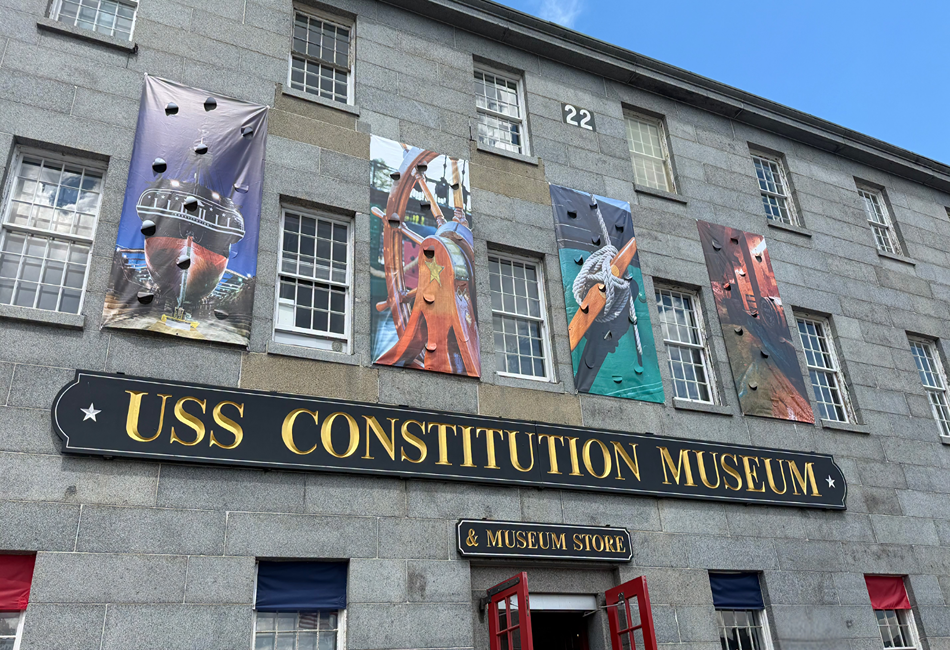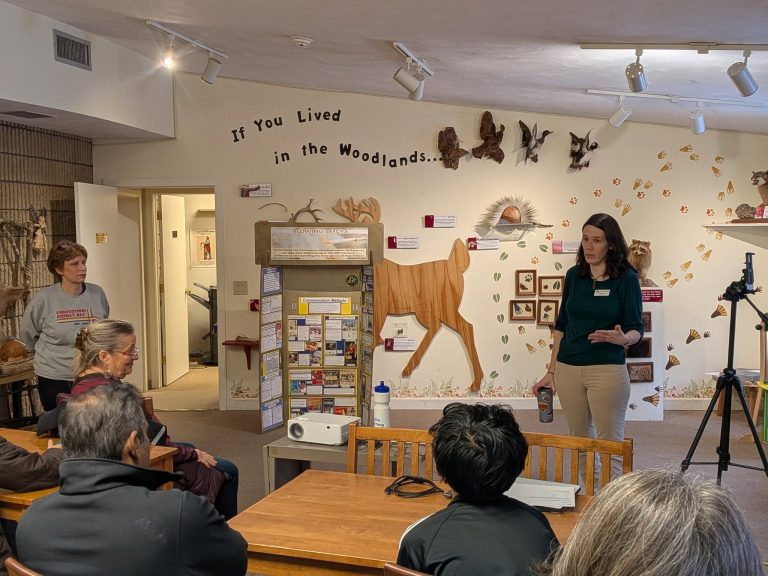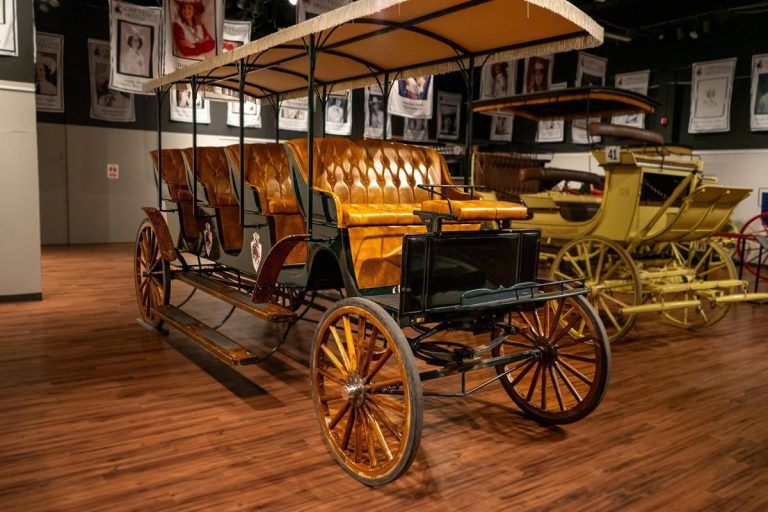
STEM, maritime history and civics converge at the USS Constitution Museum beside “Old Ironsides” in Boston’s Charlestown Navy Yard. Elementary through high school students can engage with interactive exhibits, authentic artifacts and facilitated programs that make naval life and the War of 1812 tangible.
Students might follow the daily routine of a young sailor in Join the Crew, construct and race model vessels during Built to Win Challenge, or negotiate and trade while building LEGO ships in Civics at Sea. More advanced engineering programs ask students to investigate buoyancy, wind, balance and ship design before testing their own creations. Many programs also incorporate a visit aboard USS Constitution, linking museum learning with the real ship.
What Students Will Experience
The museum’s strongest programs put students in the role of sailors, designers and problem-solvers rather than passive visitors. In Join the Crew, students compare life aboard USS Constitution in 1812 with service in today’s U.S. Navy. Grades 3–5 follow the routine of an eight-year-old ship’s boy, while grades 6–12 examine the experience of a teenage midshipman. Topics include recruitment, daily duties, shipboard life and battle, giving students a human-scale entry point into maritime history.
For groups focused on STEM, Ship Design Challenge combines museum exploration, experiments and engineering. Third graders investigate flotation, sail shape, weight and balance before building tinfoil vessels, while students in grades 4–8 examine the features that made USS Constitution fast and strong and then construct ships from household materials to test and race. The shorter Built to Win Challenge, designed for grades 3–5, concentrates that engineering process into one hour.
Civics at Sea approaches naval history through diplomacy and communication. Grades 3–5 and 6–8 work with a fictitious country, using trade and negotiation to meet national needs while building LEGO ships. Older students can explore similar questions about the role of a navy, international relationships and civic responsibility.
For groups with less time, A Sailor’s Life for Me? offers a 30-minute facilitated introduction to teamwork and shipboard responsibilities, followed by self-guided exploration. Younger visitors can also use the Meet the Crew Scavenger Hunt to uncover the jobs of some of USS Constitution’s youngest crew members.
Curriculum & Grade-Level Connections
Programs are carefully differentiated by age. Most elementary options begin at grade 3, with Join the Crew, Built to Win, Civics at Sea and Ship Design Challenge all designed specifically around upper-elementary learning. Middle school versions increase the historical and analytical depth, while high school programs emphasize more mature interpretations of naval service, leadership and diplomacy.
The museum is especially useful for interdisciplinary teaching. History classes can examine the War of 1812, early U.S. naval policy and life at sea. Engineering programs reinforce concepts such as buoyancy, force, wind, weight distribution and the engineering-design process. Civics programs introduce negotiation, international relationships, service and public responsibility.
The museum also offers valuable opportunities for historical perspective-taking. In Join the Crew, students consider age, rank and responsibility in the early Navy, while gallery-based programs encourage them to interpret artifacts and ask how meaning changes over time. The museum’s online Join the Crew exhibit can extend this learning in the classroom before or after the trip, letting students follow the recruitment, outfitting, daily routine and battle experiences of an 1812 sailor.
Self-guided exploration is available for all ages, making the museum suitable for mixed-age groups or schools that prefer a flexible visit.
Planning Your Visit
School programs are offered Monday through Friday, September through June, from 10 a.m. to 5 p.m. Reservations are required for facilitated programming. Many school programs serve 10–30 students per session, with some available in duplicate sessions for groups of up to 60.
Program lengths vary considerably. A Sailor’s Life for Me? lasts about 30 minutes plus optional self-guided exploration, Built to Win about one hour, Civics at Sea roughly 75–90 minutes and Ship Design Challenge about 2½ hours. Teachers should pay close attention to these differences when pairing a museum program with a ship visit or other Charlestown attractions.
Chaperone requirements also vary. Many facilitated programs require approximately one adult for every six students, while some short programs use ratios of 1:8 or 1:10. Self-guided school groups are advised to maintain about one adult for every eight students.
One important logistical distinction is that USS Constitution itself is operated by the U.S. Navy, not the museum. Ship visits are first come, first served during Navy operating hours and require security screening. Visitors age 18 and older must present federal- or state-issued photo identification; minors do not need photo ID.