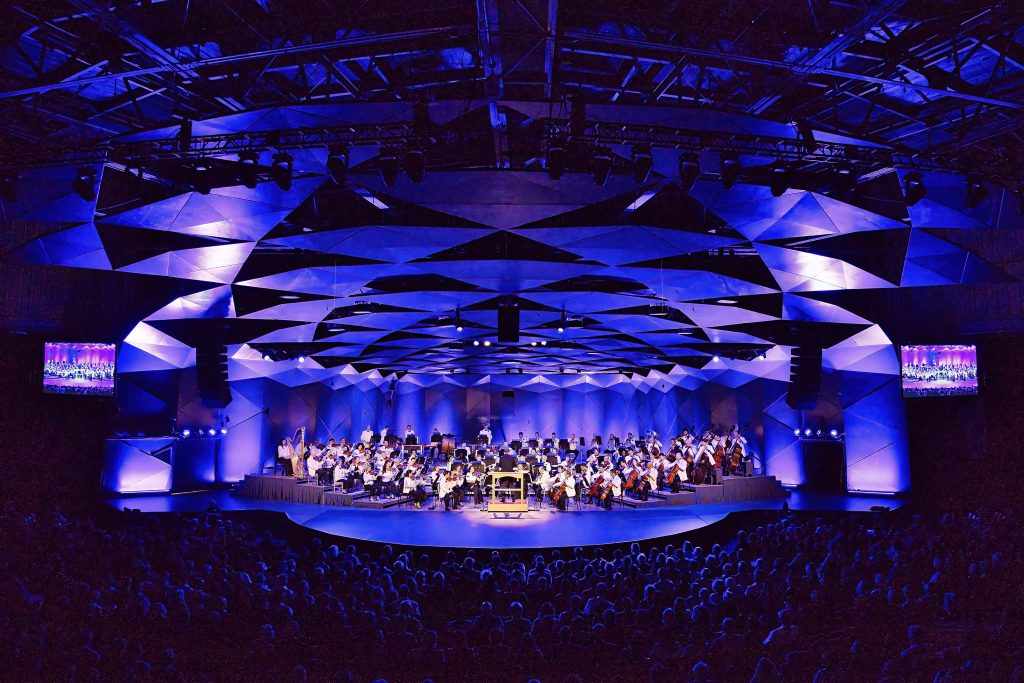

Introduce students to the power of professional orchestral music with the Boston Symphony Orchestra inside historic Symphony Hall.
Youth Concerts, designed especially for grades 4–6, use one-hour performances and conductor-led explanations to connect musical repertoire with engaging themes and character-building ideas. Middle and high school students have additional opportunities: Youth Open Rehearsals serve grades 6–8, while High School Open Rehearsals invite grades 8–12 behind the scenes of a working BSO rehearsal. Select rehearsal dates include interactive interviews with musicians or composers, and educator guides, social narratives and lesson materials help teachers prepare students before arrival and deepen learning afterward.
What Students Will Experience
A BSO school visit gives students the rare chance to hear a world-class orchestra at full scale in one of America’s most celebrated concert halls. The difference between hearing orchestral music through classroom speakers and feeling it live in Symphony Hall can be dramatic: students can see how dozens of musicians communicate, observe instrumental sections working together and hear how dynamics and orchestration fill the room.
Youth Concerts last about one hour and center on a theme that helps students make sense of the repertoire. Germeshausen Youth and Family Concerts Conductor Thomas Wilkins speaks directly to students between selections, offering musical context and connecting performances with broader ideas and positive character messages. Although the concerts are developed primarily for grades 4–6, younger elementary students and middle- or high-school groups may also attend with appropriate preparation.
For older students, the rehearsal experience is even more revealing. High School Open Rehearsals for grades 8–12 allow students to watch the orchestra stop, repeat, adjust and refine music in real time. A Conductor Cam provides a view from the orchestra’s perspective, helping students see gestures and cues they might otherwise miss. Some dates include a 9:30–10 a.m. interview with a musician or composer before the rehearsal begins.
Curriculum & Grade-Level Connections
The BSO’s student programming supports much more than music appreciation. Youth Concerts are especially well suited to grades 4–6, while Youth Open Rehearsals serve grades 6–8 and High School Open Rehearsals serve grades 8–12.
Music educators can use the experience to reinforce instrument families, form, dynamics, tempo, orchestration and ensemble technique. Students who play instruments can compare their own rehearsal processes with those of professional musicians and observe how a conductor communicates through gesture rather than words.
Language arts and social studies teachers can also build meaningful connections through program themes, composer biographies and the cultural or historical contexts of specific works. The BSO publishes educator guides and lesson plans tied to Youth Concerts and Open Rehearsals, making it easier to incorporate the field trip into classroom study rather than treating it as a stand-alone performance.
Older students interested in music careers can also gain insight into professional performance, conducting, composition and rehearsal practice. The BSO’s broader student offerings include competitions and programs for advanced high school musicians, illustrating possible pathways from school music into professional-level study and performance.
Planning Your Visit
Open Rehearsals generally begin at 10:30 a.m. and may continue until 1 p.m., with a short orchestra break during the session. Optional musician or composer interviews can begin at 9:30 a.m. Schools should allow extra arrival time so students are seated before the rehearsal begins.
Food is not permitted inside Symphony Hall, so plan lunch elsewhere. Weather permitting, the nearby Christian Science Plaza is one suggested outdoor option. Students may bring reusable water bottles to Open Rehearsals.
Accessibility accommodations can include wheelchair seating, noise-reduction headphones and other supports. Inclusion and special-education groups are specifically welcomed, and teachers should communicate needs during booking. The BSO also offers downloadable social narratives to help students understand what to expect before arriving.
Because schedules and repertoire change annually, teachers should always review the current student-performance calendar before choosing a date.