The Smithsonian National Air and Space Museum is one of the world’s most visited museums, offering students an unparalleled opportunity to explore the history of aviation and space exploration. With its vast collection of historic aircraft, spacecraft, and interactive exhibits, the museum offers an engaging, educational experience that brings the story of flight to life.
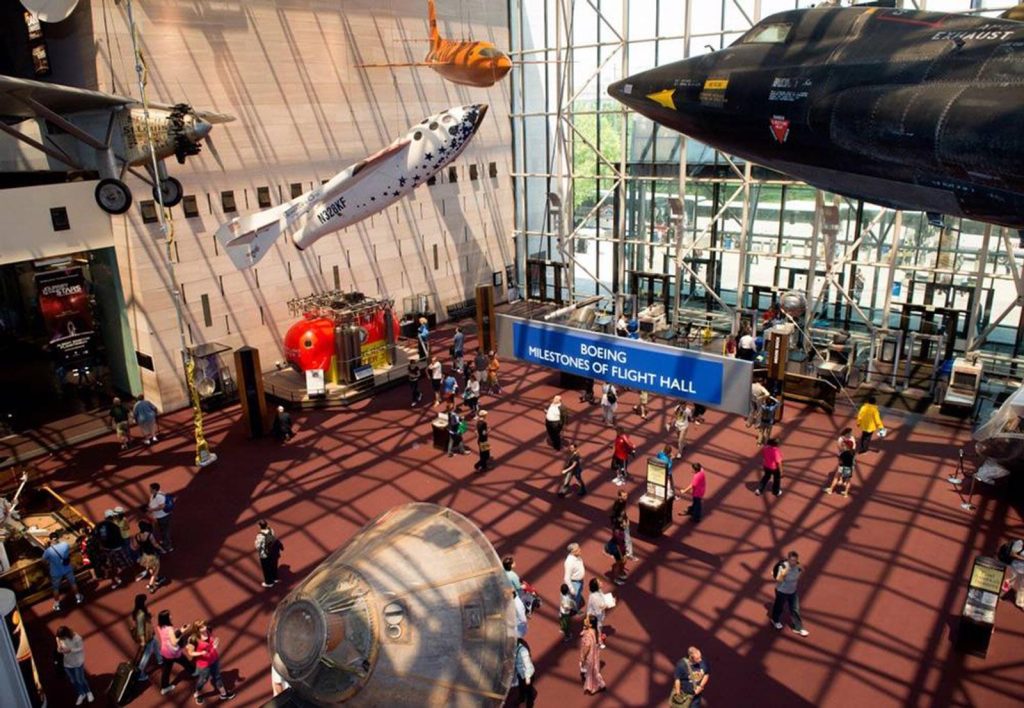
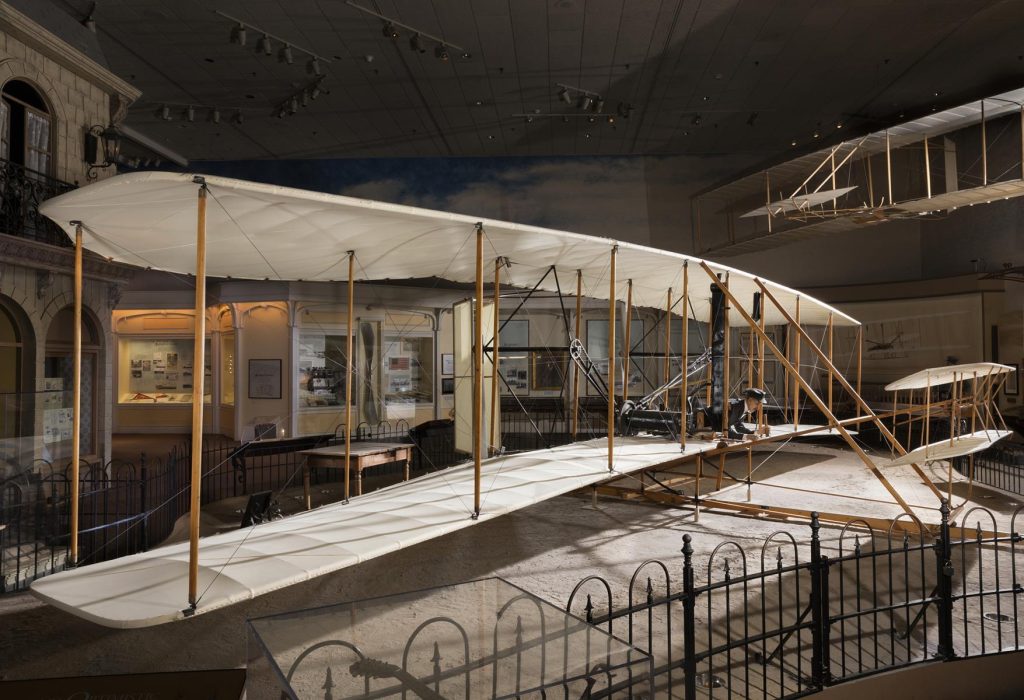
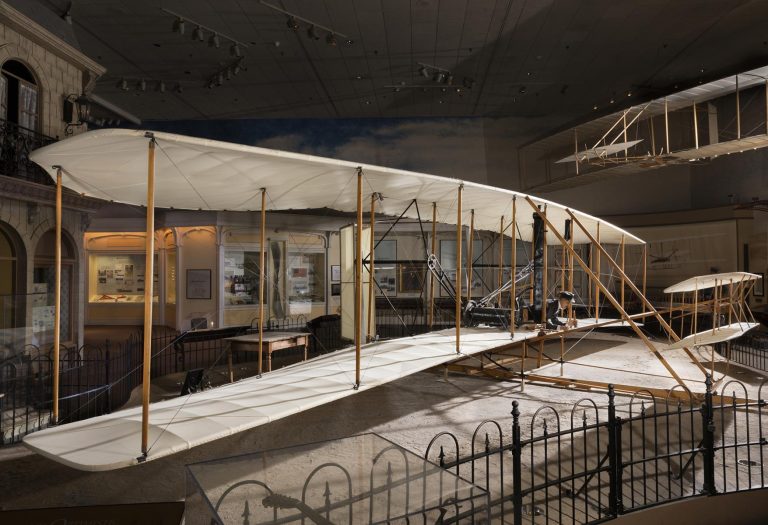
The milestones of human flight surround students at the Museum, where extraordinary artifacts connect engineering, science and history. Groups can encounter objects ranging from the 1903 Wright Flyer to artifacts associated with lunar exploration and human spaceflight.
What Students Will Experience
Few museums allow students to stand within sight of objects that fundamentally changed human history. At the National Air and Space Museum, artifacts are not merely illustrations of science lessons—they are evidence of the experiments, risks and engineering breakthroughs that made flight and space exploration possible.
A self-guided visit can introduce students to major milestones in aviation and spaceflight, but school groups can add free reservable programs that make the experience more interactive. Science Demonstrations, recommended for grades 3–12, use live experiments, hands-on activities and authentic artifacts to explain complex STEM ideas. A Forces of Flight demonstration for grades 3–8 explores lift, propulsion and Bernoulli’s principle. At the same time, the Paper Airplane Contest lets students apply center-of-lift and center-of-gravity concepts by designing aircraft of their own.
For grades 3–12, Living and Working in Space examines spacesuits, the International Space Station and the challenges the human body faces beyond Earth. Students connect scientific concepts with the technology astronauts depend upon for survival.
Younger visitors can join educator-led Story Time programs that pair picture books with museum objects, discussion, and a craft demonstration. In Washington, planetarium programs for grades 3–8 guide students through an exploration of planets, stars, constellations, and the Moon beneath the dome.
Curriculum & Grade-Level Connections
The museum’s educational offerings can support physics, engineering, astronomy, Earth science, technology, history and mathematics across a wide range of grades.
For elementary students, flight and space provide highly visual ways to explore shape, motion, gravity and cause and effect. Middle school groups can explore more sophisticated topics such as aerodynamics, propulsion, planetary science, and engineering design. High school students can use exhibits and demonstrations to examine how physics, materials science, mathematics and human problem-solving intersect in real aerospace systems.
Science demonstrations are designed for grades 3–12, while individual topics narrow that range when appropriate. Forces of Flight and Paper Airplane Contest are recommended for grades 3–8, and Living and Working in Space spans grades 3–12. Washington’s reservable planetarium field-trip program targets grades 3–8.
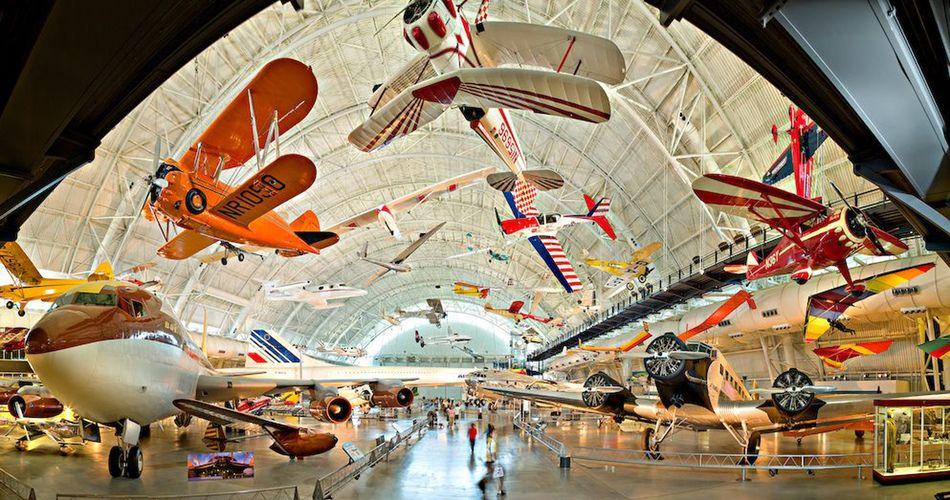
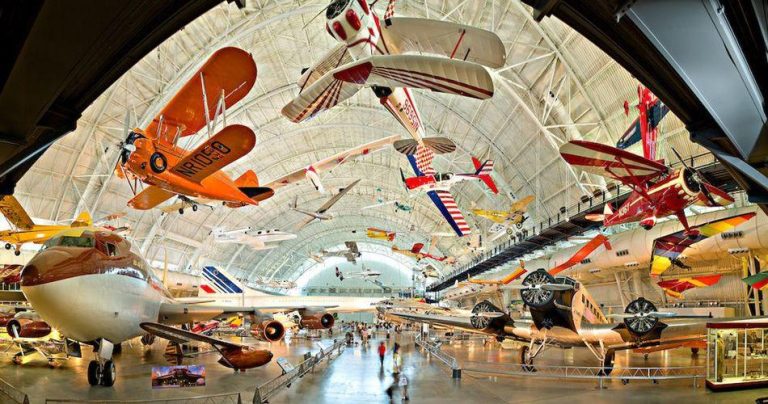
Teachers should also know that the Smithsonian operates a second Air and Space location, the Steven F. Udvar-Hazy Center in Chantilly, Virginia. It offers additional school experiences, including K–12 STEAM Labs, guided youth tours and specialized engineering challenges. Programs there range from coding robotic solar-system journeys for K–2 students to wind-tunnel design and flight-simulator activities for older learners. Schools building a larger Washington-area STEM itinerary may want to compare the two locations before booking.
Planning Your Visit
The National Mall museum is free, but it requires timed-entry passes, including for school field trips. Groups that reserve a museum education program don’t need a separate timed-entry reservation; passes are issued automatically when the program is confirmed. Schools visiting without a reserved program must obtain their own group passes. Current booking rules allow up to two reservations of 55 people under one group contact for the same day.
Free educator-led programs require at least 10 participants and should be reserved at least three weeks in advance. Science demonstrations generally accommodate 10–30 participants, while the Washington planetarium can host much larger groups.
Chaperone requirements vary by grade: one adult for every five students in pre-K–3, one for every 10 students in grades 4–6 and one for every 15 students in grades 7–12. The museum recommends dividing larger classes into groups of roughly 10–12 so students can explore more effectively.
Teachers should minimize backpacks and other belongings because the National Mall location has no lockers, and all bags undergo security screening. Outside food is not permitted inside the museum, except bottled water, and there is no dedicated indoor space for school groups to eat packed lunches. The on-site Mars Café has limited seating, so planners bringing bagged lunches should arrange another location on or near the National Mall.
Because parts of the museum continue to evolve through its multiyear renovation, teachers should check the current exhibition list before finalizing worksheets or promising students a particular artifact. A little advance planning ensures that one of Washington’s most iconic museums becomes more than a sightseeing stop—it becomes a purposeful STEM learning experience.