Students can explore a remarkably preserved Shaker community at Canterbury Shaker Village, where more than 200 years of religious, social, agricultural and technological history unfold across historic buildings, landscapes and collections. Approximately two-hour school programs welcome students of all ages and combine guided exploration with Shaker-inspired hands-on activities. Teachers can also customize field trips to match classroom topics or specific areas of interest. The Village’s 25 original and four reconstructed buildings, nearly 700 acres of fields and forests, gardens and mill ponds provide an unusually rich setting for examining communal life, craftsmanship, innovation and belief. School tours are generally available April through November, with off-season visits possible by advance arrangement.
What Students Will Experience
A visit to Canterbury Shaker Village lets students experience history where it happened. Rather than learning about the Shakers through a single exhibit gallery, groups move through an entire historic community whose buildings, workspaces and landscape reveal how religious beliefs shaped everyday life.
Knowledgeable interpreters lead school programs and pair guided exploration with hands-on, Shaker-inspired activities. The Village can tailor tours to a class’s curriculum, which gives teachers flexibility to emphasize history, religion, design, agriculture, technology or community life.
Students can investigate how Shakers organized daily routines around cooperation, discipline and shared work. Historic buildings such as the Meetinghouse, Dwelling House, School House, Laundry and Infirmary offer different windows into community life, while museum collections include furniture, textiles, crafts and other objects that reflect the group’s emphasis on usefulness, quality and simplicity.
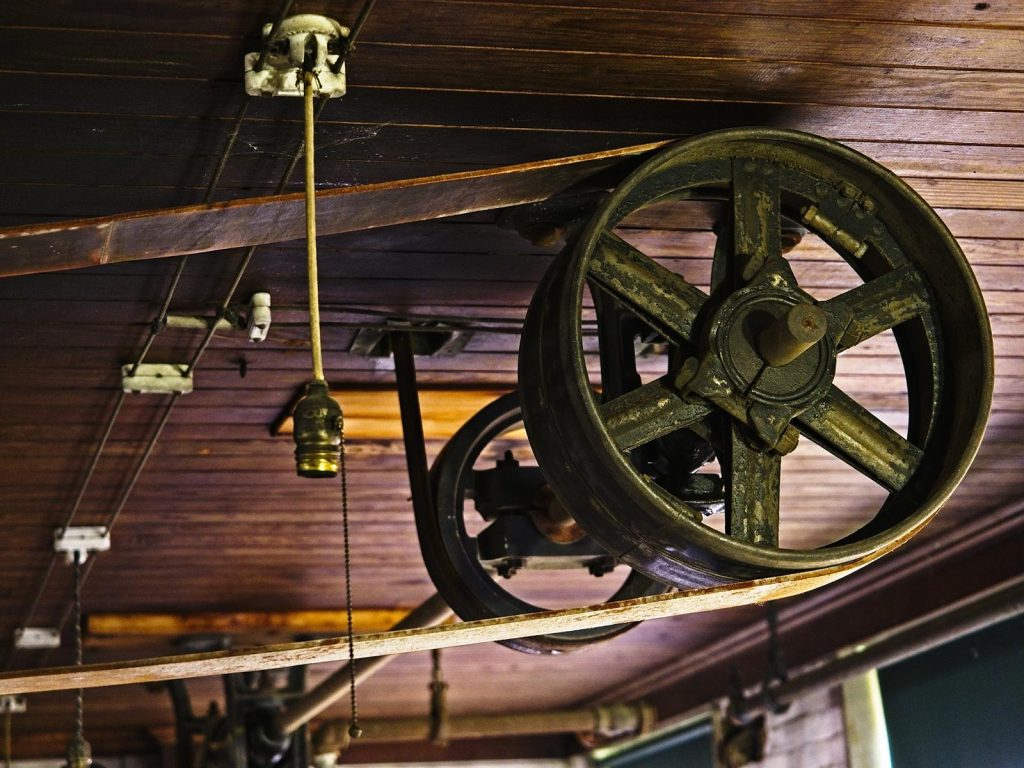
Innovation is another compelling theme. The Shakers became known for contributions to agriculture, seed production, medicine, furniture, textiles and labor-saving devices. Current public interpretation highlights their willingness to experiment, fail and try again—an idea teachers can easily connect to engineering design and problem-solving.
When available, traditional craft demonstrations can make the experience even more tangible. Demonstrations have included broom making, letterpress printing, oval-box construction, woodworking, chair taping, spinning, weaving, rug making and sewing.
The landscape itself is part of the lesson. Nearly 700 acres of forests, fields, gardens and ponds surround the historic village, giving students opportunities to consider how geography, natural resources and agriculture supported a self-contained religious community.
Curriculum & Grade-Level Connections
Canterbury Shaker Village welcomes students of all ages, rather than limiting field trips to one grade range. Programs can be adjusted to a class’s interests and developmental level, making the site useful from elementary social studies through high school U.S. history.
For younger students, teachers can focus on daily life, chores, schooling, tools, clothing, food and the differences between modern communities and those of the past. Historic buildings provide concrete examples of concepts that can otherwise feel abstract.
Upper elementary and middle school groups can go deeper into communal living, agriculture, invention and the relationship between belief and behavior. Students can ask why the Shakers chose to share property, organize labor collectively or design buildings and tools in particular ways.
Older students can examine more complex topics including religious freedom, gender roles, pacifism, communal economics and utopian movements in American history. Current Village interpretation highlights Shaker ideas of gender equality, pacifism, simplicity, communal life, and religious practice, all of which create strong links to civics, social history, and religious studies.
The Village also lends itself well to interdisciplinary STEM connections. Shaker approaches to waterpower, agriculture, manufacturing and labor-saving inventions let teachers connect historical ingenuity with engineering and design thinking.
Art and design teachers may find the Village equally useful. Shaker furniture, textiles, architecture, and crafted objects show how aesthetic values can emerge from function, belief, and material constraints rather than decoration alone.
Planning Your Visit
School tours are available April through November, with off-season visits possible with advance notice and weather permitting. Standard field trips run approximately two hours.
Groups may bring picnic lunches and eat on the grounds after their program. The Village does not currently offer full dining service, though the Village Store may have light snacks and beverages.
Teachers should prepare students for significant walking. The campus covers a large historic landscape, and the Village recommends sturdy, comfortable footwear. Because of the buildings’ age and the site’s terrain, accessibility is limited in some areas, so schools with students with mobility needs should discuss specific accommodations when arranging the trip.
Free parking is available near the Village entrance. The grounds and nature trails are open year-round from dawn to dusk, and teachers planning a longer visit can add a walk around Turning Mill Pond, where students may see historic water infrastructure, beaver activity and local plant life.
For teachers looking for a site where religion, technology, art, agriculture and social history overlap, Canterbury offers an unusually complete historical environment rather than a single-topic museum experience.