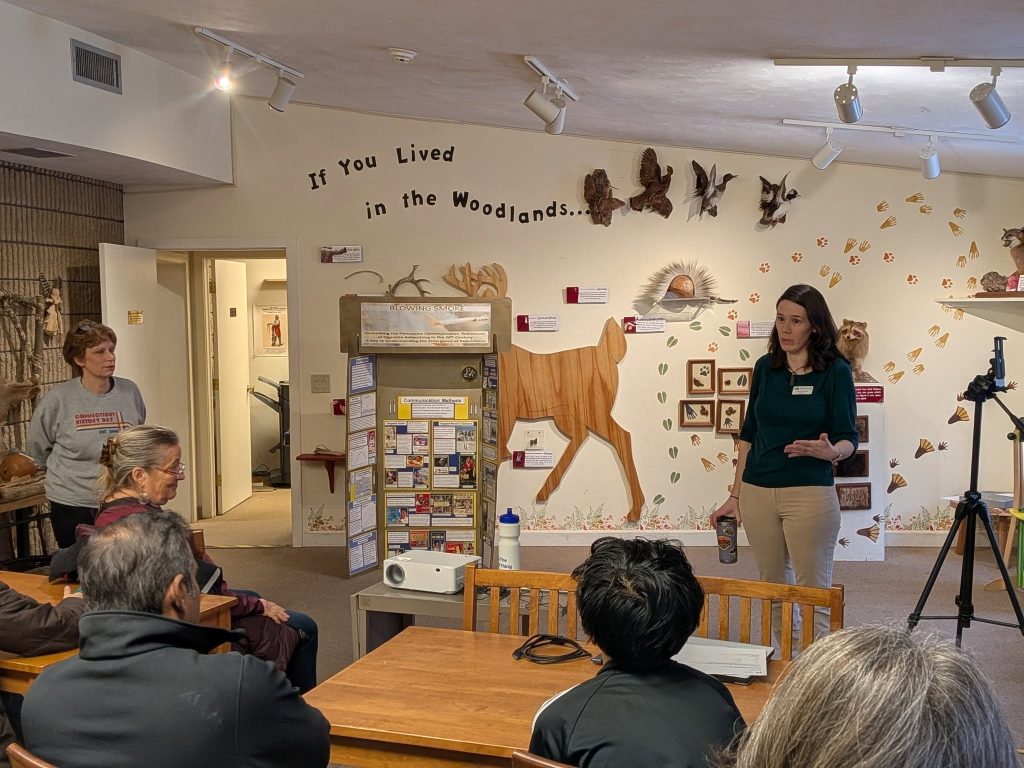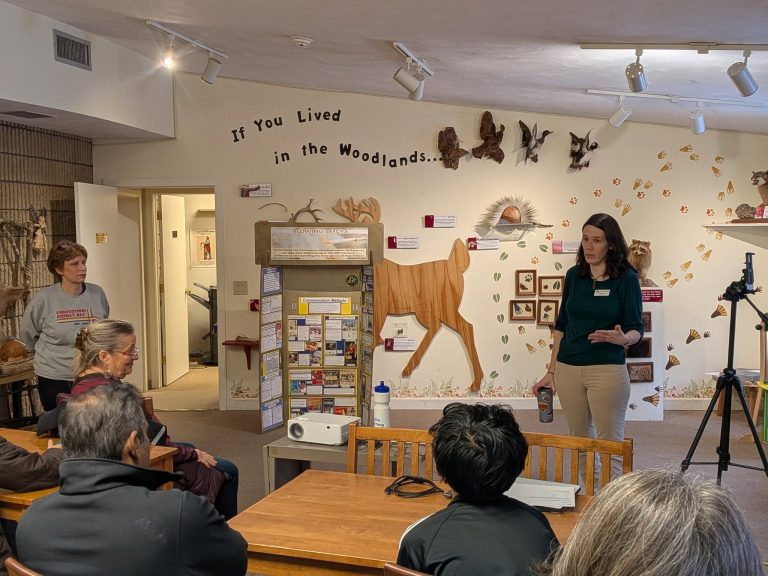
School groups can discover more than 12,000 years of Indigenous history at the Institute for American Indian Studies Museum & Research Center.
Grade-specific programming introduces students to Native communities through inquiry, reconstructed environments, cultural materials and hands-on learning. Younger groups explore traditional homes and community life, while grades 3–5 investigate tools, natural resources and environmental adaptations. Middle and high school students examine Indigenous perspectives on colonization, resilience and identity through historical inquiry and art interpretation. Experiences can become even more interactive with traditional storytelling, Native games, beading, pottery, corn-husk dolls and other activities.
What Students Will Experience
IAIS structures its school programming by developmental level, allowing the same broader themes—community, adaptation, culture and continuity—to become more sophisticated as students grow.
For pre-K through grade 2, We’re All In This Together: Life Lessons from Native American Communities combines storytelling, cultural materials and exploration of Native homes. Students compare their own communities with Native communities past and present while learning through tactile, visual and auditory experiences.
Grades 3–5 take a deeper look in Since Time Immemorial: Native American Communities in the Eastern Woodlands. Students examine how Indigenous peoples adapted to changing environments, developed tools and homes and used available resources. Teachers can choose an additional team activity: students might answer questions while moving across a map of Connecticut’s tribal communities or complete an exhibit scavenger hunt examining similarities and differences among Native cultures.
Outdoor and reconstructed environments are an important part of the experience. Programs can include exploration of a replicated 16th-century Algonkian village and other spaces that help students visualize how technology, environment and community intersected in daily life.
Curriculum & Grade-Level Connections
For grades 6–8, Looking Eastward: Indigenous Perspectives on Colonialism encourages students to investigate colonization, Manifest Destiny and westward expansion from Indigenous perspectives. Art interpretation helps learners consider how point of view shapes historical understanding, while discussions examine the effects of environmental change, technology and contact between cultures.
High school students in grades 9–12 can participate in Power of the Eighth Generation, which explores post-contact history, Native identity, assimilation, colonial control and cultural resilience. Students consider multiple perspectives on European-Indigenous interactions while examining how Native communities have persisted and adapted.
Programs connect with Connecticut standards and Common Core skills in reading, speaking, listening and inquiry. This makes IAIS particularly useful for interdisciplinary units combining social studies, language arts, civics, ecology and cultural studies.
Optional 30-minute additions give educators even more ways to tailor the experience. Traditional Native games introduce practical skills and cooperation through play; oral storytelling demonstrates how knowledge and values are transmitted across generations; and crafts include beading for all ages, pottery, talking sticks and corn-husk dolls. Some crafts have minimum grade recommendations, so teachers should match add-ons carefully to their group.
Planning Your Visit
Most IAIS school programs last between 90 minutes and 2½ hours, depending on grade level, giving teachers enough time for substantive learning without necessarily requiring a full-day trip. Peak-season dates can fill months in advance and are assigned on a first-come, first-served basis, so early reservations are strongly recommended.
Teachers, aides, paraprofessionals and nurses accompanying school groups are admitted free, and one chaperone for every 10 students is also complimentary. Because programs include outdoor experiences even in rainy weather, students should arrive in weather-appropriate clothing and footwear. This is an important planning consideration for teachers expecting a primarily indoor museum visit.
Crafts requiring materials should be booked ahead—some require at least three weeks’ notice. Schools should also discuss lunch timing, accessibility needs, quiet-space requirements, allergies or other accommodations when completing the reservation request. The museum specifically invites groups to provide those details beforehand.
Teachers who need to cancel should generally provide at least two weeks’ notice to avoid a cancellation fee, although school closures, delayed openings and early dismissals receive different consideration. With its combination of grade-specific instruction, reconstructed environments and hands-on add-ons, IAIS works especially well for educators seeking an Indigenous-history experience that moves beyond observation into discussion, participation and historical perspective-taking.