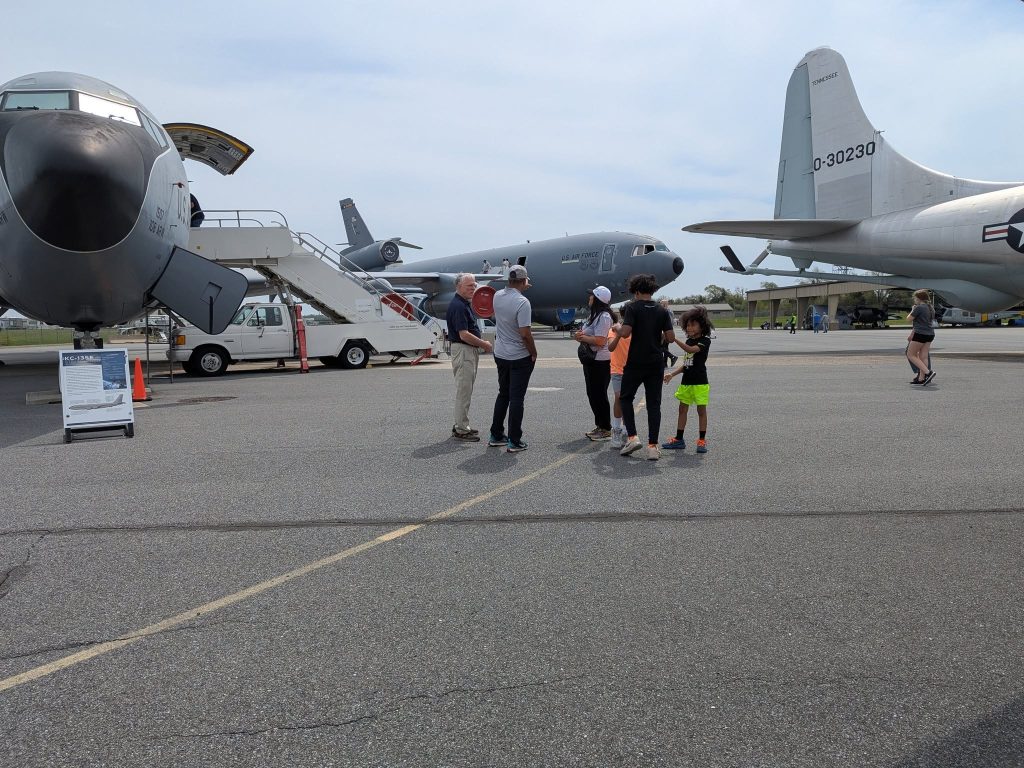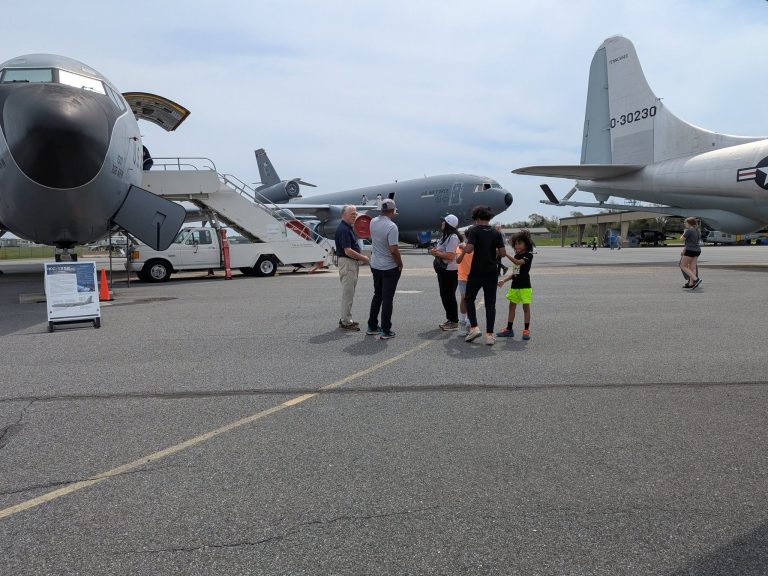
Historic military aircraft become the classroom when students stand beneath and step aboard authentic machines at the Air Mobility Command Museum. More than 35 aircraft and exhibits devoted to airlift, aerial refueling and humanitarian missions provide natural connections to STEM, engineering, military history and technological change.
Students can study aircraft ranging from enormous transport planes to specialized military vehicles and explore how aviation supports missions worldwide. For visitors age 10 and older, the museum’s flight simulator offers the chance to take the controls while volunteers introduce the principles of flight, including takeoff, traffic patterns and landing at Dover Air Force Base. Admission and parking are free.
What Students Will Experience
The Air Mobility Command Museum’s scale makes an immediate impression. Students encounter more than 35 aircraft, many large enough to walk around or, when staffing and conditions allow, enter. The collection helps explain the specialized role of military air mobility—moving troops, supplies, equipment and humanitarian aid while also supporting aerial refueling and medical evacuation.
Exhibits extend beyond the aircraft themselves. Students can investigate topics including airlift during the Korean and Vietnam wars, Medal of Honor recipients and the history of Dover Air Force Base. A preserved control-tower exhibit provides another perspective on how aircraft movements are coordinated and monitored.
Several aircraft may be open for self-guided or guided interior tours. The C-141B Starlifter and C-130 Hercules are generally available for self-guided exploration when weather permits, while the C-5A Galaxy and KC-10 Extender may open when tour guides are available. On selected third Saturdays from April through October, the museum opens additional aircraft for guided tours, subject to weather and volunteer staffing.
For students 10 and older, the flight simulator provides one of the most interactive experiences. Museum volunteers teach basic flight principles and guide participants through takeoff, the traffic pattern and landing at Dover Air Force Base. Simulator availability depends on volunteer staffing.
Curriculum & Grade-Level Connections
Unlike many museums in this guide, the Air Mobility Command Museum does not publish a formal grade-banded school curriculum, so teachers have considerable freedom to shape a visit around their own learning objectives. Group tours are available, and the collection supports a wide range of elementary-through-high-school topics.
For younger students, aircraft size, shape and function can introduce basic concepts of transportation, forces, motion and engineering. Teachers can ask students to compare wings, engines and cargo spaces or identify ways different aircraft were designed for different jobs.
Middle school students can dig further into flight science, including lift, thrust, weight and drag, while also considering how engineering constraints influence aircraft design. The flight simulator is especially useful for students old enough to connect classroom physics with a real-world aviation environment.
For high school groups, the museum can support more advanced discussions about aeronautical engineering, logistics, military technology, global conflict and humanitarian response. Exhibits on airlift during Korea and Vietnam can also support U.S. history courses, while the museum’s focus on air mobility offers an entry point into broader questions about supply chains, strategic planning, and technological innovation.
The museum also maintains a research library and photo archive available by appointment, which may be useful for advanced students completing research projects.
Planning Your Visit
Admission and parking are free, which makes the museum an appealing choice for budget-conscious school groups. The museum is currently open Wednesday through Sunday from 9 a.m. to 4 p.m. and closed Mondays, Tuesdays and most federal holidays.
Groups of 10 or more should contact the museum in advance to arrange a guided tour. Because tours rely heavily on volunteer staff, schools should schedule early and confirm which aircraft or special experiences will be available on the chosen date.
Weather is a significant planning factor. Outdoor aircraft may close during rain, unsafe conditions or extreme heat. The museum specifically notes that aircraft interiors close when outside temperatures rise above 90 degrees, so spring or fall visits may provide more reliable access than very hot summer dates.
The museum has its own entrance from Route 9, so school buses do not need to pass through the main Dover Air Force Base gate. That simplifies arrival considerably for student groups.
Accessibility varies by aircraft, but the C-141B Starlifter is wheelchair accessible. Teachers should contact the museum in advance about mobility needs, particularly if boarding aircraft is an important part of the planned experience.
Because the museum does not have rigid school-program blocks, it is especially useful for planners who want flexibility. A teacher can build a shorter aviation stop around a guided tour or spend several hours combining exhibit exploration, aircraft interiors and simulator time.