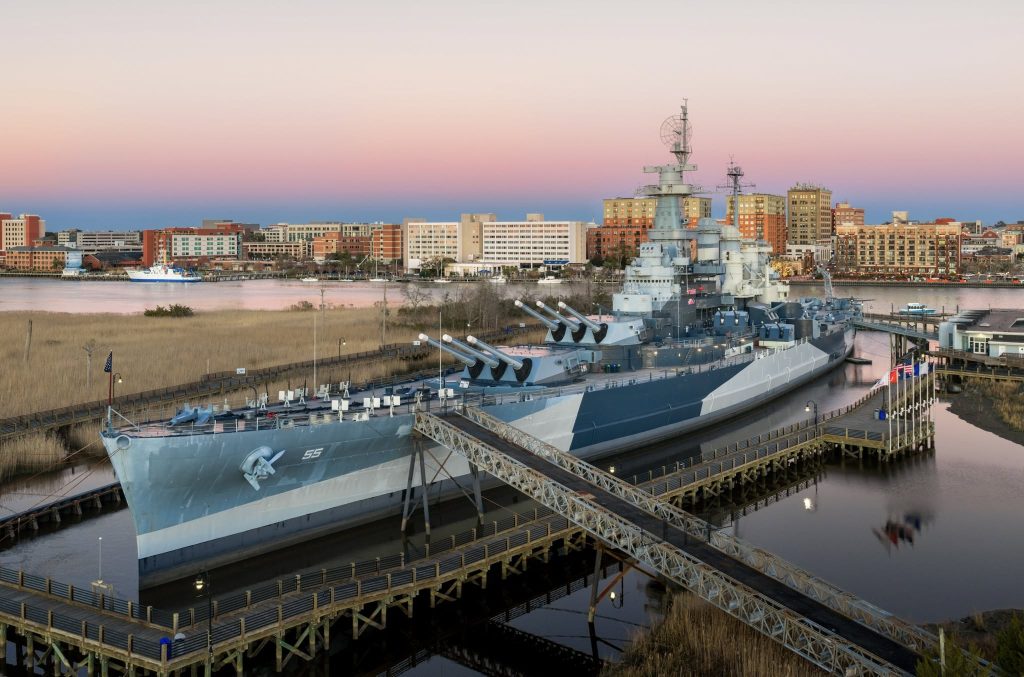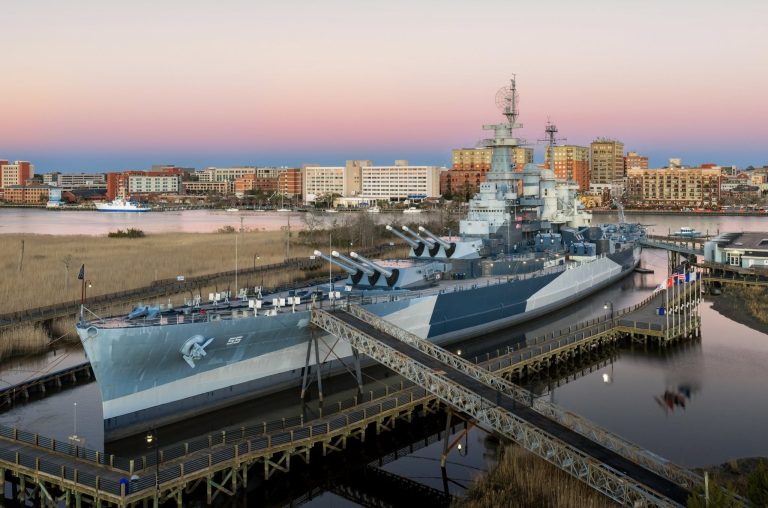

In Wilmington, North Carolina, the Battleship USS NORTH CAROLINA lets students step into a real piece of World War II history and explore the spaces where sailors lived and worked. Moored across the river from downtown Wilmington, the ship is the most decorated battleship of World War II and a National Historic Landmark. Students can explore everything from the engine room to the bridge while discovering how a massive ship like this actually operated. More importantly, the experience gives them a chance to think about the thousands of crew members who lived and worked aboard the ship and the teamwork it took to keep it running. Instead of simply reading about wartime life, students can walk through the same spaces and get a much better sense of what it was like.
Educational Programs
A field trip aboard the Battleship is anything but a sit-and-listen experience. School groups can take a self-guided tour through all nine levels of the ship, discovering artifacts and stories along the way. Students can explore areas such as the engine room, living quarters, and bridge while getting a closer look at the equipment that made the ship function. The Battleship also offers educational programs that take the experience a step further. The Price of Freedom program allows students in grades 3–12 to explore the roles North Carolinians and crew members played during World War II while learning about courage, sacrifice, teamwork, and service. Another program, Eagles Island Immersion: Island in the Stream, takes students outside to investigate the ecosystem surrounding the ship and explore the relationship between people and the environment. Both programs use hands-on activities and are aligned with North Carolina curriculum standards.
What Students Can Learn
For educators, the Battleship offers a chance to bring several subjects together in one place. History is an obvious connection, with students learning about World War II, military service, and sailors’ daily lives. Still, the ship can also support lessons in science, engineering, geography, and environmental studies. Students can consider how the ship was designed, how its systems worked, and why teamwork was so important to keeping such a large vessel operating. The new educational programs are designed for active participation rather than simple touring, with trained staff and volunteers guiding students through standards-based activities. Teachers can also use the ship’s artifacts and different working areas to start conversations about technology, innovation, and the responsibilities that come with working as part of a team.
The field trip can also become a great opportunity for students to think about careers and skills they may not normally associate with history. Before visiting, teachers could have students choose a job that would have been necessary aboard a battleship and research what that person did each day. Students might choose an engineer, cook, mechanic, medic, radio operator, or crew member and then look for clues about that job while exploring the ship. The experience can also open conversations about leadership and teamwork by asking students to consider what would happen if one part of the crew did not do its job. For older students, the Price of Freedom program offers an opportunity to reflect on the personal stories behind wartime service. In contrast, Eagles Island Immersion offers a different perspective by connecting the ship to the surrounding environment and Eagles Island’s history.
Immersive Experiences
The Battleship North Carolina is the kind of field trip students are likely to remember long after the school bus heads home. Walking through a real World War II battleship makes history feel much more immediate. At the same time, the ship’s educational programs give students opportunities to investigate, ask questions, and make their own connections. Something is there for a variety of learners, whether a student is fascinated by military history, interested in engineering, or simply excited to explore a giant ship. North Carolina schools can also take advantage of free admission for students and teachers with a reservation, while out-of-state schools have reduced student admission rates. With its combination of history, hands-on exploration, STEM connections, and plenty of “wow” factor, the Battleship makes for a field trip that feels like an adventure from the moment students step aboard.