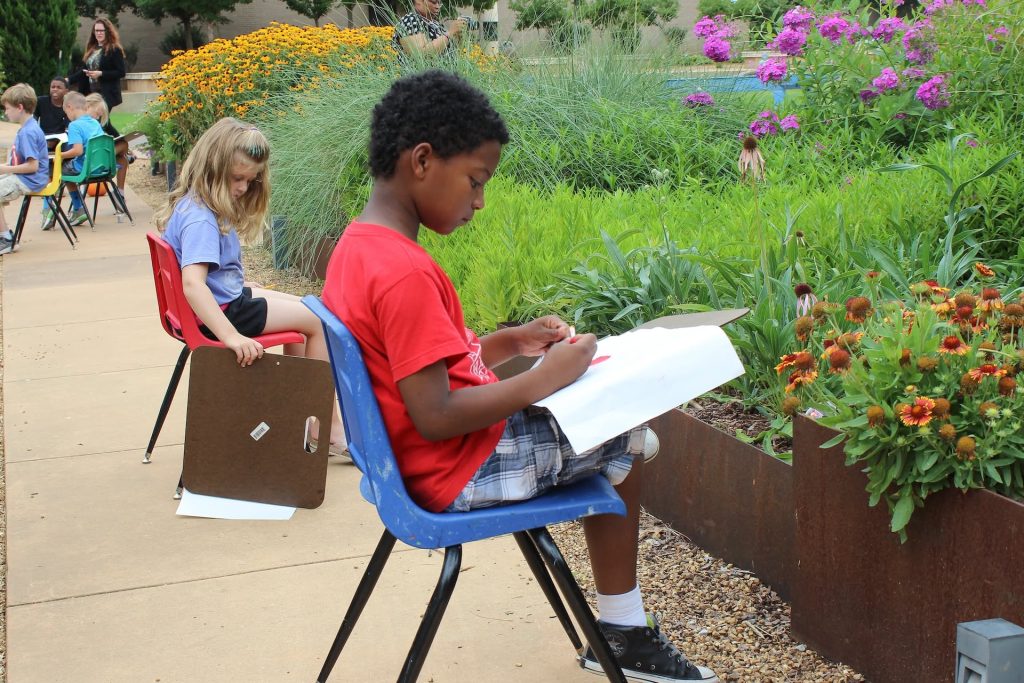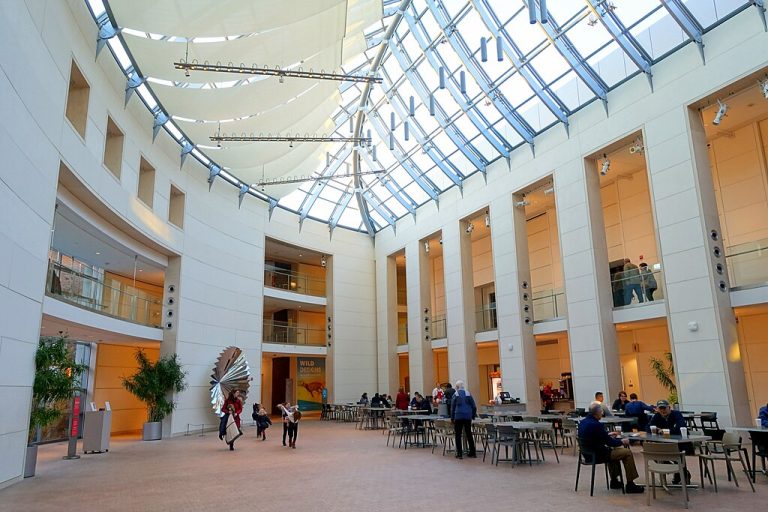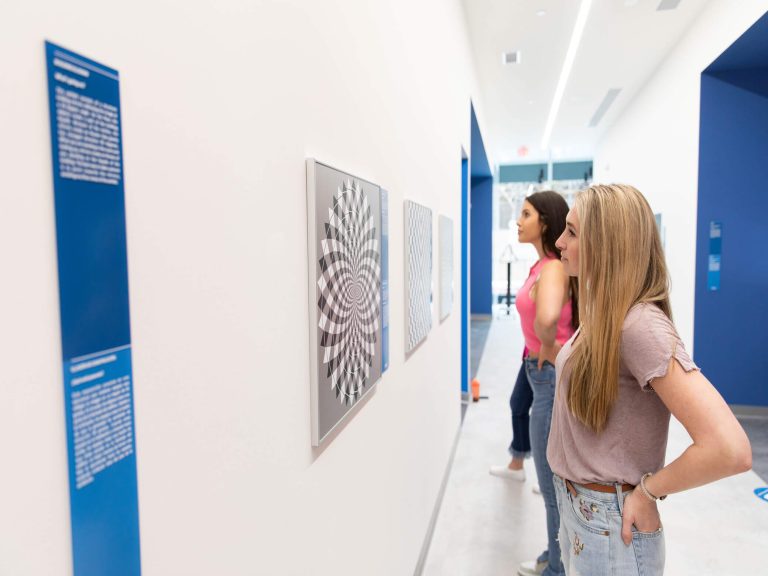

Art can be a great way for students to see history, culture and even their own communities from a different perspective. At the Mississippi Museum of Art in downtown Jackson, students can explore original works of art while learning about Mississippi artists, American history and the stories behind the pieces they see. The museum offers school groups a choice between guided and self-guided visits, making it easy to tailor a trip to a classroom’s needs. Guided tours are led by trained gallery educators who encourage students to look closely at artwork, share their own observations and think about the historical and cultural context behind what they are seeing. For students who may not consider themselves “art people,” the experience is a chance to discover that there is no single right way to look at or respond to a work of art.
Educational Experiences
Students can explore the museum in several ways during a field trip. Guided tours typically focus on three to four main works of art and last about an hour, although tours can be adjusted to fit a group’s goals. The museum offers themes for different age groups, including Animals in Art and Artful Stories for younger students, while elementary through high school groups can explore topics such as Art & Civil Rights, Mississippi Artists, Women Artists, Storytelling in Art, Art & Identity, Art & Environment and Art & Activism. Students can also take a self-guided visit and explore the galleries with downloadable teaching materials. The museum’s Bloomberg Connects app provides additional audio content, curator remarks and programming that can help students continue exploring the artwork.
Field Trip Activities
For educators, the Mississippi Museum of Art offers more than just a place to take a class for an afternoon. Its school tours can be adapted to different grade levels and specific curriculum needs, making it possible to connect an art visit to lessons students are already studying. School group visits to the museum’s permanent collection are free, although schools must register at least two weeks in advance. Guided tours are limited to 50 participants and require one chaperone for every 10 students, while self-guided groups must be divided into smaller groups of students and chaperones. The museum also provides resources specifically for educators, including digital activities, teacher workshops, and opportunities to learn how to use objects and artwork as teaching tools across different subjects.
More Than Art
One of the biggest strengths of a field trip to the museum is how easily art can connect to subjects beyond the art classroom. A class studying the Civil Rights Movement, for example, can explore artwork through the museum’s Art & Civil Rights theme. In contrast, students studying Mississippi history can focus on the state’s artists and cultural stories. Younger students can practice identifying colors, shapes, materials, and patterns, while older students can discuss identity, activism, environment, or historical context. Before visiting, teachers could ask students to choose one piece of artwork and write down what they notice without reading the description. After learning more about the artist and the work, students can compare their first impressions with what they discovered. This simple activity encourages observation, curiosity, and critical thinking, and gives students permission to form their own opinions about art.
The Mississippi Museum of Art offers students a chance to learn in a way that is visual, conversational, and creative. Instead of being told what a piece of art means, students are encouraged to look closely, ask questions, and form their own interpretations. With programs covering everything from Mississippi artists and storytelling to civil rights and activism, the museum can complement lessons in art, history, social studies, English and beyond. Add in the museum’s free permanent-collection visits for school groups and its extensive educator resources, and it becomes an especially useful field-trip destination for Mississippi classrooms. Students may walk in expecting to see paintings and sculptures, but they can walk out having learned a little more about their state and its history.