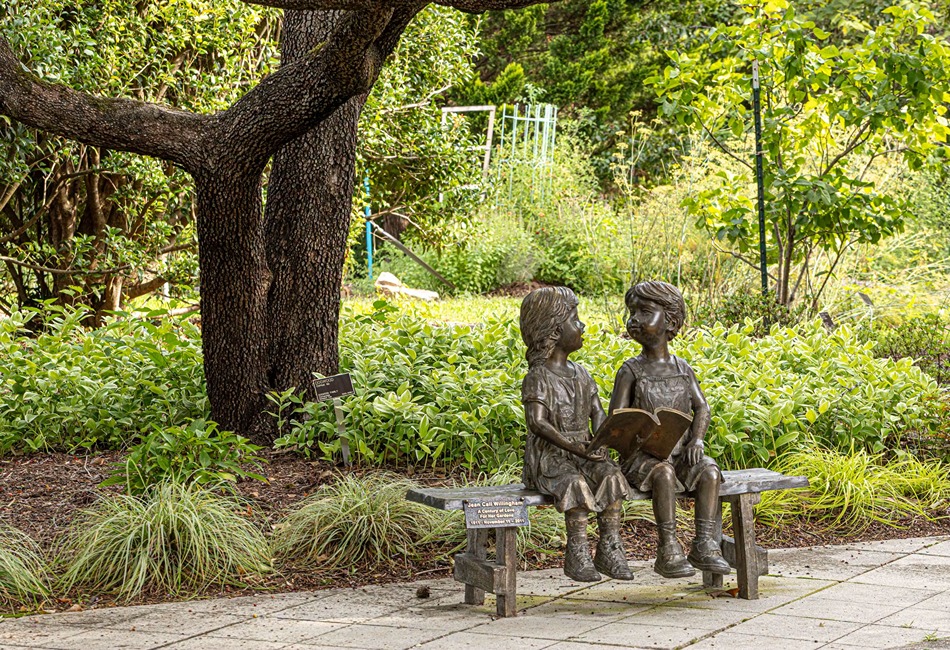

Lewis Ginter Botanical Garden gives students a chance to study science with their surroundings as the classroom. A lesson about wetlands can happen beside an actual wetland, a discussion about plant life can happen among living specimens, and scientific observation becomes something students practice rather than simply read about. Spread across expansive grounds, the garden includes a Conservatory, Education Center, Children’s Garden, Tea House, and Visitors Center, along with a variety of formal gardens and natural spaces. Together, these settings create an engaging environment for exploring the natural world and offer opportunities for everyone in the classroom.
Learning Opportunities
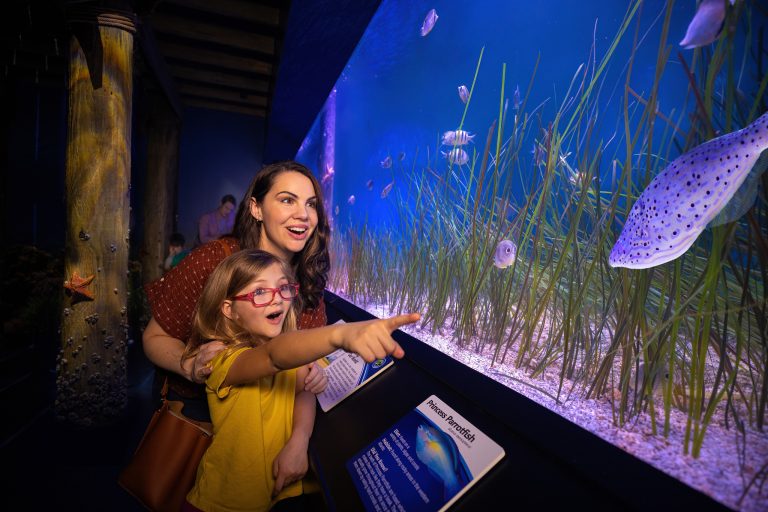
Field trips focus on exploration and active discovery. Younger students may investigate plant life cycles or use their senses to explore the Children’s Garden. Older groups can examine wetland environments, test water quality, or explore sustainable gardening practices. Moving through different areas of the garden also gives students the opportunity to compare environments and notice how plants, water, soil, and other elements interact. Rather than remaining in one location, groups can use the garden’s varied landscapes to see how scientific ideas appear in different forms throughout the grounds. The gardens give educators the opportunity to prepare their classroom for the different lessons they may learn.
The programs cover a broad range of topics, including plant science, ecosystems, wetlands, water quality, sustainability, and scientific observation. Beyond learning specific facts, students practice skills that scientists use in the field, such as careful observation, asking questions, gathering information, and interpreting what they find. Seeing a wetland or examining a living plant can make abstract concepts easier to understand, while activities such as water quality testing give older students an opportunity to apply scientific methods themselves. The result is an experience that connects classroom concepts with the environment immediately around them.
Student Programs
With programs available from preschool through high school, Lewis Ginter can accommodate a wide range of ages and academic needs. Activities are designed with students’ developmental stages and curriculum in mind, allowing teachers and group organizers to select experiences that make sense for their particular group. Younger children can focus on foundational ideas about plants and nature, while older students can take a deeper look at ecology and environmental science. The variety also makes it possible to plan a visit around a specific academic theme rather than treating the field trip as a one-size-fits-all experience.
A visit to Lewis Ginter Botanical Garden can change the way students think about science by putting them in the middle of what they are studying. Plants become specimens to examine, wetlands become ecosystems to investigate, and the garden itself becomes a place to ask questions and make discoveries. With experiences ranging from early childhood exploration to more advanced environmental studies, Lewis Ginter offers students of all ages a chance to see science happening around them and to take part in it.