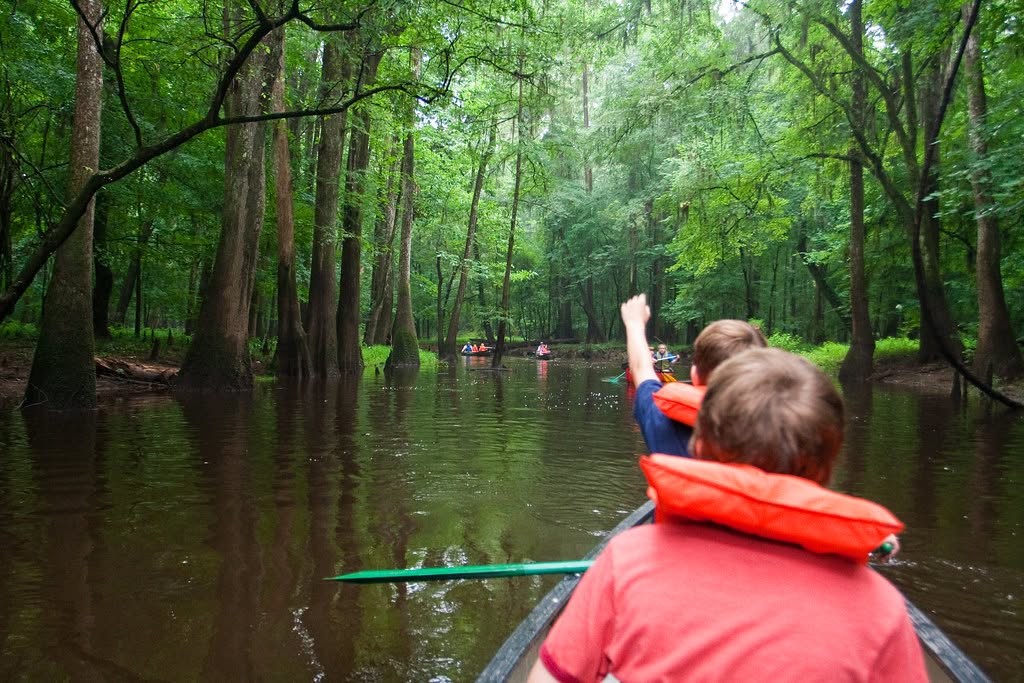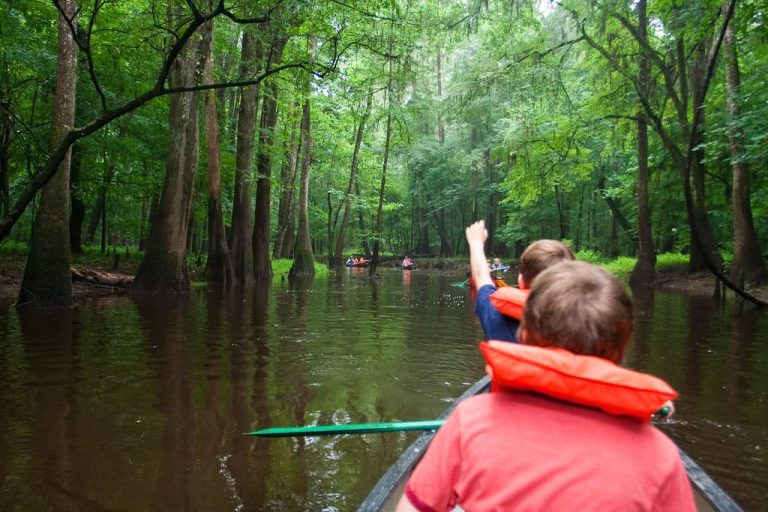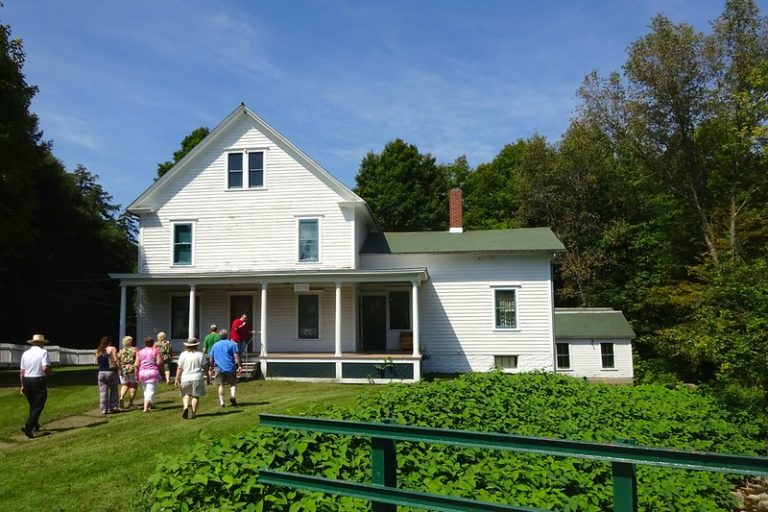

Congaree National Park is the kind of field trip that gets students out of their desks and into a living science lesson. Located just outside Columbia, the park protects one of the largest remaining expanses of old-growth bottomland hardwood forest in the southeastern United States. With towering trees, wetlands, waterways, and an incredible variety of plants and wildlife, Congaree gives students a chance to see an ecosystem working right in front of them. The National Park Service encourages teachers to use the landscape as an outdoor classroom, with opportunities to explore the area’s natural and cultural history.
Field Trip Opportunities
Congaree is asking teachers to contact the park for help planning a self-guided field trip. That may sound a little less structured than a traditional museum visit, but it also gives teachers plenty of freedom to shape the day around their own curriculum. Students can explore the park while observing trees, leaves, birds, water, and other forest features. A walk through Congaree can quickly become a scavenger hunt for different types of leaves, a bird-watching activity, or an investigation into how water moves through a floodplain.
What Students Can Learn
The National Park Service also provides several lesson plans that teachers can use before, during, or after a visit. Current resources include “The Congaree Dash,” “Water You Looking At?” for third grade, “Bird Calls” and “Leaf Classification” for fourth grade, and a Leave No Trace lesson for fourth and fifth grade. These resources give educators an easy starting point for turning a walk through the woods into a more focused science lesson. The park’s educational resources also highlight the area’s cultural history, making Congaree a place where students can learn about more than just plants and animals.
Educational Experiences
There are plenty of ways to keep students engaged before they even arrive. A class could make predictions about what kinds of plants and animals they expect to find, practice identifying leaves, or learn about the way floodplains change over time. During the visit, students could keep a nature journal, sketch something they observe, or record evidence of how water affects the landscape. Afterward, they could create a food web, compare different plant adaptations, or discuss ways people can protect fragile ecosystems. One lesson, “Water You Looking At?,” even connects science and visual art by having students investigate weathering, erosion, and deposition in the floodplain landscape.
Congaree National Park offers something hard to recreate in a classroom: the chance to learn directly from the environment itself. Students can walk beneath enormous trees, listen for birds, examine leaves, and see how water shapes an entire ecosystem. There is no entrance fee to the park, and the National Park Service currently provides teachers with resources to help make a self-guided visit meaningful and curriculum-connected. For a South Carolina field trip list, Congaree is a great choice for teachers who want students to experience science rather than read about it.