What students can learn from stadiums, halls of fame and athletic history
By Christopher D. Silbernagel
Field trips are more than just fun excursions for students, as they help young minds see familiar subjects from a different perspective. Increasingly, some of the Southeastern United States’ most innovative sports venues are doing exactly that. They are transforming stadiums, halls of fame and racing facilities into places where science, engineering, technology, art, history and leadership come to life through dynamic interactive experiences.
Get your free copy of the new Student Travel Planning Guide for expert insight and planning advice.
Sports as an Applied STEM Laboratory
Being an athlete is often the only career path in sports that a child might initially consider, but of course there are many others. Sports depend on professionals who design venues, manage operations, develop technology, produce live events, maintain playing surfaces – yes, there is a degree for that – and analyze performance data, and that’s just a small part of the full scope. Experiences within such a multitude of fields can help students better understand that the sports industry depends on a diverse workforce with backgrounds in engineering, architecture, business, communications, and skilled trades.
But how does taking a group of students to a football stadium or racetrack support what they are learning in the classroom? Sports provide elements that traditional STEM instruction cannot always replicate: an immediate and visible consequence of when the engineering, physics, or math works, or doesn’t.
The Southeastern U.S. has a large variety of destinations that have embraced this interdisciplinary approach with sports STEM and STEAM field trips. Through dedicated educational programming, behind-the-scenes experiences and curriculum-aligned activities, venues can demonstrate how sports reinforce classroom learning while inspiring students to explore future academic and career pathways.
Engineering in Action
Sports can give students numerous opportunities to see STEM principles in action, from designing safer race cars to operating sustainable stadiums.
NASCAR Hall of Fame
Few places do this better than the NASCAR Hall of Fame in Charlotte, North Carolina. This HOF venue’s educational programs for pre-K through 12th grade connect classroom concepts to motorsports through hands-on activities that explore force and motion, engineering design, problem-solving, and career pathways. A project-based workshop for the popular engineering design process provides tools to build custom race cars that children can take home and race.
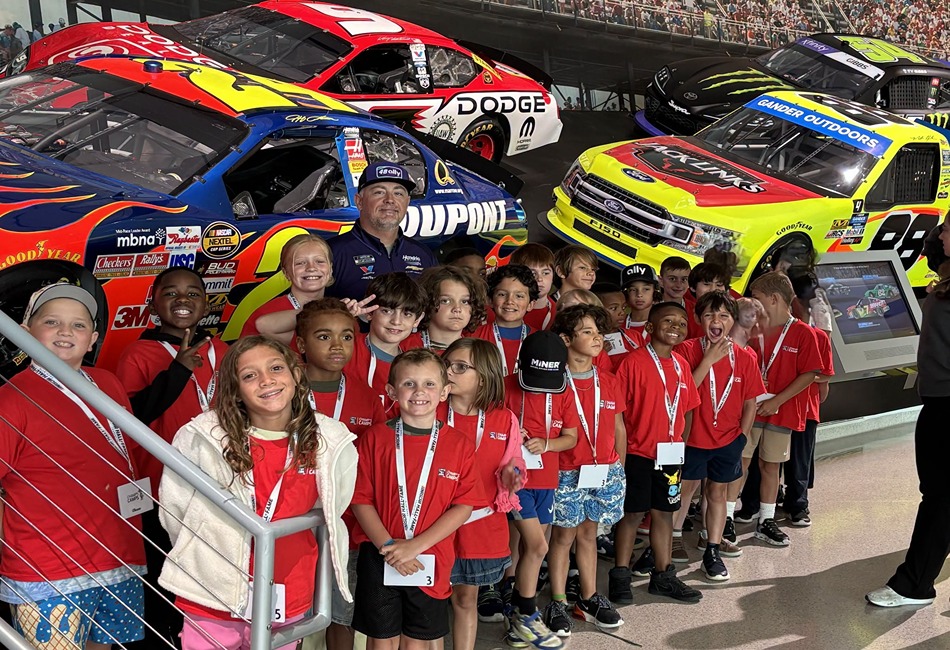
Grade-specific programming includes:
Pre-K – 90-minute, fully staffed STEM sessions focusing on the wheel, incline planes, levers, and axles. Hands-on activities include demonstrating how race cars move on banked tracks and utilizing simple levers and machines.
Grades K-2 – 45-minute Engineering Sessions encourage hands-on experimentation and teach about the engineering of a race car, with interactive experiences in design, engineering, construction, and testing.
Grades 3-5 – 45-minute Science & Math Sessions blend STEM topics such as demonstrating chemical changes and the chemistry of changing states of matter that power a race car with hands-on chemistry workshops.
Grades 6-8 – 45-minute Science & Math Sessions accommodate up to 50 students divided into teams and collaborate on model-based subject matter, including combustion, gases, liquids, and chemical reactions that connect to car movement and measuring the impact of velocity.
Grades 9-12 – 90-minute Chemistry Sessions help high school students understand the heart of the race car: the engine. Groups are encouraged to collaborate in teams and focus on chemistry components and conduct field tests to understand fundamental principles used in race car performance.
With a NASCAR Hall of Fame field trip, students learn that success in racing depends as much on physics, technology, and innovation as it does on the driver behind the wheel.
Learning Connections: force and motion, aerodynamics, engineering design, math, communications and motorsports careers
Charlotte Motor Speedway
Just outside Charlotte, Charlotte Motor Speedway offers students a STEAM program experience like no other that operates year-round. Able to accommodate a minimum of 30 per group, this 3–3.5-hour program includes hands-on STEAM activities, including robotics and aerodynamic experiments. The program also includes the NASCAR track experience with a ride around the 1.5-mile oval and interactive stations to simulate collision force and bring to life racing design concepts.
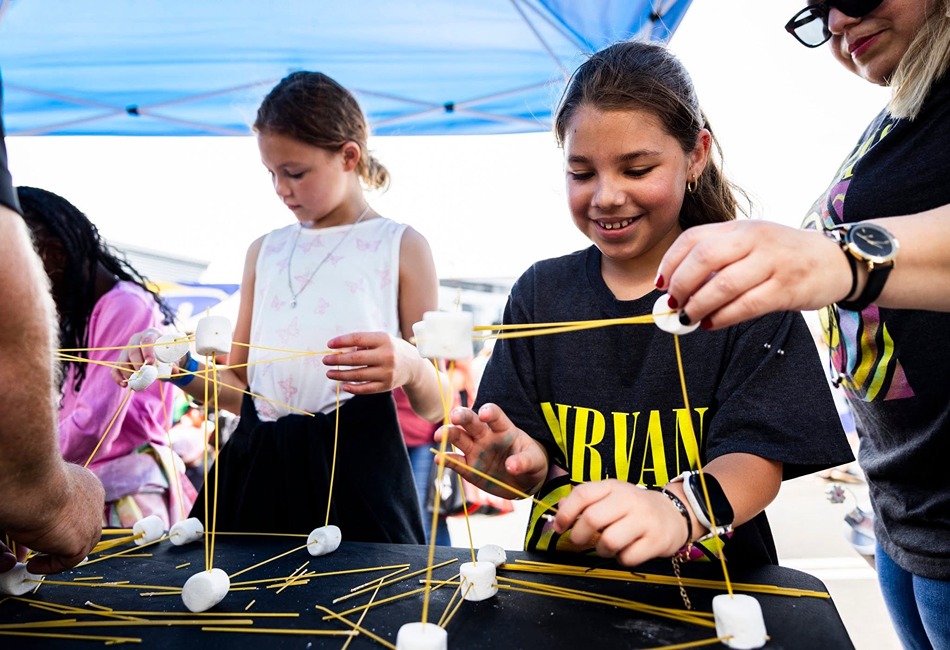
Charlotte Motor Speedway tours give groups a behind-the-scenes glimpse into the history of several tracks, with an in-depth look into what the speedway is like when getting ready to host a NASCAR race event.
Educators interested in a larger event experience focused on STEM learning can check out the Charlotte Motor Speedway STEAM Expo, which is hosted every October. Students in grades 1 through 12 can explore cool chemistry at Lug Nut’s Laboratory, engage in interactive scavenger hunts involving robotics, meet professional drivers and get a close-up look at authentic race cars.
Learning Connections: speed, acceleration, force and motion, traction, engineering design and teamwork
The Venue as a Working Engineering Lab
While sports-related STEM experiences help students gain perspectives on the sports themselves, facility STEM focuses on how different aspects of venues work through all facets of science, technology, engineering and math.
Students can investigate questions such as:
- How do engineers safely remove tens of thousands of people through an avenue?
- How does a retractable roof work?
- What happens to rainwater?
- How is a stadium illuminated?
- How are giant video boards powered and controlled?
- How is a football field or hockey rink maintained?
- How does Wi-Fi serve tens of thousands of users simultaneously?
- How are crowd flow and emergency evacuation calculated?
- How is sound distributed throughout an arena?
- How can a facility reduce waste and energy consumption?
Mercedes-Benz Stadium
In Atlanta, Georgia, Mercedes-Benz Stadium Tours provide four distinct STEAM pathways:
- Engineering & Architecture
- Sustainability
- Technology
- Art
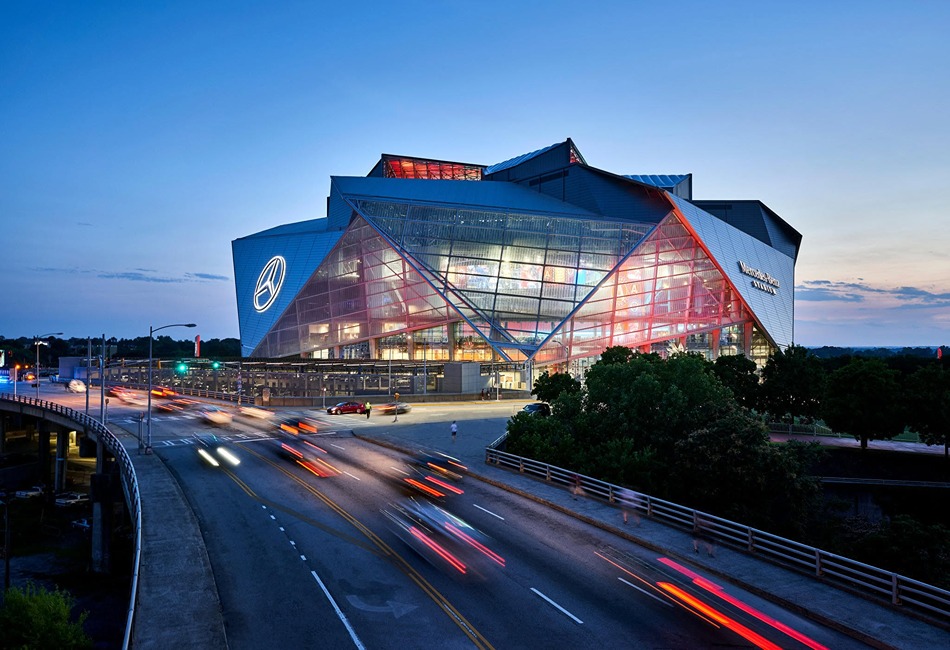
As the first professional sports stadium in the nation to earn LEED Platinum certification for zero waste, ecology and environmental science, Sustainability Stadium Tours cover their zero-waste initiatives, the MBS Urban Garden and solar panel integration.
Students can learn about numerous sustainable topics that focus on:
- Energy – lighting, solar systems and HVAC
- Water – stormwater, irrigation and conservation
- Waste – composting, recycling and zero-waste systems
- Engineering – efficient building systems
- Environmental Science – the carbon footprint of large public facilities
In addition, engineering, architecture, art and technology naturally play a significant role as students study the stadium’s unique features like the retractable “camera lens” roof, the facility’s architecture and its exterior landscaping.
Learning Connections: technology, sustainability, architecture, structural engineering, art/design and environmental science
Daytona International Speedway
Abstract science and math concepts are put into focus at Daytona International Speedway in Daytona Beach, Florida. Schools, homeschools and summer camps can book 60-minute All Access Field Trip/Group Tours that give students a behind-the-scenes look into the “World Center of Racing.”
Depending on track schedules, groups can visit the historic start/finish line, explore Victory Lane and ride along pit road for immersive experiences before continuing to the Motorsports Hall of Fame of America (MSHFA). Daytona’s racing history and unique 31-degree banked turns provide natural starting points for open discussions focused on speed, geometry, force and engineering.
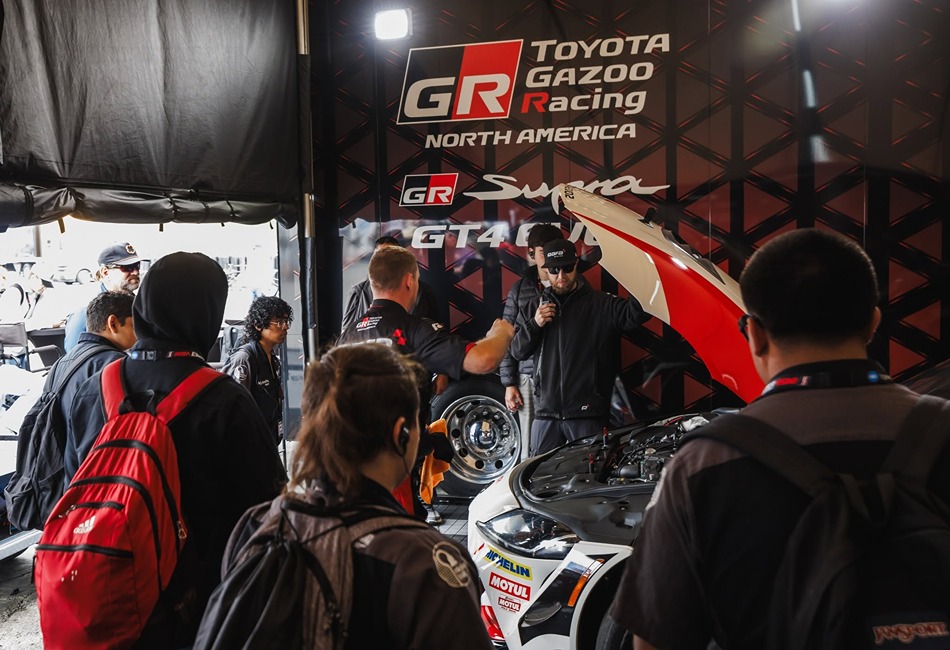
Dig deeper into motorsports STEM connections via a separate initiative offered by the International Motor Sports Association (IMSA). Launched in 2025, in partnership with education tech company EVERFI, IMSA STEM is a free curriculum that introduces high school students to physics, engineering, technology and data science concepts using sports-car racing. In its first year, IMSA STEM reached more than 420 schools, 14,000 students and nearly 500 educators, and continues to expand and grow in 2026.
Students can explore distinct topics such as:
- Tires, traction and tread
- Hybrid technologies used in Grand Touring Prototype cars
- Data-driven racing
- Safety engineering and material science
Learning Connections: force, speed, banking and geometry, motorsports, engineering, history and career exploration
Beyond STEM: Leadership, Finance and Career
Readiness: Many sports venues also use athletics as a framework for developing leadership, teamwork and the interpersonal skills required for certain career paths within the sports industry.
College Football Hall of Fame
The College Football Hall of Fame in Atlanta demonstrates that approach through its Curriculum Playbooks, focusing on four unique educational themes:
- STEAM – connecting art and design
- Technology – focusing on football physics and data collection
- Social Justice – educating on community and social issues
- Financial – delving into early financial planning tools
These downloadable educational resources help prepare groups for their experience and teach about unique aspects of the industry that students may be unaware exist. Students can also interact with fun exhibits that let them step into industry roles, such as being a sports broadcaster.
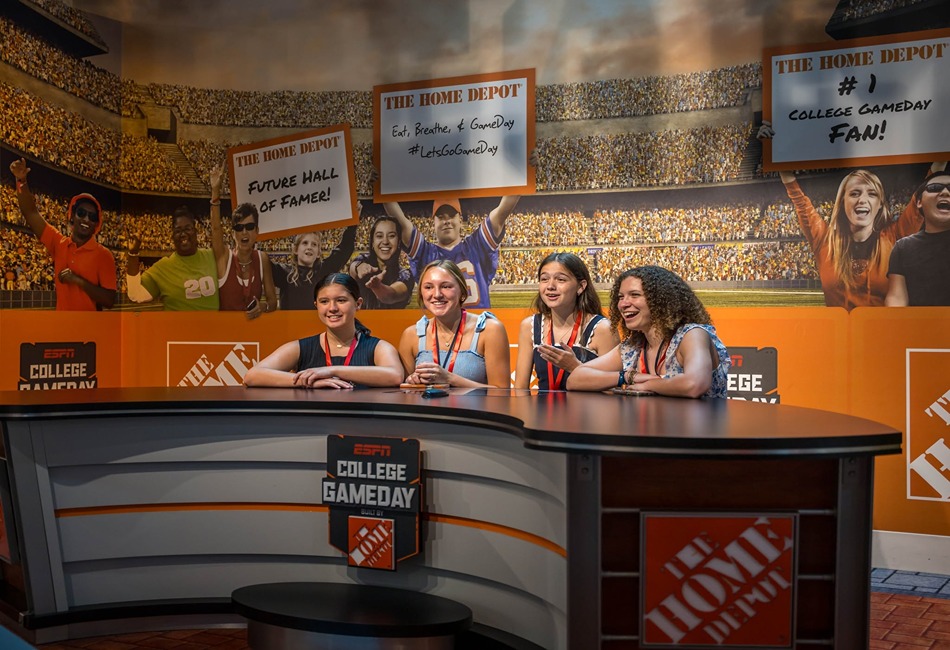
Learning Connections: technology, STEAM, civil/social issues, history, teamwork, leadership, and financial literacy
Learning During the Game
Educational game-day experiences not only immerse groups in the action of sports, but they provide tangible and visual connections to STEM topics in real time.
School Game Day at Kia Center
During the Orlando Solar Bears’ annual School Day Game at Kia Center in Orlando, Florida, K–12 students will experience professional hockey through an educational lens. Previous School Day curricula have connected the game with science, math, and geography, allowing teachers to explore concepts such as speed, friction, angles, and distance while students watch those principles unfold on the ice.
Learning Connections: geometry, measurement, force and motion, friction, statistics and geography
Careers Behind the Scoreboard
Do you have students who love sports but don’t necessarily plan to become an athlete? That’s okay because they can explore numerous careers throughout the industry that don’t require athleticism. A sports facility can expose students to the following career pathways:
- Architects and structural engineers
- Mechanical and automation engineers
- Software / IT specialistsData analysts
- Environmental and sustainability professionals
- Turfgrass and grounds-management specialists
- Sports medicine professionals and athletic trainers
- Graphic designers
- Camera operators and broadcast engineers
- Audiovisual technicians
- Electricians / HVAC techs
- Commentators/journalists
- Hospitality professionals
- Event managers
- Security and emergency-management personnel
- Finance professionals
- Marketing and sponsorship teams
Make the Field Trip Part of the Curriculum
Get students ready for an educational journey by incorporating useful questions and activities before, during, and after the field trip.
Before the Trip
Ask students to investigate important questions they can get answers to during the experience. For example:
- How is friction beneficial in hockey?
- Why are racetracks banked?
- What forces act on a race car?
- What statistics do coaches and teams track?
- How does a retractable stadium roof distribute weight?
- How many various occupations are required to stage one professional sporting event?
During the Trip
An ideal student assignment during a sports and STEM field trip can be to ask learners to identify three STEM careers they encounter and record the necessary education or skills each requires. This helps them connect STEM topics to different careers in the sports industry.
After the Trip
Potential post-field trip activities might include:
- Create a race car prototype
- Design a more sustainable stadium
- Analyze sports statistics
- Create a sports event budget
- Calculate speed or acceleration
- Research one sports industry career
- Produce a mock TV sports broadcast
Beyond the Big Leagues
STEM learning doesn’t only happen at marquee venues. A venue doesn’t need an NFL logo or NASCAR race to become an effective sports STEM classroom. Local and collegiate facilities can provide similar opportunities to study facility design, turf science, statistics, sports medicine, broadcasting, and event operations.
- minor-league baseball stadiums
- collegiate athletic facilities
- recreation complexes
- sports museums
- motorsports facilities
- aquatic centers
- Olympic/training centers
Planning a Sports STEM Field Trip
There are vital questions educators should inquire about before booking a stadium or venue experience. Asking these questions before booking will help educators know exactly what to expect, how classroom curricula will be connected to hands-on experiences, and what paperwork is required.
- Which grade levels does the program serve?
- Is the curriculum aligned with state or national standards?
- Are experiences guided or self-guided?
- Does the facility offer teaching materials for pre-trip engagement?
- How much of the program is hands-on?
- What, if any, is the minimum/maximum group size?
- How much time should groups allow for the experience?
- Can the facility accommodate buses?
- Is there a lunch space available?
- What are the chaperone requirements?
- Are accessibility services or accommodations available?
- Are waivers required?
- Do programs change during event days?
PRO TIP: For teachers, administrators, and group leaders planning a sports/STEM educational trip, the Sports Planning Guide offers another great starting point for nationwide sports facilities and group experiences they may offer.
Connecting Sports and Education
As personal interests for students can vary greatly, along with educational goals and classroom curricula, educators are always looking for new and unique ways to bring learning concepts to life on field trips. Sports venues across the Southeast can provide that needed experience that goes far beyond just entertainment and souvenirs, with sports interests and learning objectives that stretch outside professional and collegiate athletes. Students of all ages can explore unparalleled backgrounds where sports, engineering, architecture, design, art, groundskeeping, and other fields come together.
Plan smarter trips. Create meaningful experiences. Subscribe to the Student Travel Pro newsletter, free