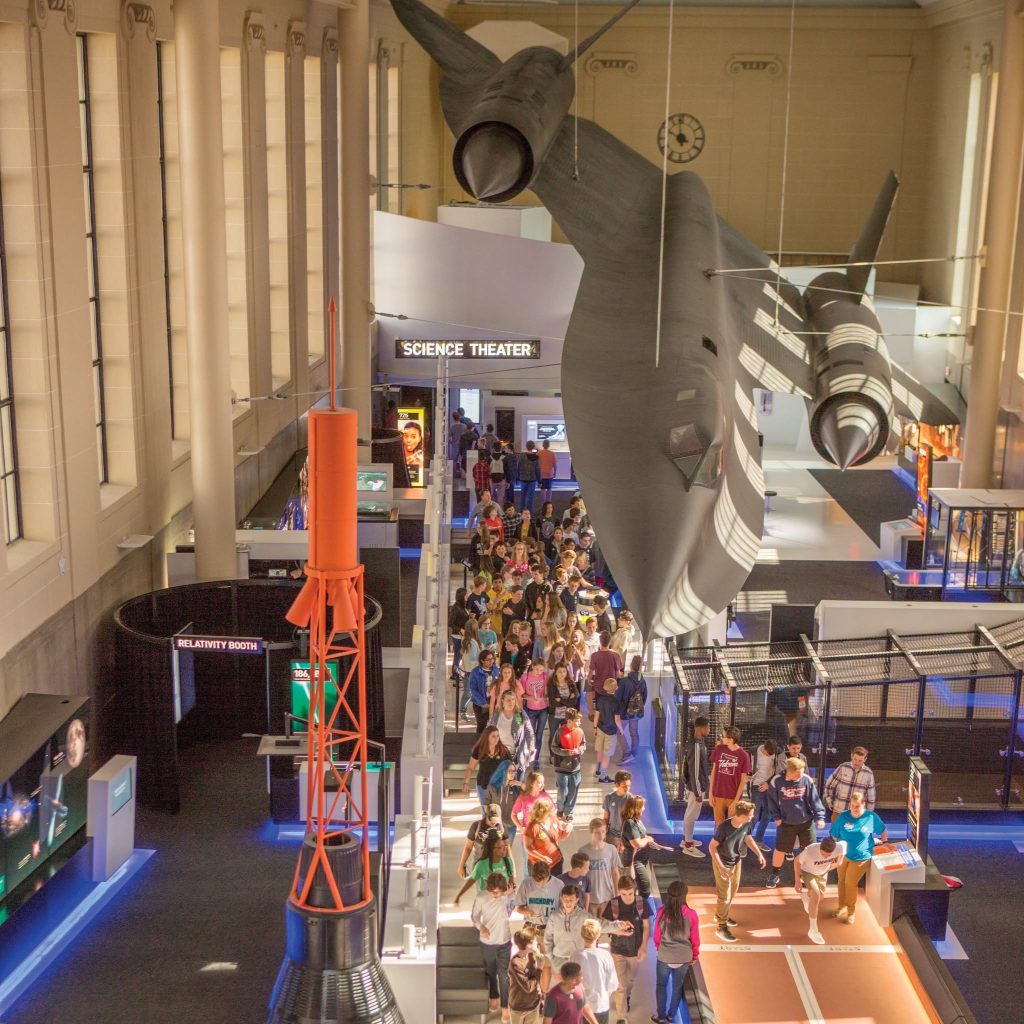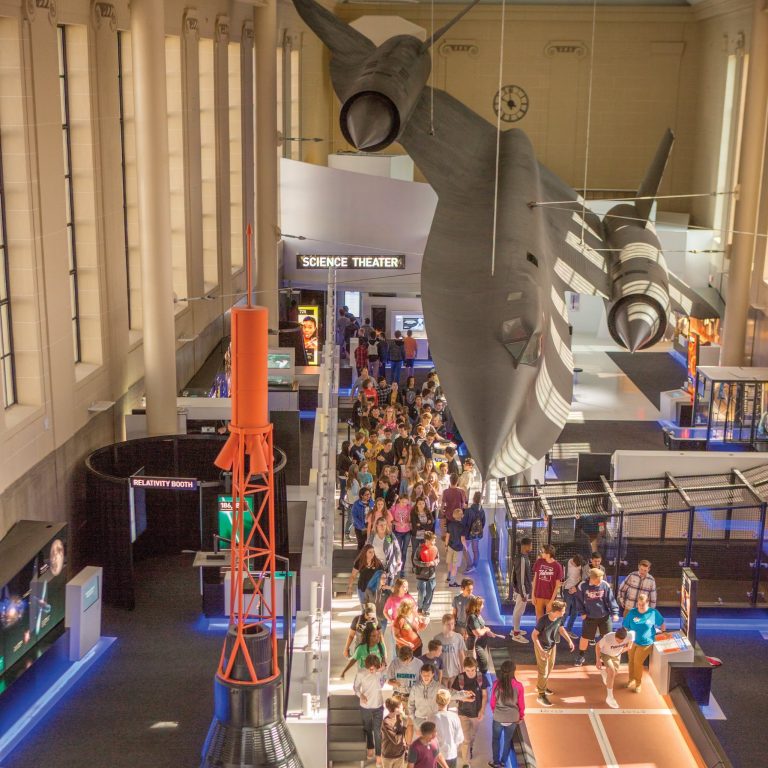

The Science Museum of Virginia in Richmond is a field trip that gives students plenty of reasons to get curious. With interactive exhibits, hands-on labs, live demonstrations, and spaces dedicated to making and experimenting, the museum gives students a chance to see how science, technology, engineering, and math show up in everyday life. There is a lot to explore, so students can move from learning about animals and the human body to exploring space, engineering, and the natural world, all in one visit.
Field Trip Experiences
Field trips can be customized depending on what a class is studying. Students can explore the museum’s exhibitions, take part in a live science demonstration, or work together during an Engineering Challenge Lab. These labs ask students to investigate a scientific idea and then plan, build, test, and improve their own solutions. The museum also offers Science on a Sphere, a room-sized animated globe that students can use to explore topics such as weather, Earth science, volcanoes, and the solar system. For students who love space, The Dome offers astronomy shows, while giant-screen films provide another way to explore science and the world around them.
For educators, the Science Museum of Virginia makes it easy to build a visit around classroom goals. The museum offers dozens of customizable options, and its programs support the scientific investigation, reasoning, and logic strands of the Virginia Standards of Learning. Teachers can combine exhibits with live science programs, workshops, Dome experiences, and other activities based on their students’ needs. The museum also provides a Field Trip Guide to help teachers plan their day, and educators can receive free general admission with a school ID during regular museum hours, giving them a chance to explore before bringing their class.
What Students Can Learn
Teachers can also turn a museum visit into a lesson that continues back at school. Before the trip, students could predict a science demonstration or choose a topic to investigate while exploring the exhibits. During an Engineering Challenge Lab, students can reflect on how their first design works and what they would change if they had another chance. After the trip, they could write about their favorite experiment, create their own engineering challenge, or research a question that came up during the visit. Students interested in nature can also use the museum’s Green Guide Nature Journal to make observations and record what they notice about their environment.
Live Virtual Field Trip Options
If getting to Richmond is not possible, the Science Museum of Virginia can also bring some of its programming directly into the classroom through Digital Demos. These live virtual lessons are interactive, with hands-on activities, demonstrations, and questions that engage students. Programs range from science demonstrations to activities focused on anatomy, chemistry, and physics, and sessions can be adjusted to fit different learning levels.
The Science Museum of Virginia is a great option for teachers who want students to learn by doing. With interactive exhibits, engineering challenges, live experiments, and immersive Dome experiences, students can explore science without spending the entire day sitting and listening. The museum also gives teachers the flexibility to build a visit around their curriculum, making it useful for everything from a general STEM adventure to a field trip focused on a specific science topic. With so many ways to experiment, build, and explore, students can leave with more than a few fun memories and hopefully a little more curiosity about how the world works.