
Magical history through extraordinary exhibits at the Salem Witch Museum
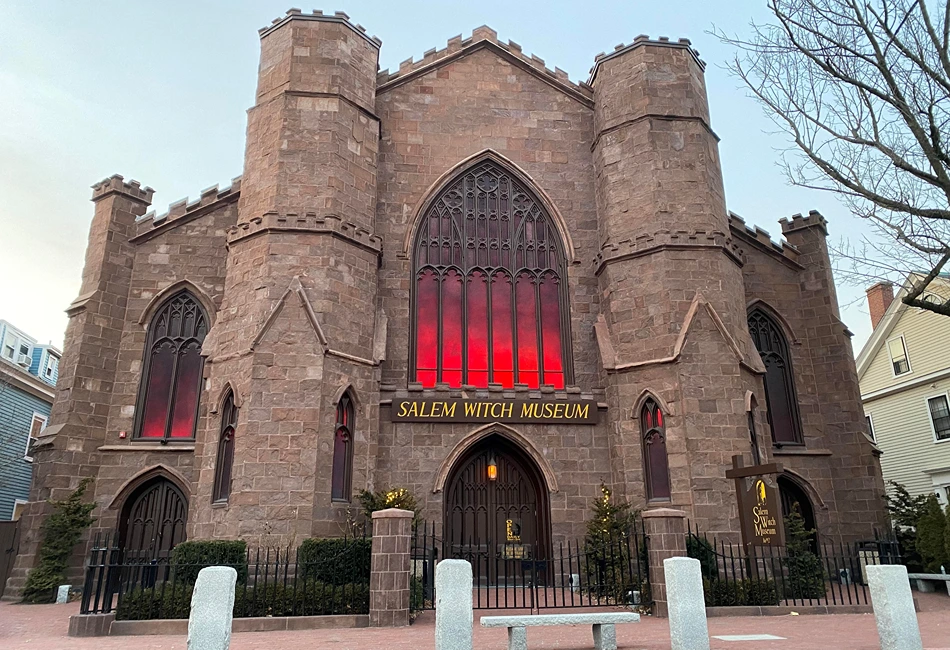
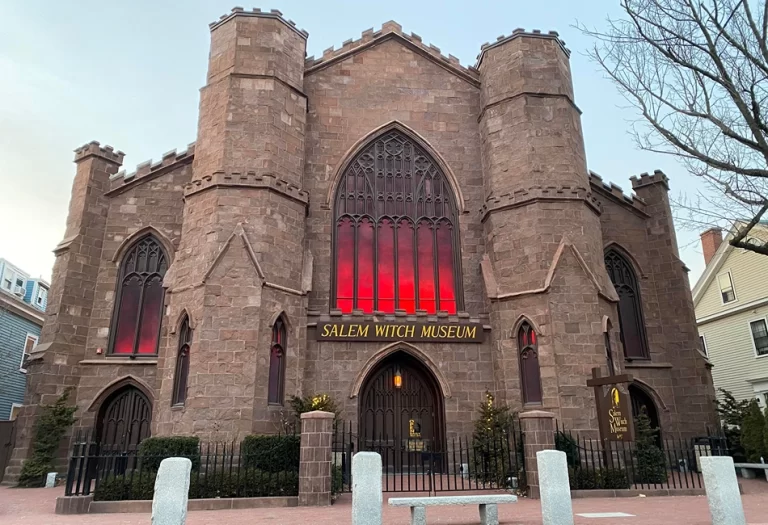
This is a very special year to visit Salem, Massachusetts. Not only is it the 250th anniversary of the Revolutionary War and our country’s independence, but 2026 marks the 400th anniversary of the founding of Salem. Discover a pivotal moment in our history at the Salem Witch Museum.
Captivating Stories
The Salem witch hunt of 1692 was a defining moment in our country’s early history. These were the largest and deadliest witch trials in colonial North America. In just over a year, nineteen innocent people were hanged, an elderly man was tortured to death, five died in prison, and approximately 150 men and women were arrested throughout the colony. The lessons of this history remain relevant to this day, as we continue to witness scapegoating during times of great fear.
Thought-Provoking Programs
Within only a few generations, the same families drawn into these devastating events fought with colonial forces during the War of Independence. As part of our ongoing work with descendants, we will present a virtual lecture this fall entitled “Our Founding Mothers and Fathers: More Revolutionary War Connections to the Salem Witch Trials.” This free program will discuss four individuals drawn into the Salem witch trials whose descendants participated in the Revolution.
What will you see during a visit to the Salem Witch Museum?
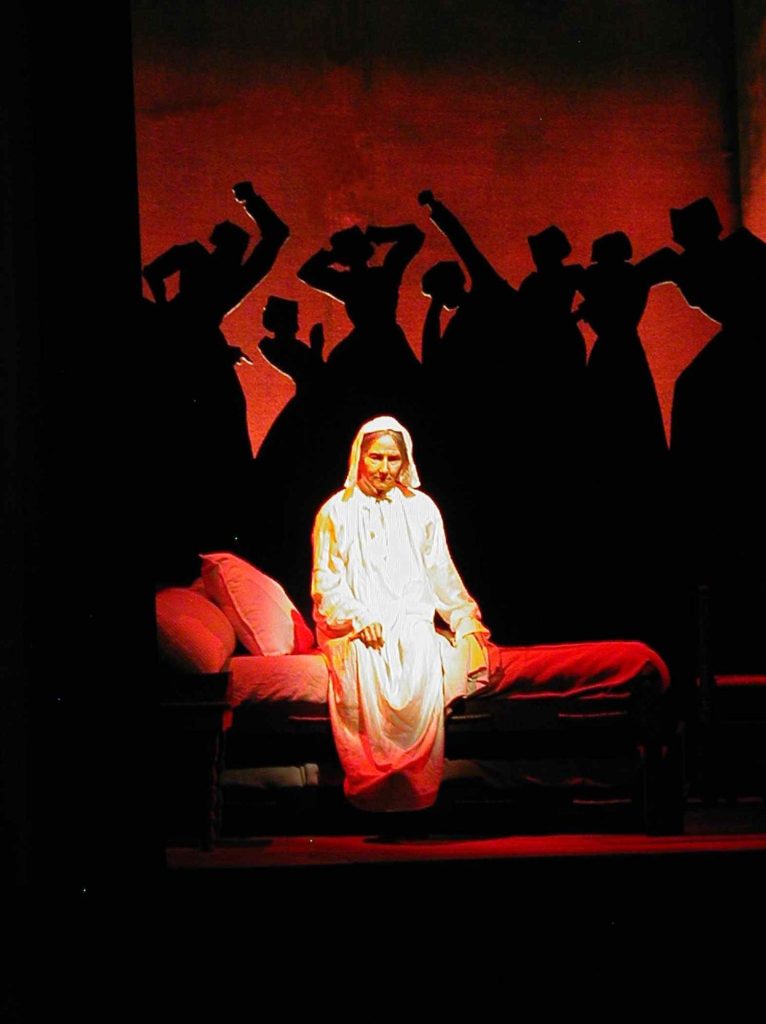
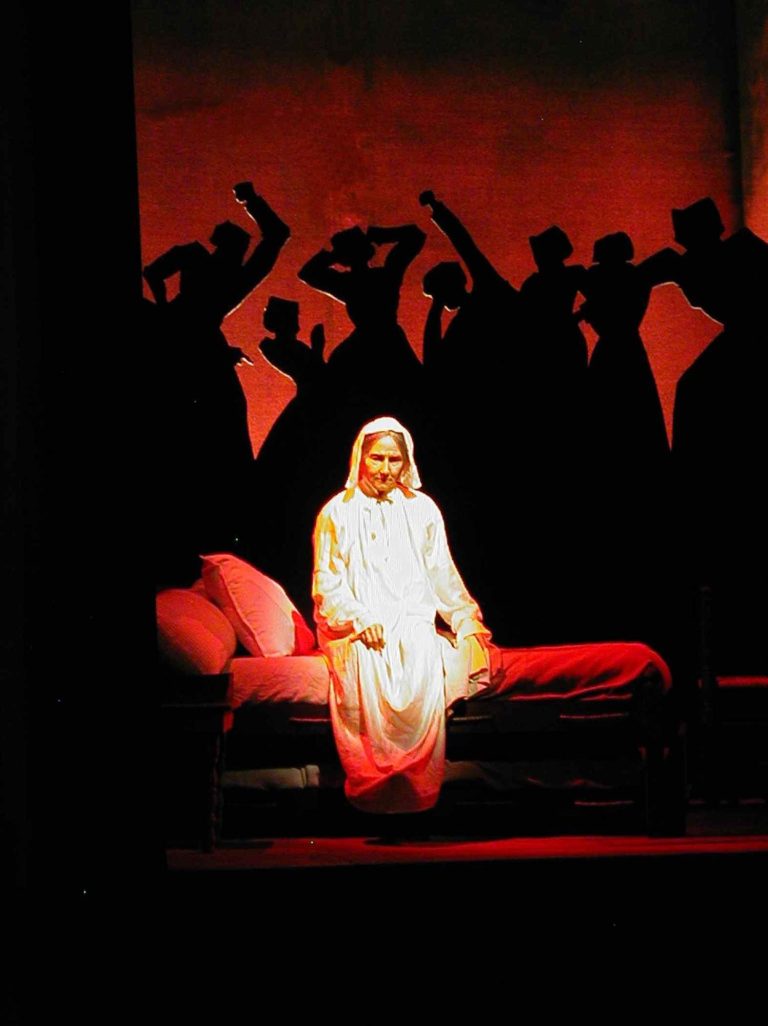
Two unique exhibits delve into the fascinating history of witchcraft. In our main theater, visitors are immersed in the world of 1692 Salem, as an audio-visual experience presents the story of these tragic events. Thirteen life-size stage sets, human figures, flashes of lightning and narration illustrate the web of lies and intrigue of this infamous witch-hunt.
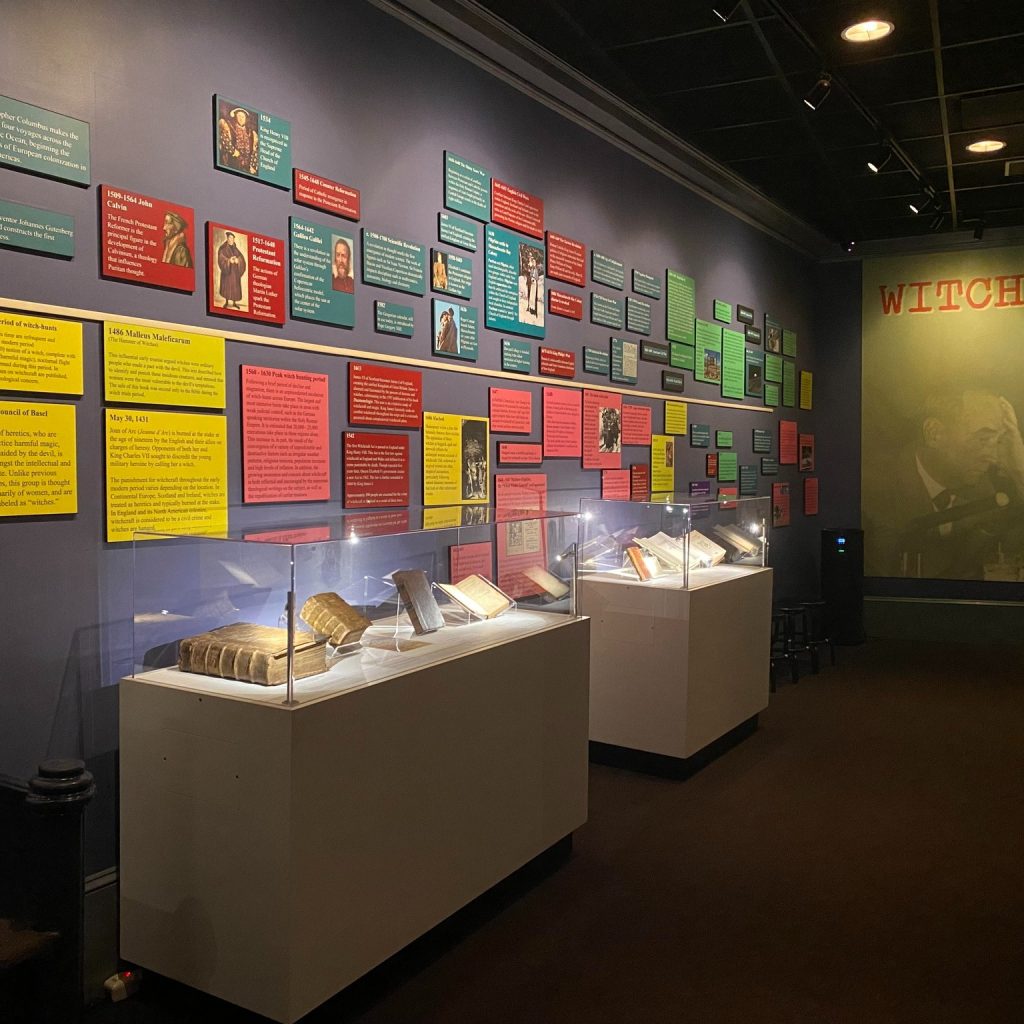
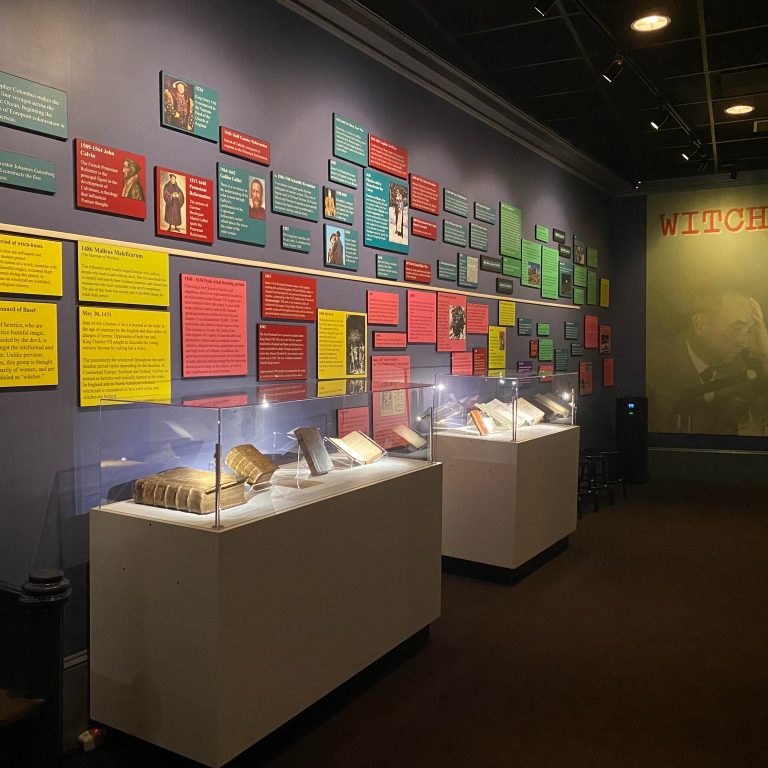
A guided tour of a second exhibit, Witches: Evolving Perceptions, highlights the long history of the witch, from its dark origins to modern definitions. View real artifacts from the witch trials period, including an infamous witch hunter’s manual, a 17th-century witch’s bottle, and artifacts from the home of one of the victims of the Salem trials.
The exhibit also includes several objects relating to the Salem witch trials of 1692. These include a signed 1650 edition of A Large and Complete Concordance to the Bible owned by witch trials Judge Samuel Sewall as well as a number of artifacts discovered on the property once owned by Elizabeth and James How. Elizabeth How was one of the 19 innocent people hanged during the Salem witch trials. While the recovery of seventeenth century artifacts is always remarkable, the discovery of items connected to a victim of the Salem witch trials is exceedingly rare. Only a handful of personal items from the individuals executed during this witch hunt have been preserved over the generations. Items now on display at the Salem Witch Museum include a clay pipe, a pewter spoon, a glass bottle neck, pewter buttons, a buckle, and shards of glass (likely from a window).
Meet Salem’s Founder
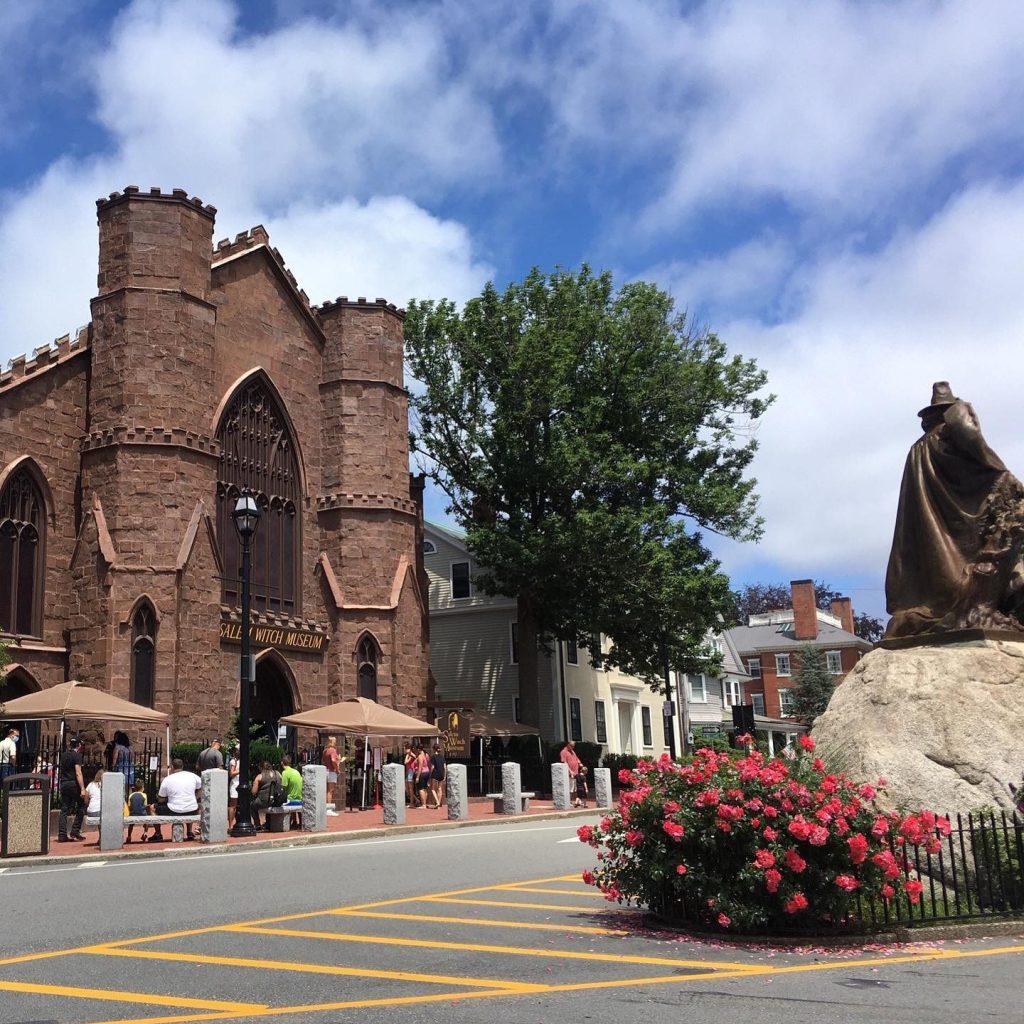
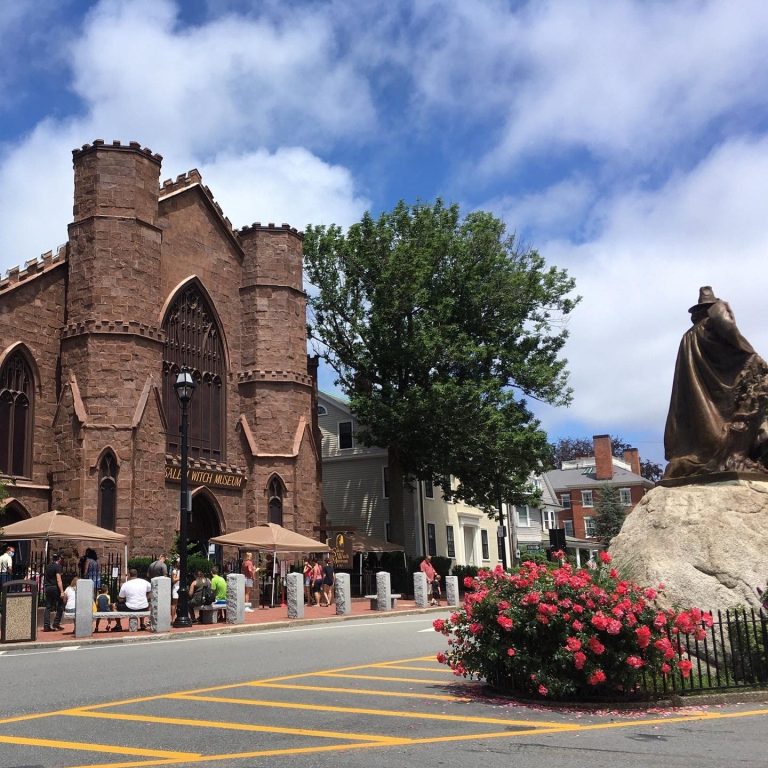
And don’t miss the statue in front of our building! Sometimes mistaken for a witch because of his colonial garb, this monument honors Salem’s founder, Roger Conant. First arriving on this shore in 1626, Conant and his associates came from a fishing settlement in Cape Ann. Originally called Naumkeag, meaning “fishing place,” the new community was renamed Salem, “City of Peace.” For more information, visit www.salemwitchmuseum.com
For more information, visit our website www.salemwitchmuseum.com.