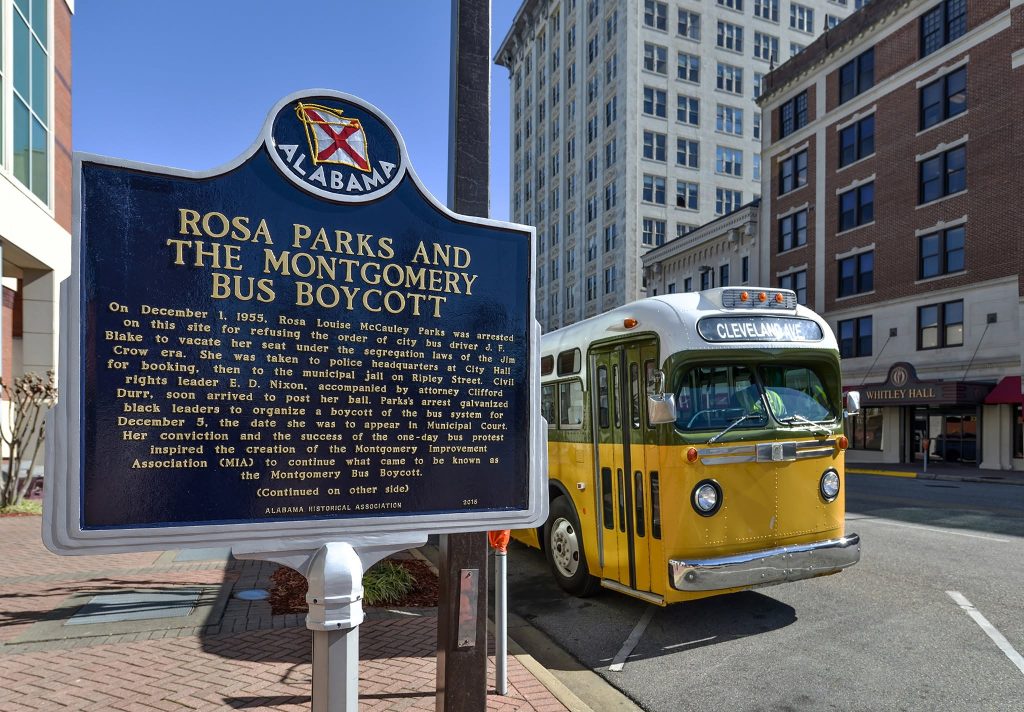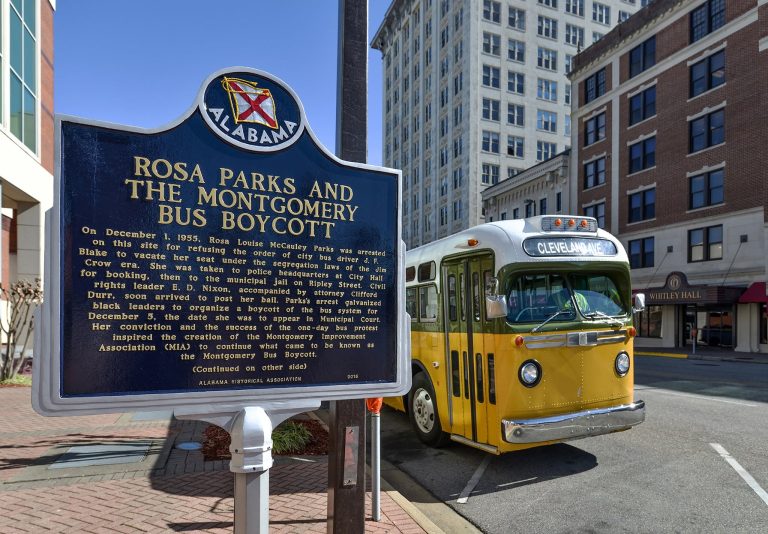

An active memorial to one of the Civil Rights Movement’s most iconic historical figures, the Rosa Parks Museum encourages students not just to learn about history—but to experience it. Born in 1913, Rosa Parks lived a fairly uneventful life. Then, in December 1955, she became a turning point in the ongoing fight for racial equality when she refused to get up from her seat on a bus. While Rosa Parks was not the first person who peacefully sat on a bus in protest of unfair treatment — and wasn’t even the first to be arrested for it in Montgomery — it was Rosa Parks’ arrest and subsequent court appearance that led to the Montgomery Bus Boycott.
Educational Experiences
Students will learn not just about Rosa Parks’ life but her role in a larger movement, and how simply refusing to give up a seat on a bus sparked so much more. Examine local history through informative lessons on life in 1950s Montgomery and the social and political climates that shaped everyday life. Learn about the impact of Jim Crow laws on the South and in Montgomery specifically to get a more well-rounded understanding of why protesting was necessary. Explore the stories of those who fought for change and how protesting and boycotting buses were part of changing the laws around segregation.
Their permanent exhibitions are designed to immerse students in history, helping them gain a fuller education on Rosa Parks and the Civil Rights Movement. Their rotating exhibits focus on Montgomery’s past, current social and political topics, and highlight modern artists and authors. Storytelling is more than what students read here; it is interactive, bringing stories to life and inviting deeper engagement with local history. Educational programming encourages students to connect what they learn here to classroom learning and beyond.
Age-Appropriate Opportunities
Visit the main wing of the museum to witness Rosa Parks’ arrest. View a big piece of Montgomery history with a 1955 city bus on display. Or check out the dedicated Children’s Wing, which highlights the museum’s commitment to education at every level. This approachable, hands-on environment engages young minds with the important history lessons throughout the museum. With a time machine, children can travel back to the 1800s to learn about Jim Crow laws as they “meet” historical figures from that time.
Rosa Parks is an important historical figure, and while her small act of protest is often taught in schools through textbooks, this museum highlights the bigger picture. Montgomery and Rosa Parks are pivotal to the Civil Rights Movement, and through a trip to this museum, students can gain a deeper understanding of how bus-based protests were the catalyst for real change in this city.