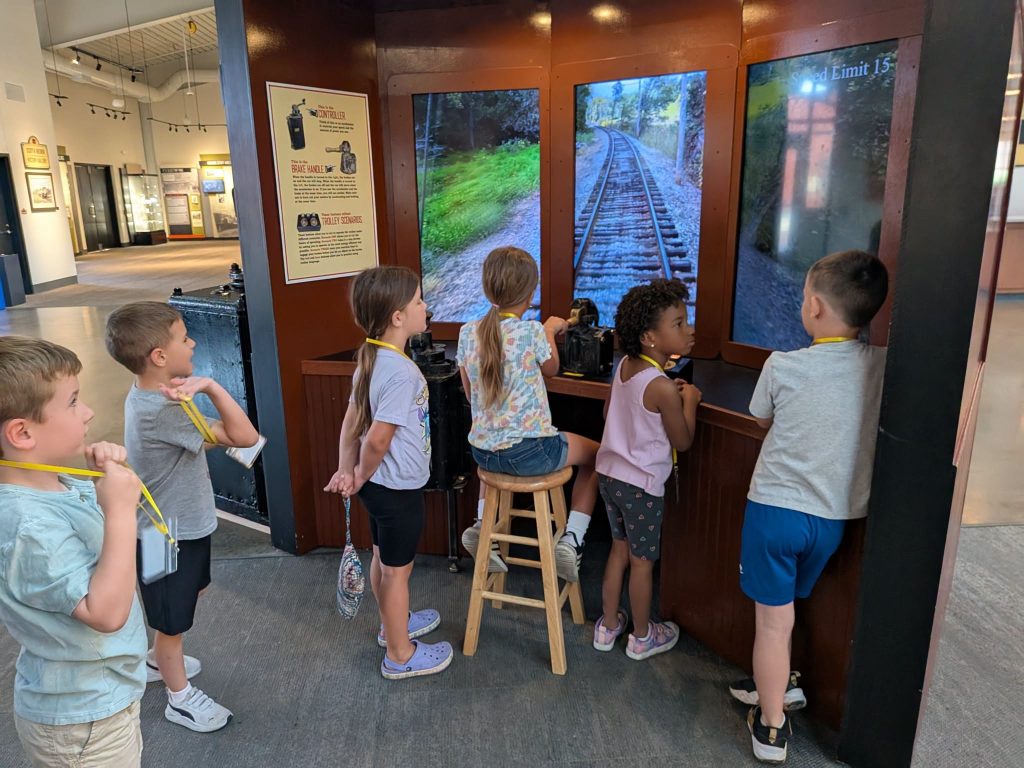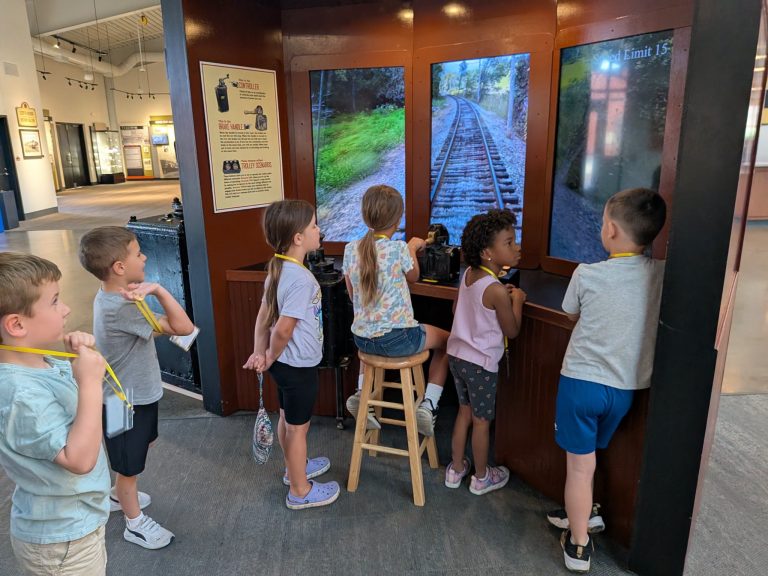
Discover history in motion at the Pennsylvania Trolley Museum, where a field trip combines an actual ride aboard a historic streetcar with hands-on exhibits, guided interpretation and optional STEAM activities. Programs serve pre-K through grade 12 and align with Pennsylvania Core Standards. A standard visit includes time in the 21,000-square-foot Welcome and Education Center, an interactive guided tour of the Trolley Display Building and a roughly four-mile round-trip ride on a restored streetcar. Optional classroom modules let students investigate electricity, chemistry, geometry, transportation design and urban planning, turning the trolley era into a springboard for STEM, art and social studies.
What Students Will Experience
The centerpiece of a field trip is the chance to ride a real historic trolley. Students experience the movement, sounds and scale of electric streetcar transportation while learning how trolleys once connected neighborhoods, workplaces, shopping districts and recreation areas.
Inside, the Welcome and Education Center features hands-on exhibits on the Trolley Era and transportation technology. A guided tour through the Trolley Display Building gives students a closer look at preserved streetcars while educators explain how vehicle design, electricity and urban transit evolved over time.
Teachers can make the trip even more interactive by adding a STEAM module. Streetcar Slime, for grades 1–5, introduces states of matter and the scientific method before students make trolley-inspired slime to take home. Circuits 101, for grades 3–5, asks students to compare conductors and insulators and then build a functional simple circuit using conductive dough.
For kindergarten through grade 5, Brick Station uses LEGO-style building challenges to explore geometry, transportation and engineering. Older students in grades 6–12 can tackle Future City Planners, a 60-minute collaborative activity where teams use science and math concepts to design their own vision of a future city while considering what historic urban development can teach them.
These add-ons help students see that trolley history is not simply nostalgic. Streetcars connect directly to topics such as electricity, land use, urban planning, engineering and how transportation influences where people live and work.
Curriculum & Grade-Level Connections
All on-site programs serve pre-K through grade 12, while off-site school programs are currently available for pre-K through grade 5. The museum also offers virtual field trips for all grade levels.
Younger students can focus on transportation basics, community connections, motion and the visual differences among historic streetcars. Elementary learners benefit especially from the hands-on STEAM modules, which connect the museum’s vehicles to science and engineering concepts they already encounter in school.
Middle school students can investigate electricity, urban growth and technological change, while high school groups can use trolley history as a case study in city planning, infrastructure and the relationship between transportation systems and development.
The museum’s programs align with Pennsylvania Core Standards, and many STEAM modules integrate multiple disciplines at once. Future City Planners, for example, combines social studies, history, mathematics, science, engineering and transportation technology.
Virtual programming provides another useful extension. Trolley Talk, available for all grades, uses a virtual ride, artifacts and views inside the Trolley Display Building to examine Pennsylvania history, electricity, engineering and transportation technology. Virtual sessions last roughly 30–60 minutes and can be modified for classroom needs.
Planning Your Visit
A standard field trip lasts approximately 1½ to two hours. Adding a STEAM module extends the visit by either 30 or 60 minutes, depending on the activity.
Regular field trips are offered Monday through Friday from January through November, beginning at 9 a.m. Reservations should be submitted at least four weeks in advance, and dates are assigned on a first-come, first-served basis.
Schools must provide at least one adult for every 10 students. One historic trolley holds about 50 people; larger groups can be divided among multiple vehicles and rotations.
Outside food is allowed, but students cannot eat or drink inside trolley cars or the Trolley Display Building. An outdoor picnic area is available for brown-bag lunches, while indoor lunch seating may be available by advance arrangement for an additional fee. There is no cafeteria.
The museum asks participants to wear comfortable, closed-toe shoes because field trips are active and include outdoor portions. Historic trolley cars may have high steps, though the museum says it can adapt field-trip programs for visitors with disabilities. Teachers should note access needs when booking so staff can arrange the best possible experience.