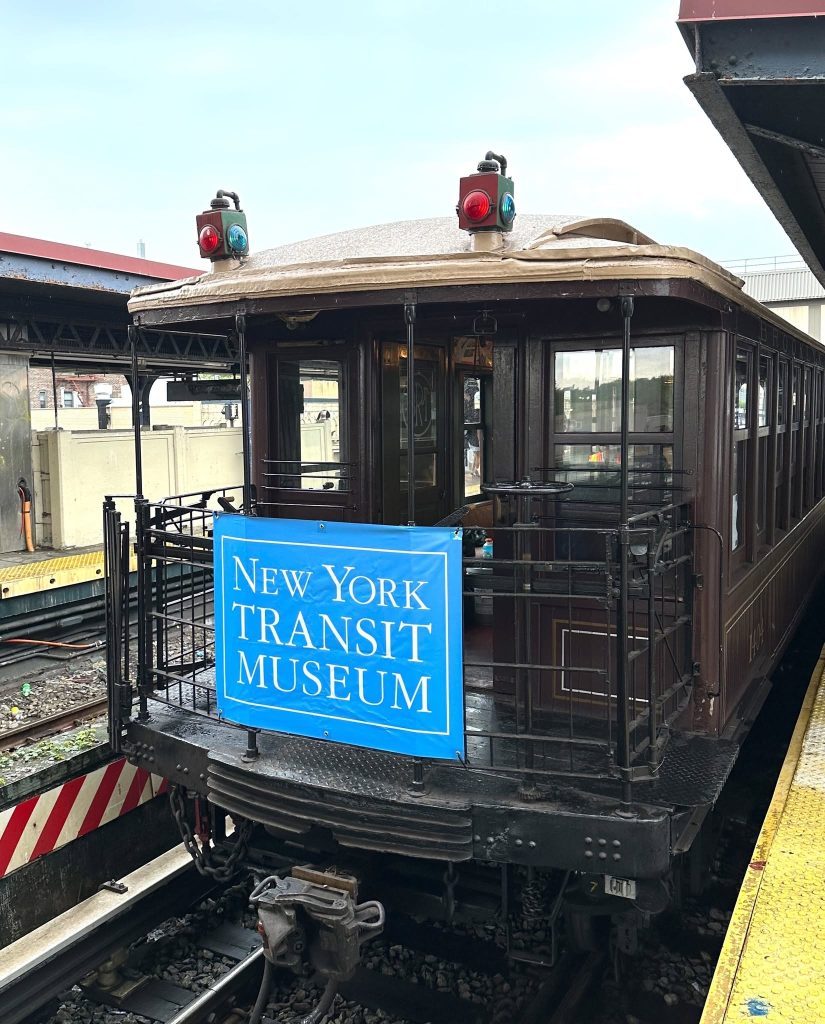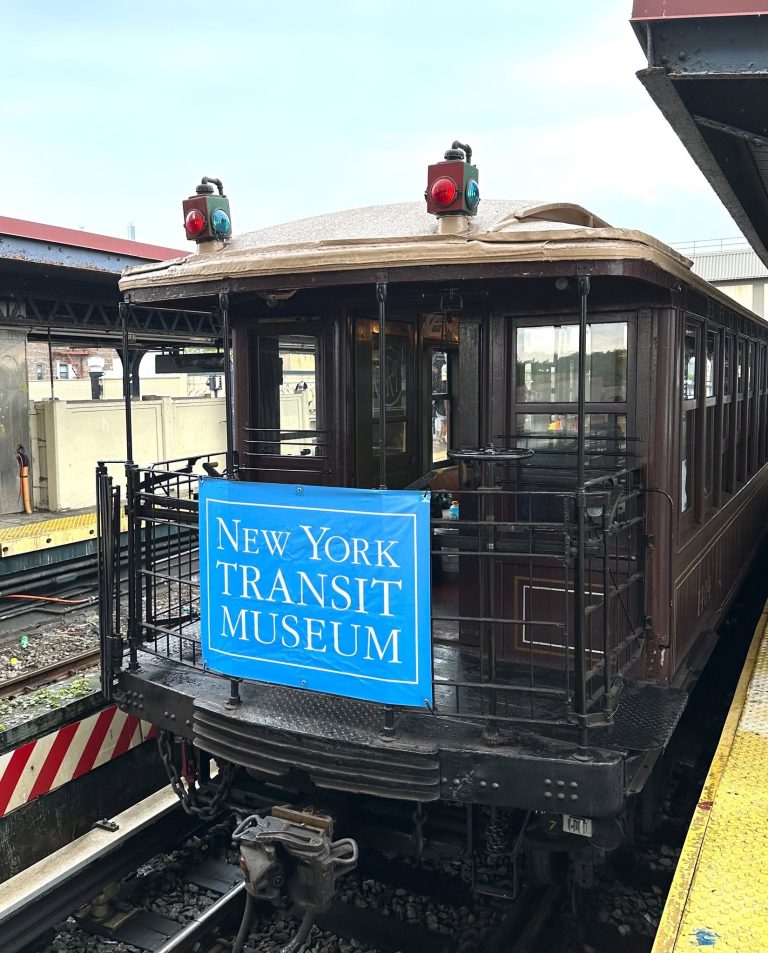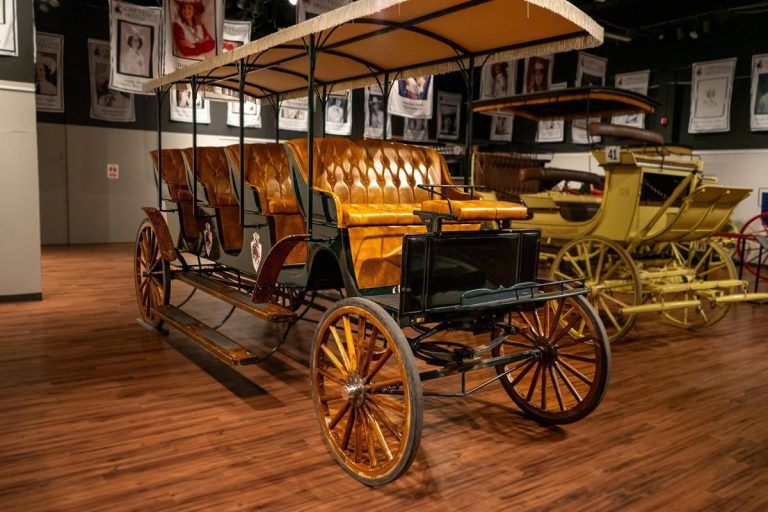
Housed inside the historic decommissioned Court Street subway station, the New York Transit Museum turns transportation history into an immersive classroom. Students descend into a former subway station filled with vintage vehicles, archival photographs, signs, objects and exhibits tracing how mass transit helped shape New York City. Staff-led school tours last approximately 60 minutes and combine inquiry, observation and hands-on activities. Programs span pre-K through grade 12, with younger students exploring transportation through movement, storytelling, and sensory encounters, and older learners investigating engineering, public art, transit workers, technological innovation, and civil rights. School and youth groups must reserve in advance; self-guided school visits are not permitted.
What Students Will Experience
The museum’s historic setting is part of the experience. Students walk through the mezzanine and platform areas of an actual former subway station before entering a collection of vintage railcars representing different periods of New York transit history. This makes changes in vehicle design, signage, seating and technology easy to see and compare.
For pre-K and kindergarten, Rails & Roads introduces children ages 3–6 to public transportation through singing, story time, movement, play and tactile exploration. Students encounter vintage trains while building a basic understanding of how transit works and how people use shared transportation systems.
Journey to the Past, for grades 1–12, uses storytelling, objects and inquiry to examine New York transit during the late 19th and early 20th centuries. Students learn about inventors, construction workers, transit employees and civil rights activists who helped shape the system.
For grades 4–12, Moving the Millions shifts toward engineering and problem-solving. Students examine how the subway was constructed, how railcars evolved and how engineers addressed transportation challenges in a dense and growing city. Hands-on activities encourage students to brainstorm solutions rather than simply observe historic technology.
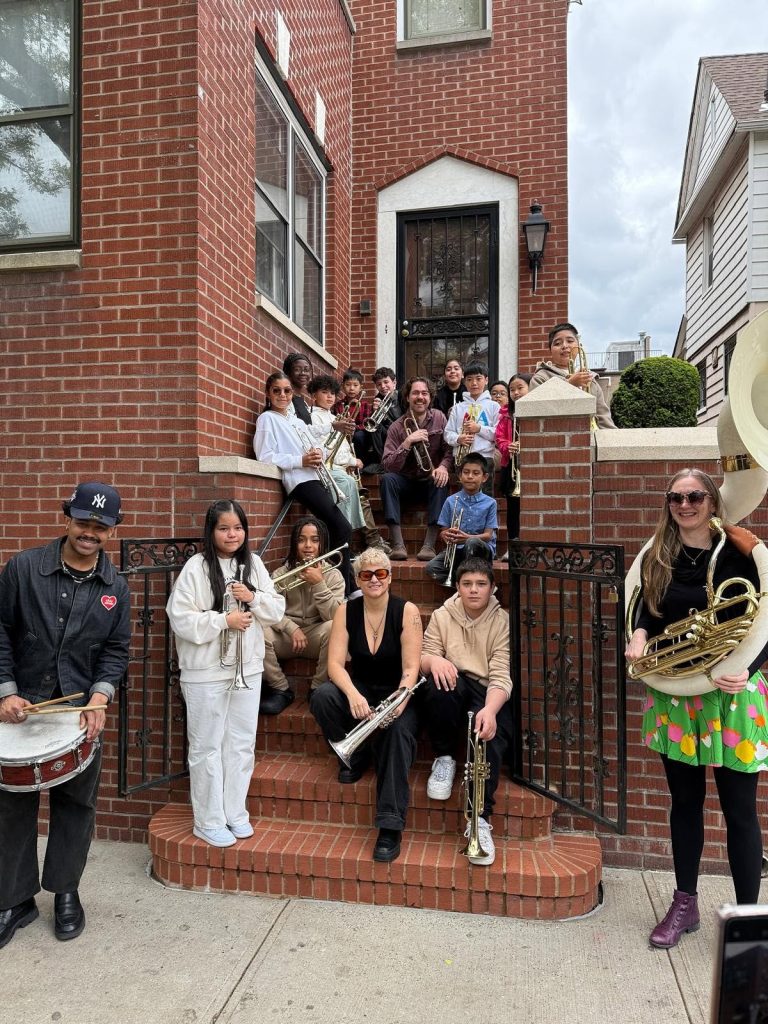
Art on the Go, available for K–12, explores the visual art, poetry, music and design found throughout New York’s transportation network. The program lets art and humanities teachers use transit to explore public space and creative expression.
The museum also offers Subway Tracks specifically for self-contained special-education groups from grade 6 through adulthood. Students explore transit history while practicing practical skills such as entering the subway system, recognizing social cues and identifying safety concerns.
Curriculum & Grade-Level Connections
The Transit Museum’s programs are aligned with learning standards and support multiple curriculum areas, including history, STEM, engineering, art, social studies and social-emotional learning.
Early learners can focus on community transportation, movement, safety and shared public spaces. Elementary students can examine how transportation changes a city and how inventors, builders, and operators shape everyday life.
By grades 4–12, the museum becomes especially strong for engineering. Students can consider how designers and construction teams solve problems involving geography, crowd movement, technology and infrastructure. The subway system becomes a real-world case study in urban engineering.
History teachers can use Journey to the Past to connect transit with immigration, industrial growth, labor and civil rights. The museum’s emphasis on the people behind the system helps students understand that infrastructure is shaped not only by machines but also by workers, policies and public needs.
Art teachers can use Art on the Go to investigate how creative work functions in public environments. Students can discuss why transportation systems incorporate mosaics, posters, typography, architecture, music and poetry and how public art affects the experience of a shared space.
Special-education teachers benefit from programs created specifically with accessibility and practical transit learning in mind, including social narratives and the Subway Tracks program.
Planning Your Visit
School tours are offered Wednesday through Friday during scheduled morning and early-afternoon times, with additional availability on Saturdays and during school breaks. Programs last approximately 60 minutes.
Reservations are required for all school and youth groups. The museum does not permit unscheduled or self-guided school visits, even for small groups. Schools should book one class per tour and should not combine multiple classes into a single reservation.
Maximum group sizes vary by grade. Pre-K tours accommodate up to 18 students, kindergarten through grade 3 up to 25 students, and grades 4–12 up to 25 students. Self-contained special-education tours have a maximum of 17 total participants, including students and chaperones.
The museum asks groups to arrive no more than five minutes before the scheduled tour because its historic station entrance cannot accommodate early waiting groups. Late arrivals receive abbreviated programs. Payment is due three weeks before the visit.
The museum has no lunch facilities and no coat or bag check, so groups should leave backpacks and unnecessary items at school or on the bus. Nearby outdoor lunch options include Cadman Plaza Park and Korean War Veterans Plaza.
The museum is wheelchair accessible using a lift at Court and Schermerhorn streets, although access between levels takes extra time and some vintage train cars themselves are not wheelchair accessible. Teachers should notify the museum in advance about accessibility needs.
For educators, the museum’s real strength is the way it makes an enormous urban system understandable through authentic vehicles, human stories and problem-solving.