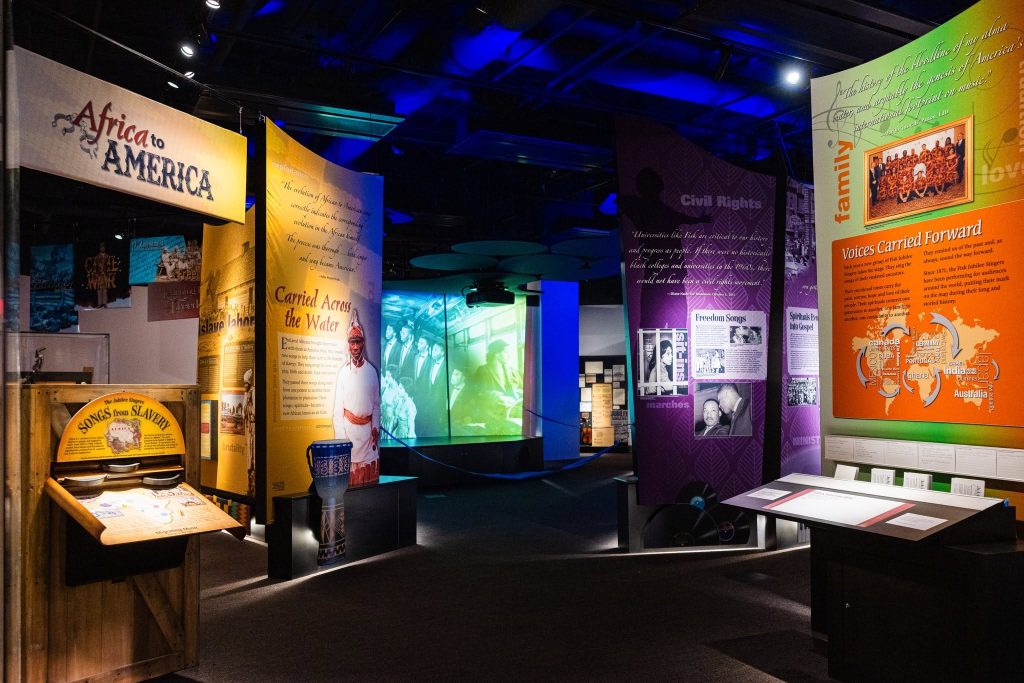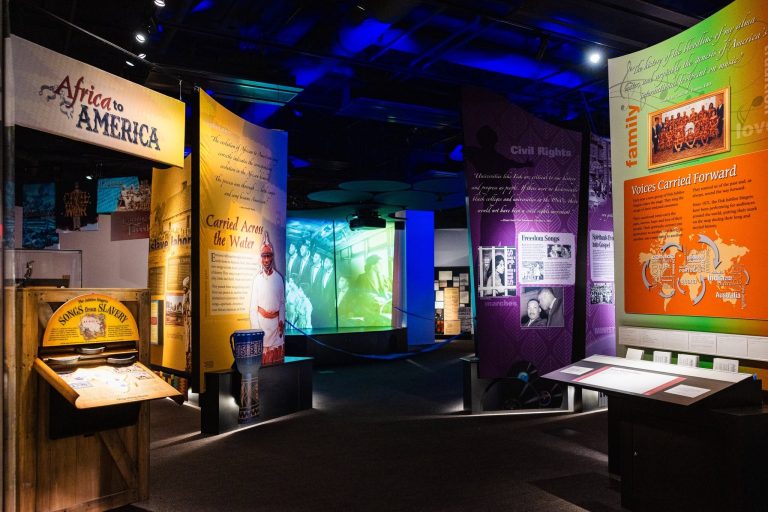
The National Museum of African American Music (NMAAM) in Nashville is the kind of field trip where students quickly realize that music is about much more than what comes through their headphones. NMAAM is the only museum dedicated to preserving and celebrating the many music genres created, influenced, or inspired by African Americans. Through interactive exhibits, music, and storytelling, students can explore how African American musicians have shaped the soundtrack of American life, from spirituals and gospel to blues, jazz, R&B, and hip hop.
Immersive Learning Experiences
The museum gives students plenty of opportunities to experience music rather than read about it. Its signature Rivers of Rhythm experience connects an interactive timeline of American history with the evolution of African American music. From there, students can move through galleries focused on spirituals and gospel, blues, jazz, R&B, and hip hop. NMAAM’s educational programming also includes From Nothing to Something, an interactive workshop for K–8 students that explores how African Americans turned everyday objects, like spoons and washtubs, into musical instruments. Students can learn about rhythm, creativity, and musical innovation while seeing how ordinary materials can become something extraordinary.
Field Trip Programs
For educators, NMAAM offers school programs specifically designed to connect music with history, culture, and classroom learning. K–12 school programs can include interactive workshops, guided tours, and curriculum-aligned resources, with options available both at the museum and through participating schools in the Middle Tennessee area. Teachers can also access lesson plans covering topics such as Music as Activism, the Geography of Music, and Langston Hughes and Poetry as Lyrics. These resources encourage students to think about how music has reflected social movements, migration, regional identity, and literary expression.
There are plenty of ways to keep the learning going once students leave the museum. Before a visit, teachers could have students choose a musical genre and research where it came from, who influenced it, and what was happening historically when it developed. Afterward, students could create a timeline connecting major musical movements to important events in American history, analyze how lyrics communicate emotion or social messages, or map how a genre traveled from one region to another. Older students could even write their own short piece of protest music or poetry inspired by what they learned. NMAAM’s digital Rivers of Rhythm series also gives teachers a way to bring these connections into the classroom without requiring another trip to Nashville.
NMAAM is a particularly strong field-trip choice for students who connect with music, storytelling, and creative expression. Instead of treating music as something separate from history, the museum shows how deeply the two are connected, and how African American creativity has influenced American culture for generations. Students can listen, interact, explore, and think about familiar genres in a completely different way. With immersive galleries, hands-on programs, and classroom resources that bring together music, history, geography, literature, and social studies, NMAAM gives students a field trip where the lesson is quite literally something they can hear.