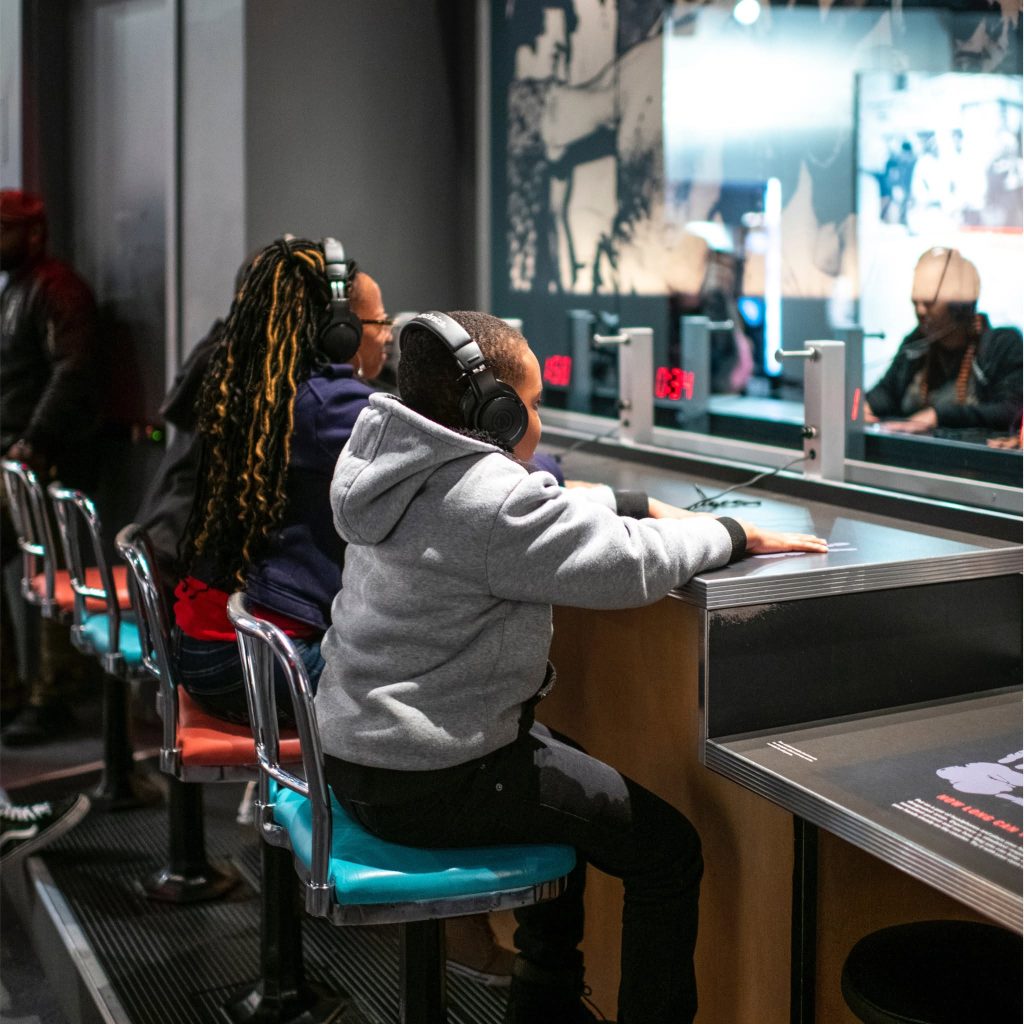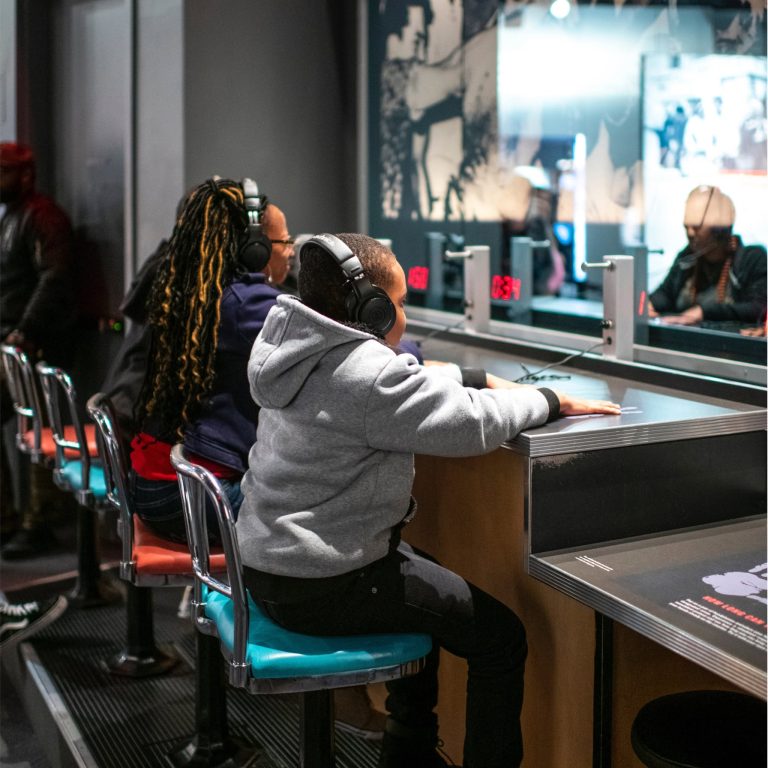
Since 2014, the National Center for Civil and Human Rights has provided visitors with an educational center for dialogue and change. Connecting history to the present, it reminds everyone who comes here of the power of freedom, equality, and inclusion. From the Civil Rights Movement of America’s past to current human rights struggles across the globe, visitors are encouraged to engage in history, reflection, and action.
Thought-Provoking Exhibits
Immersive and inspiring exhibitions highlight the history and modern-day impacts of human rights throughout the centuries. The center’s signature galleries cover themes from the Reconstruction era to the Global Human Rights Movement, the American Civil Rights Movement, and more. Rotating exhibits bring fresh stories and important themes, making each visit a new advocacy adventure. Specific children’s galleries offer young learners hands-on activities and interactive prompts that spark fun educational opportunities.
The Action Lab features a quiz to identify what type of changemaker you are, a passion wall for reflection, a conversation wheel to spark dialogue, and a way to explore next steps for getting involved in real change. Their Children’s Gallery is designed for ages 12 and under and is full of engaging activities to keep children excited about making positive change in the world. Students can draw inspiration from real stories of children their age and become agents of change themselves.
Field Trip Experiences
The National Center for Civil and Human Rights makes it its mission to equip educators with the resources to empower students through learning. Their field trip opportunities are designed for grades 3-12 with on-site experiences that deepen historical lessons. With guided tours through exhibits, students are given powerful lessons on civil rights through the ages and across the globe. Bring the center’s learning into your classroom with one of its traveling trunks. Six themes cover topics such as the March on Washington, the role of student leaders in driving real change, the role of consumerism, and more. Each trunk is designed for specific grade levels and enriches students with hands-on learning exercises, informational primary source materials, and artifacts. All trunks also include educational standards-aligned learning plans.
Educational Resources
The center also supports educators with free online resources to help them identify strategies to engage students better and sustain interactive learning in the classroom. Their online teacher’s guide unlocks a wealth of knowledge and materials, including lesson plans, timelines, activities, primary and secondary source materials, and rubrics. It also outlines tips for implementing these resources to make the most of them in the classroom. Through their teacher community, educators can connect with peers to share ideas, resources, and strategies for change.
More than a field trip destination, the National Center for Civil and Human Rights is committed to inspiring and educating at all levels. Inspiring students on their educational journey and supporting teachers in their continued education after a visit makes this a must-see Georgia field trip destination.