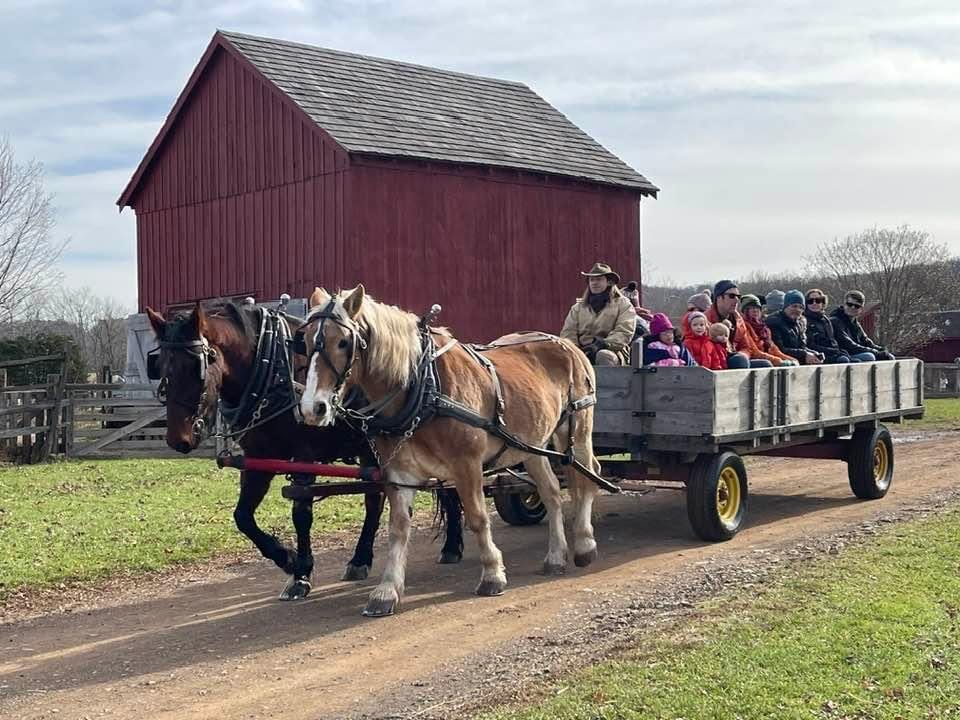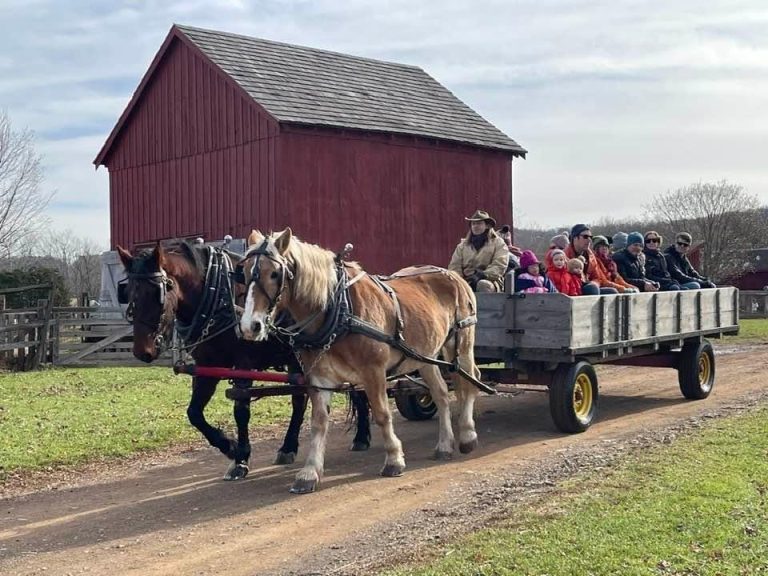
Active participation brings students into the daily work of a turn-of-the-20th-century farm at Howell Living History Farm. Seasonal programs immerse learners in real agricultural activities while connecting science, history and technology.
Dedicated Preschool Fridays serve preschool through early elementary learners, while broader school programs support private, public and homeschool groups. Students might tap maple trees, plant wheat or corn, shear sheep, spin wool, care for livestock, or investigate simple machines. During Corn Planting, students select seeds, examine soil, plant Howell Farm’s dent corn crop and visit the circa-1900 kitchen to sample cornbread. Other programs explore how weather, animal power and seasonal cycles shaped farming before tractors.
What Students Will Experience
Howell Farm’s school programs are built around one simple idea: students learn by doing the actual work of a working farm. The property recreates the systems and technologies of regional agriculture around 1890–1910, before tractors transformed farm labor, giving students a tangible way to understand how people, animals, tools, weather and seasonal cycles once worked together.
Experiences change with the season because students participate in real farm operations. During Maple Sugaring, offered January through March, groups head into the sugarbush to tap trees, collect sap and compare historic and modern sugaring methods. They visit the sugar shack to see a working evaporator, help with firewood and learn how evaporation turns sap into syrup before sampling pancakes made with flour from wheat grown on the farm.
In Corn Planting, generally offered May through June, students investigate seed selection, soil, germination and weather before planting the farm’s dent corn crop. Depending on the day, they may also see horses plowing or cultivating fields. The program finishes in the circa-1900 farmhouse kitchen, where students sample cornbread and connect the crop in the field with food on the table.
Fall brings Wheat Planting and Threshing, where students sow winter wheat by hand, compare planting methods, bundle stalks, thresh grain with a flail and separate wheat from chaff using a hand-crank fanning mill. The program shows each stage between field and flour, ending with bread made from farm-grown wheat.
Other seasonal offerings include sheep shearing and fiber work, helping students investigate wool, animal care, heredity and traditional technologies.
Curriculum & Grade-Level Connections
Howell Farm connects its programming to New Jersey and Pennsylvania standards in social studies, language arts, and science, as well as the Next Generation Science Standards.
The farm’s dedicated Preschool Fridays serve preschool through early elementary learners and last about one hour. Children may gather eggs, feed chickens, plant wheat, harvest corn or learn about horses through developmentally appropriate hands-on activities.
For elementary students, farm programs provide strong connections to life cycles, plant and animal needs, soil, weather, energy, simple machines and interdependence within ecosystems. Programs such as Corn Planting and Wheat Planting make concepts like germination, crop selection and food production concrete.
Upper-elementary learners can explore forces and motion, technological change, and agricultural systems in greater depth. Sheep Shearing, for example, connects with standards involving organism growth, heredity, interdependence and energy. At the same time, wheat and corn programs reinforce changes in technology and the relationship between environmental conditions and agriculture.
Social studies connections are equally strong. Teachers can use the farm to explore continuity and change over time, regional geography, agricultural economies and the effect of new technologies on work. Because students use tools and methods common to a specific historical period, they can directly compare how the same task—planting, harvesting or processing food—would be completed then and now.
Planning Your Visit
Programs are offered seasonally rather than as one year-round standardized field trip, so teachers should begin by selecting the agricultural experience that best fits both their curriculum and travel dates. Howell Farm publishes individual schedules for programs such as maple sugaring, corn planting, wheat planting and sheep shearing.
Because the farm works outdoors and activities depend on real agricultural conditions, students should arrive in clothing and footwear appropriate for mud, cold, sun, or rain. Some programs proceed rain or shine except during severe weather.
Teachers should also expect variation. In Corn Planting, for example, what students see in the field depends on what work is actually underway that day—plowing, harrowing, newly emerging corn or cultivation. That unpredictability is a strength rather than a drawback: it reinforces the idea that farming follows weather and biological cycles rather than a museum timetable.
Homeschool groups are welcome alongside public and private schools, and programs can serve both formal classes and mixed-age groups.
For preschool and early elementary groups, Preschool Fridays begin promptly at 10 a.m. and require an adult to accompany students. Group scheduling is available directly through the farm’s education staff.
Because Howell Farm’s educational value depends heavily on participation, planners should allow enough time for students to complete activities rather than rushing through multiple attractions. The strongest field trip is one in which students can get dirty, ask questions and see an agricultural process through from beginning to end.