
Grave Creek Mound Archaeological Complex in Moundsville, West Virginia, lets students explore thousands of years of history in one place. The centerpiece is the Grave Creek Mound, a massive burial mound built by the prehistoric Adena people between about 250 and 150 B.C. More than 57,000 tons of earth and sand were moved to create it, making the mound an impressive example of engineering and community effort. Students can visit the mound itself and then head into the Delf Norona Museum to learn more about the people who built it and the world they lived in.
Museum Experience
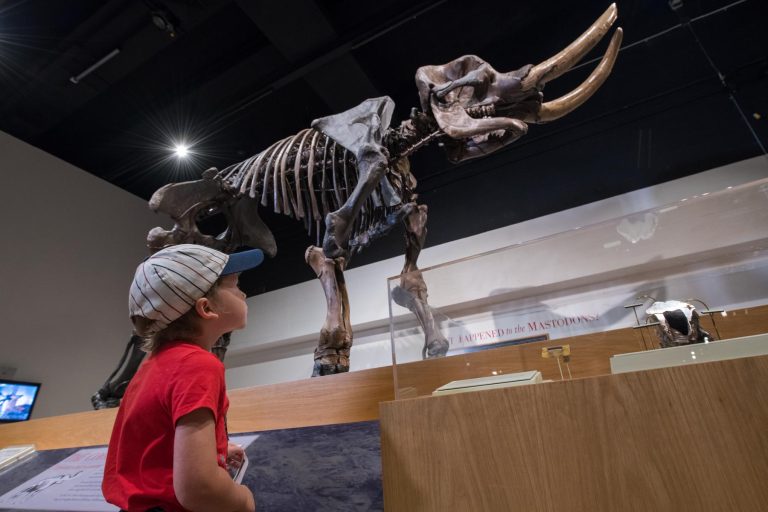
Inside the museum, students can explore exhibits covering approximately 12,000 years of human history in West Virginia. The lower gallery begins with fossils and Ice Age animals, including life-size casts of the ground sloth, West Virginia’s state fossil. Students can then move through exhibits about Indigenous peoples, early settlements, and later periods of West Virginia history. The upper gallery focuses on the Adena people and the Grave Creek Mound, including a life-size replica of an Adena structure that helps students picture what prehistoric homes may have looked like.
For educators, the complex offers a nice mix of archaeology, science, and history. Groups can reserve a guided interpretive tour in advance, and organizers can also ask about introductory programs and hands-on activities to make the visit more interactive. Throughout the year, the complex hosts educational events such as Fossil Day and Archaeology Day. These programs have included fossil identification, flint-knapping demonstrations, museum scavenger hunts, and atlatl throwing. The complex also has an outdoor Interpretive Garden featuring crops that Indigenous people, including gourds and sunflowers, first cultivated.
Educational Adventures
The field trip can easily connect to several classroom subjects. Before visiting, students could learn how archaeologists use artifacts, soil, and other evidence to understand people who lived thousands of years ago. During the trip, they could sketch an artifact, record interesting details, or look for clues about how people lived, worked, and used the land. Back in the classroom, students could create their own archaeological site, design a model of an Adena structure, or research one of the artifacts they saw. An engineering lesson could also explore how the Adena moved enormous amounts of earth using relatively simple tools and teamwork.
Grave Creek Mound Archaeological Complex is a great choice for teachers looking for a field trip that feels different from a traditional museum visit. Students can stand beside a roughly 2,000-year-old mound, see fossils from prehistoric West Virginia, explore Indigenous history, and learn how archaeologists study the past. The museum is also free and open Tuesday through Saturday, making it an accessible option for school groups. Most importantly, the site gives students a chance to learn about Native American history while visiting a place that still physically connects them to the people who lived in the region long ago. Because the mound is a sacred site to Native Americans, the complex also encourages visitors to approach it with respect.