
Frank Lloyd Wright’s Fallingwater is a great destination for teachers looking to introduce students to concepts such as architecture and engineering, and how to integrate them with art and environmental design. Rather than studying these concepts through diagrams or photographs, students can walk around one of Pennsylvania’s most influential buildings. They can observe the architecture and how it integrates with the local environment. This site is likely best suited to students in grades four or older. Higher grades, however, may be better able to grasp the underlying engineering or architectural ideas.
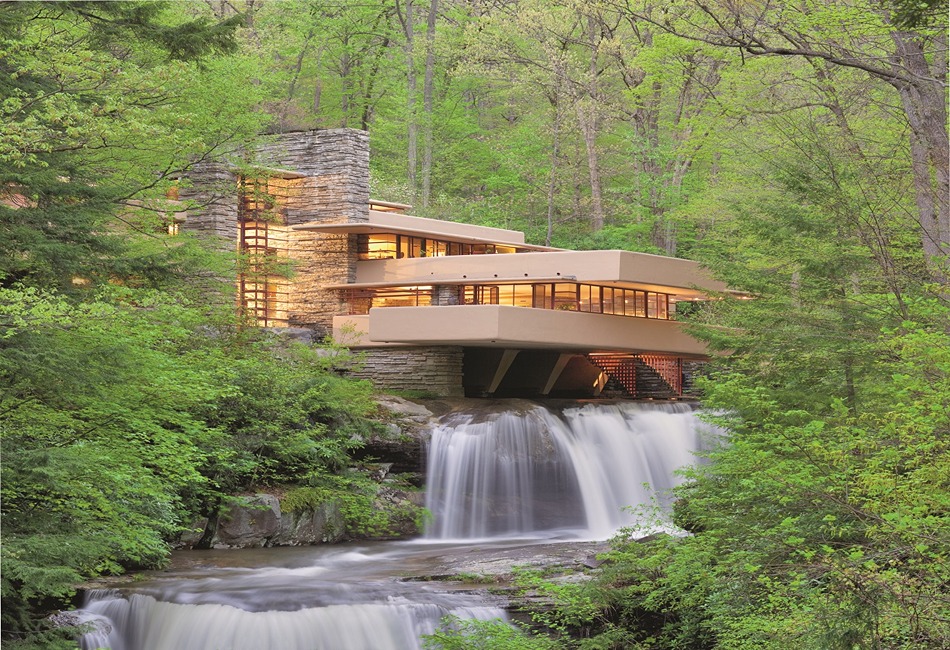
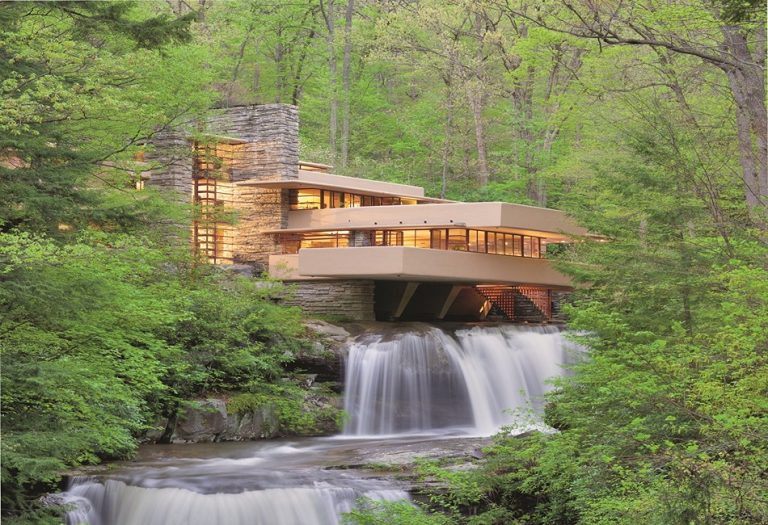
Frank Lloyd Wright’s Fallingwater is located in Mill Run in southwestern Pennsylvania, a couple of hours south of Philadelphia. Wright designed it in 1935 for the Kaufmann family, who used the building as a weekend retreat. Wright built the house directly above a waterfall rather than giving it a distant view, allowing the sound and movement of the water to become part of the experience of living in the building, rather than a separate entity.
Teachers should encourage students who visit Fallingwater to explore Wright’s ideas of organic architecture – the idea that a building is designed to exist harmoniously with its natural surroundings. The house is built using locally sourced stone, concrete terraces, large windows, and open interior spaces. The house’s terraces extend over the stream and seem to float above the waterfall, using light to make the spaces seem more open and welcoming. These features show how elements beyond the physical, such as light and sound, can influence how a building feels.
The site can also help teachers show older students the benefits of strong physics knowledge. Fallingwater’s cantilevered terraces project outward and are only supported from one end. Teachers can use these structures to discuss tension, compression, and gravity, helping students consider the practical challenges of organic architecture.
Guided architectural tours at Fallingwater are for groups of at least 13 students and cover both the interior of the house and the outdoor terraces. Students will learn in more detail about the relationship between the building and its landscape, as well as the philosophy behind the building. Students can also see furniture designed specifically for the house, as well as the Kaufmann family’s art collection. The tour lasts for around an hour.
For teachers looking to extend their students’ educational experience beyond the field trip, Fallingwater offers a gnome house design competition that will put what students learned to the test. More information about the competition is available here.
We recommend that teachers reserve group visits well in advance, particularly during popular periods. Fallingwater recommends making group reservations at least six weeks before the intended visit.
Overall, Fallingwater is an amazing educational destination that brings together engineering, art, history, and nature. Students leave with not only a greater understanding of Frank Lloyd Wright’s work, but also a stronger appreciation of how thoughtful design can shape the relationship between people and the environment.