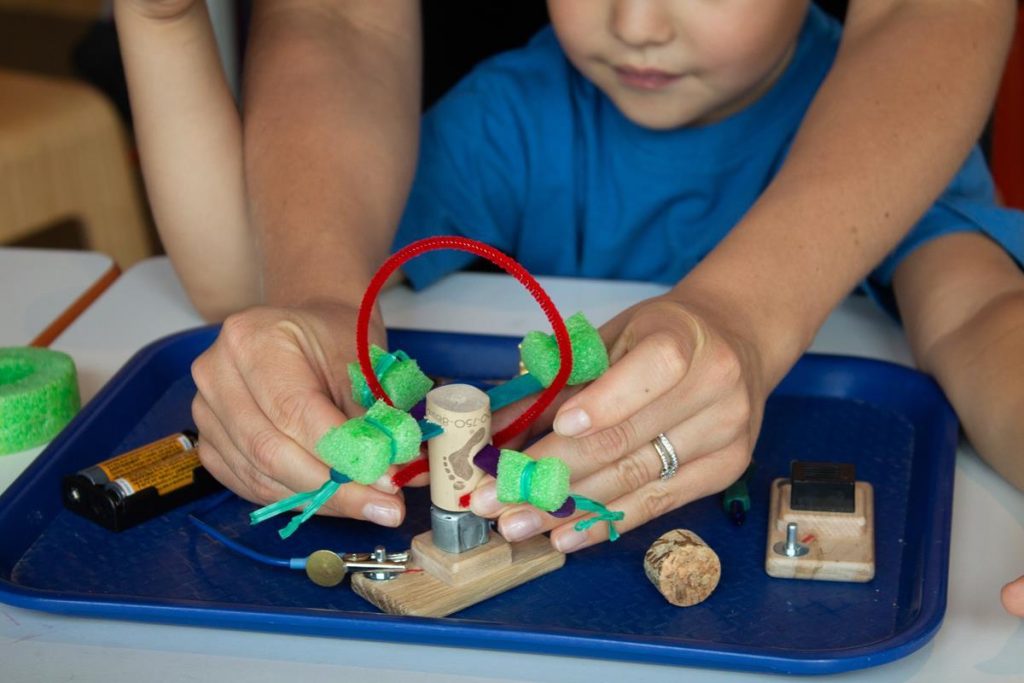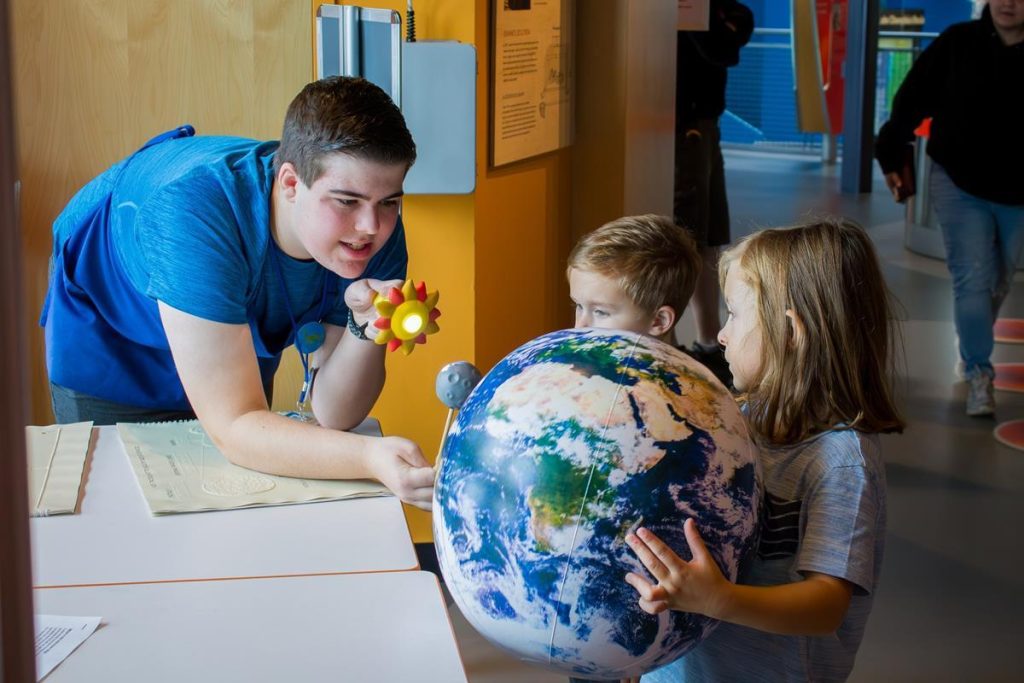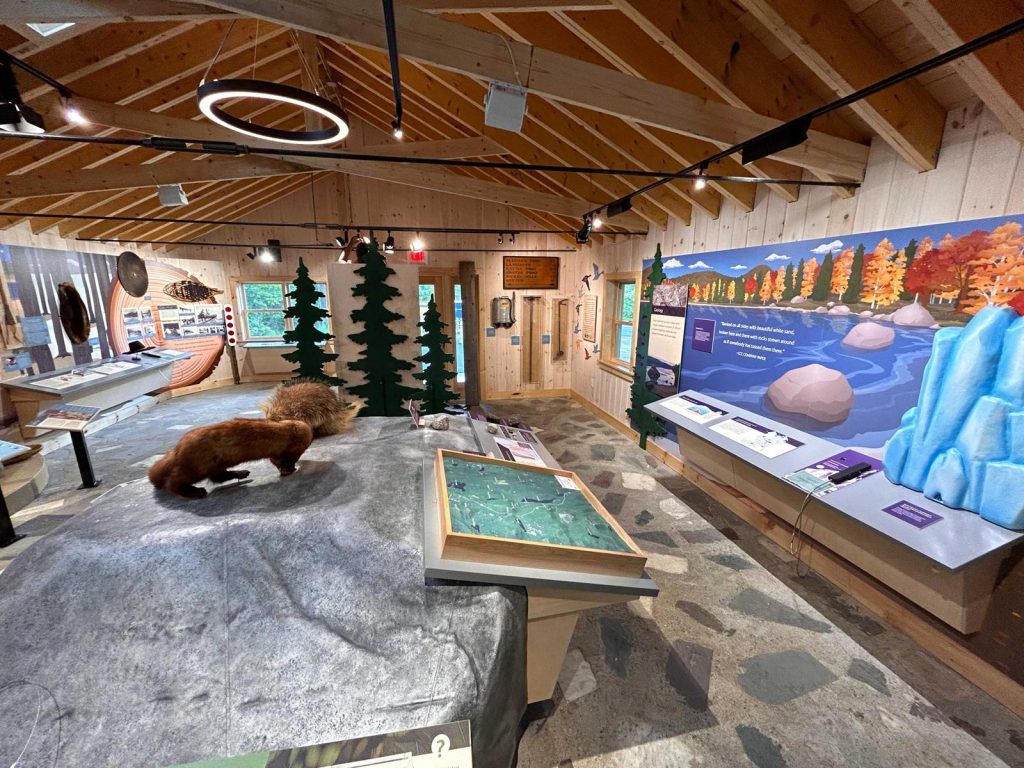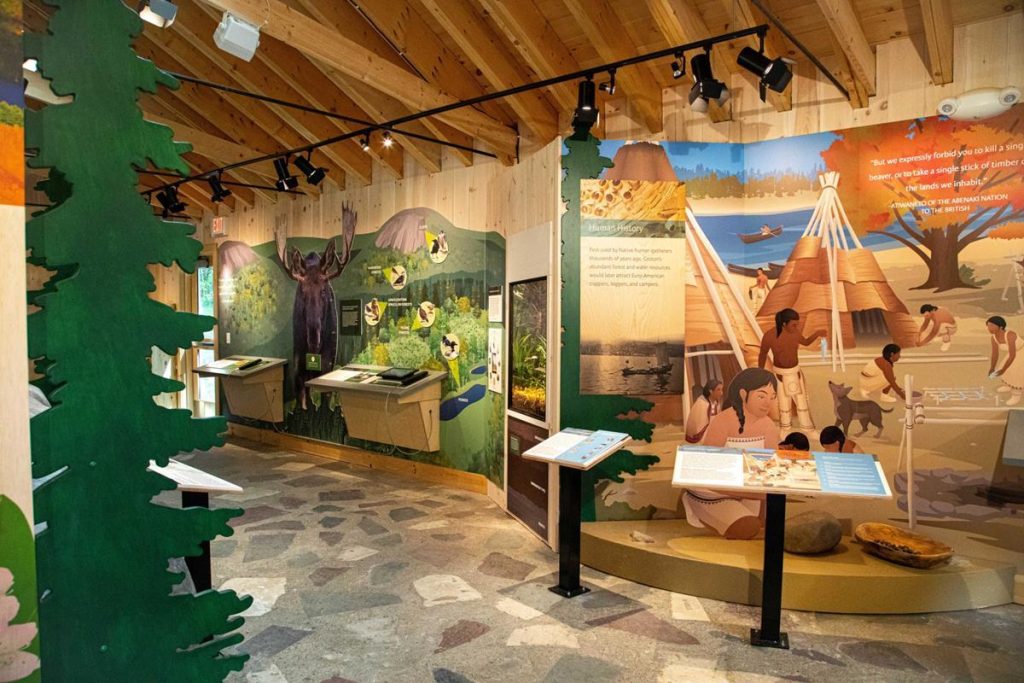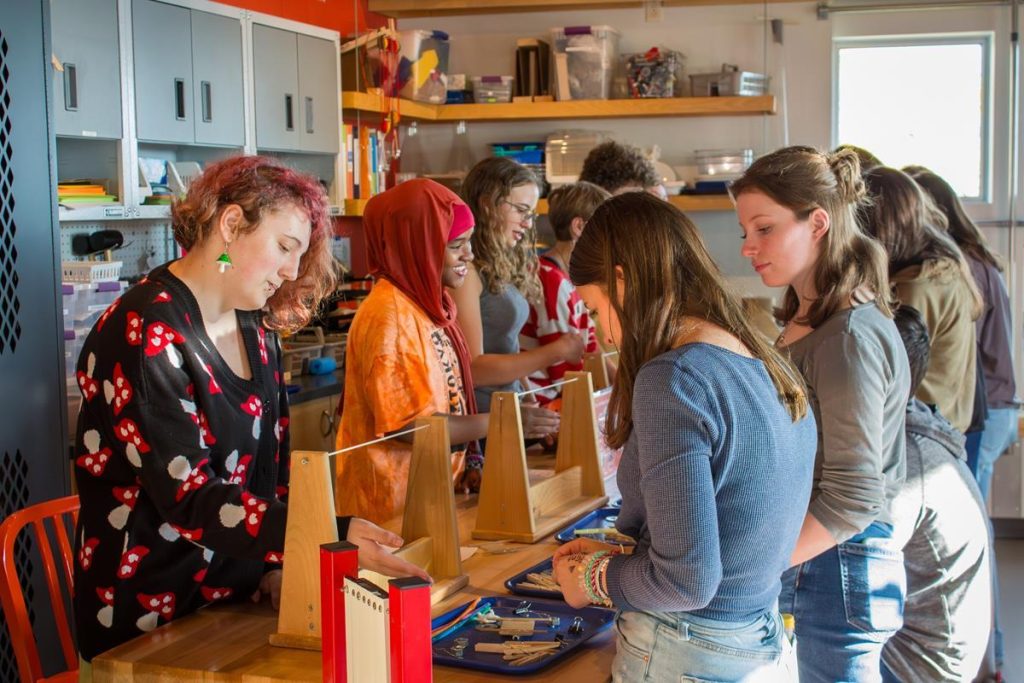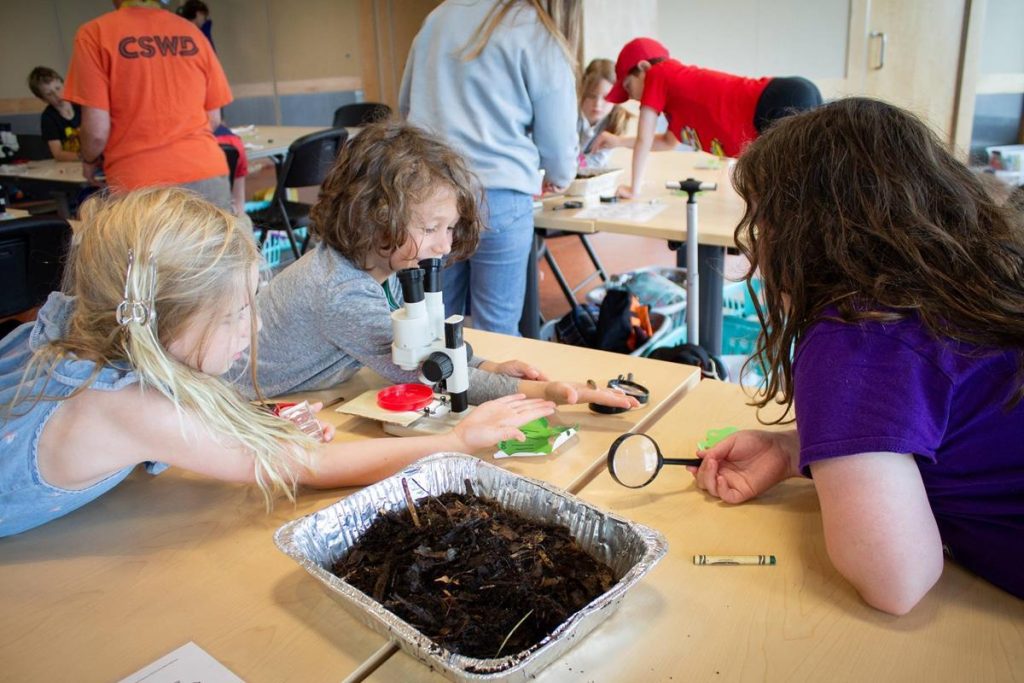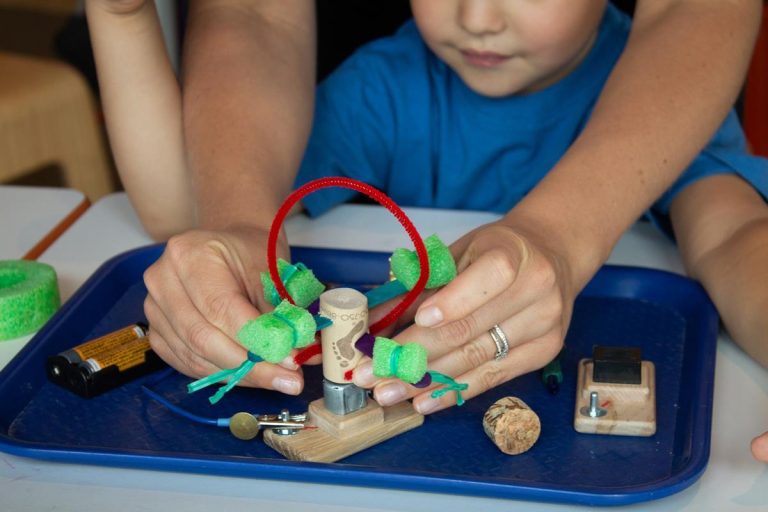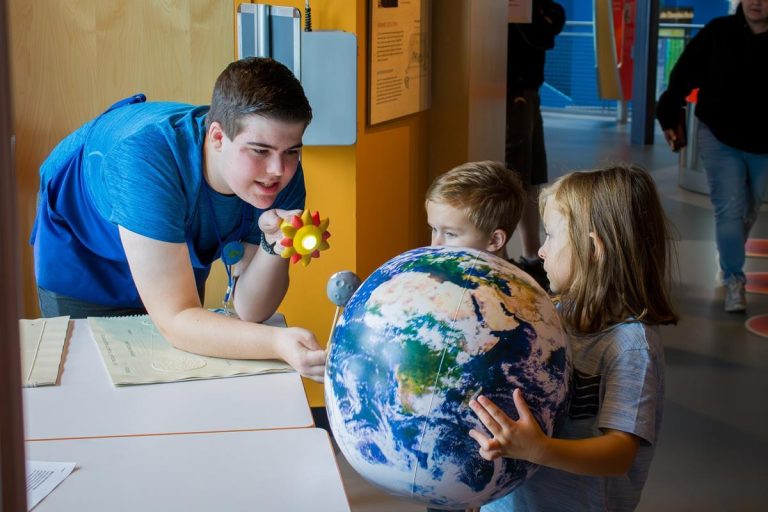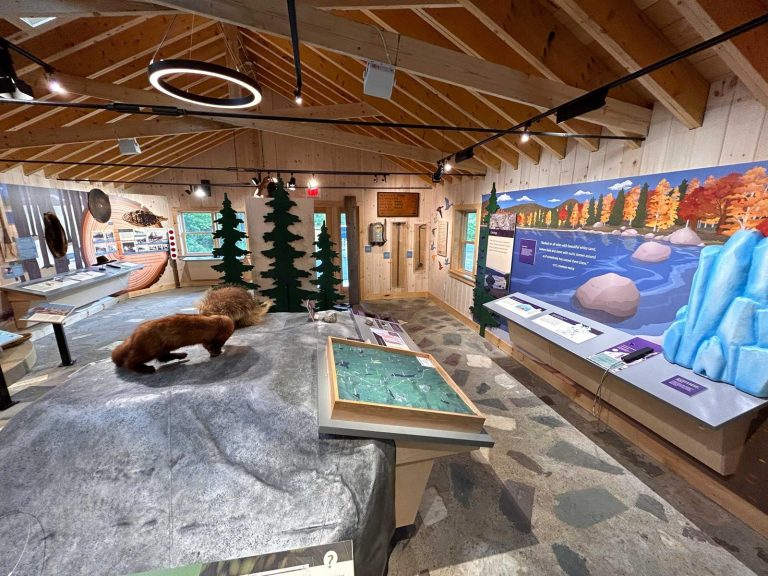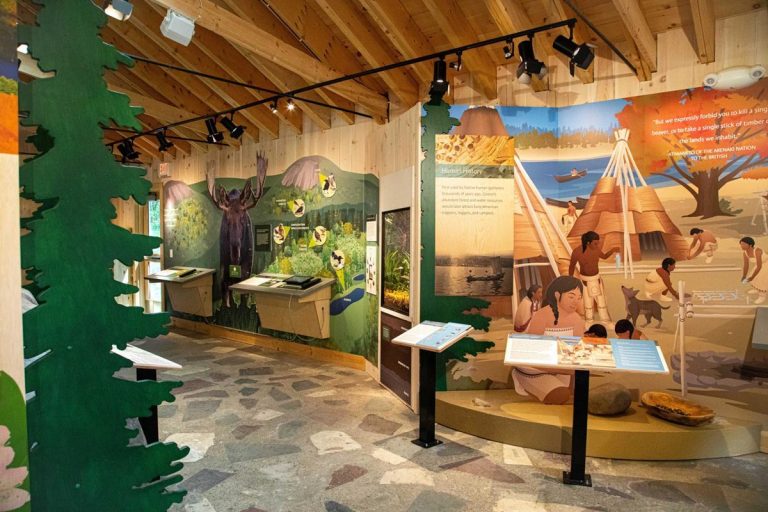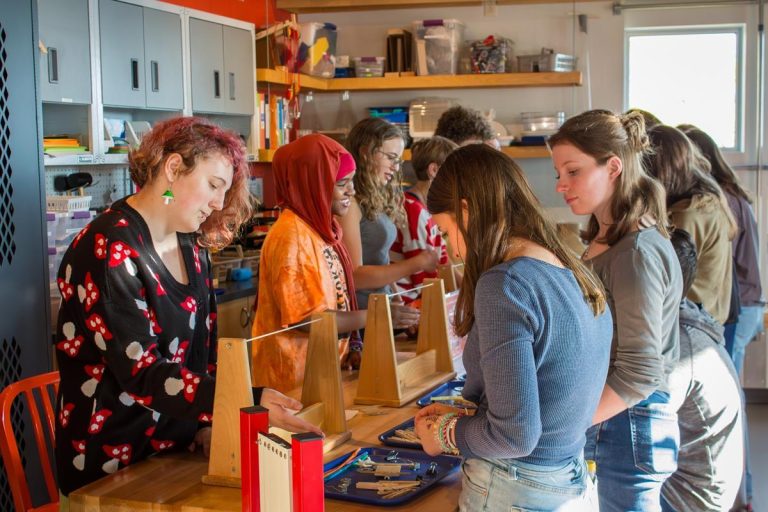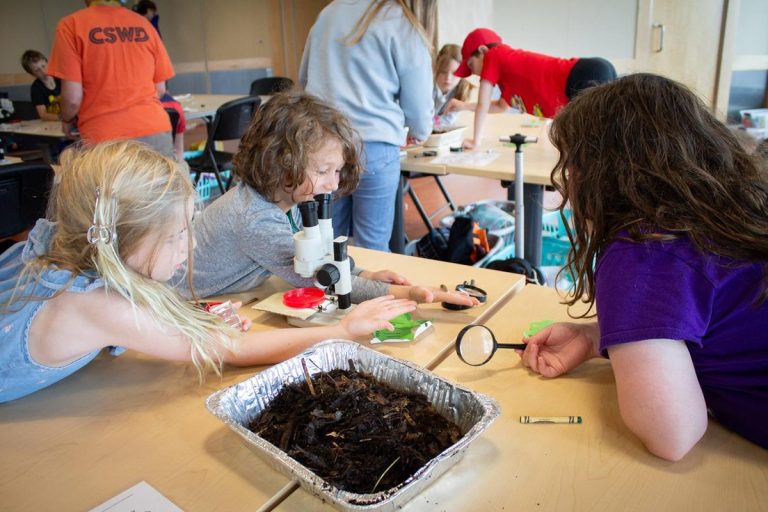

ECHO, Leahy Center for Lake Champlain offers pre-K–12 groups a hands-on introduction to the ecology, wildlife and environmental challenges of the Lake Champlain Basin. Every field trip includes access to live animal exhibits, interactive galleries, engineering challenges and pre- and post-visit resources, while teachers can add 50-minute NGSS-connected programs for grades K–12. Students might engineer solutions to help wetlands, monarch butterflies, migrating eels or turtles, analyze Abenaki artifacts, or build wind-powered vehicles while investigating climate change. Junior Ranger activities, live animal demonstrations and 3D science films provide additional options, making ECHO easy to adapt for a half-day or full-day STEM experience.
What Students Will Experience
ECHO’s educational model is highly interactive. Even without an educator-led add-on, school groups receive self-guided access to hands-on exhibits, live animal displays and engineering challenges throughout the museum. Staff and volunteers remain available during visits to answer questions and lead demonstrations.
For a more structured experience, teachers can add a Teacher’s Choice Program. These 50-minute sessions are designed for grades K–12 and align with NGSS concepts.
Wetland Wonders, for grades K–3, asks students to explore wetlands as filters, nurseries and habitats before using the engineering-design process to build a tool that can clean polluted wetlands. Launch, Fling, Fly, also for K–3, introduces monarch butterfly anatomy, life cycles and migration before challenging students to engineer a device to help monarchs travel.
Safe Crossing, for grades K–6, explores how roads and human structures affect wildlife and asks students to design safe animal crossings. Nest Rescue, also for K–6, uses peregrine falcon conservation as the starting point for an engineering challenge involving falling eggs.
For grades K–8, Journey to the Sea traces the American eel’s migration from Lake Champlain to the Sargasso Sea. Students design a way for eels to move past dams that interrupt migration routes.
Native American Artifact Inquiry (grades 4–8) uses objects to examine traditional Abenaki life before 1800. Students practice interpreting artifacts as historical evidence rather than simply reading labels.
For grades K–12, Zip Carts connects with ECHO’s turtle conservation work, while Renewable Ride introduces climate change before students design wind-powered vehicles to move along a magnetic track.
Curriculum & Grade-Level Connections
ECHO’s strongest academic fit is science and engineering, but many programs also connect with history, Indigenous studies and environmental stewardship.
The center publishes grade-banded ECHO Treks for K–2 and grades 3–5 in life, Earth and physical sciences, helping teachers prepare students before arrival and structure self-guided exploration.
The Junior Ranger program is divided into K–2, grades 3–5 and grades 6–8. Students complete short activities tied to Lake Champlain’s natural resources and can receive a Junior Ranger badge afterward.
Engineering programs build progressively in sophistication. Younger students may focus on habitats, animal needs and simple design, while middle and high school learners can tackle climate change, conservation systems and iterative engineering.
The Abenaki artifact program gives social studies teachers a strong interdisciplinary option. Rather than separating human history from environmental science, students consider how Indigenous communities used technologies and resources within the Lake Champlain Basin.
ECHO also operates a Lake Champlain Basin Program Resource Room, which includes a library, computer research lab, maps, charts, photographs, videos and artifacts. This can be especially valuable for older students conducting research projects.
Planning Your Visit
ECHO welcomes school groups year-round, and a typical visit lasts about 2½ hours, although half-day and full-day itineraries are possible.
Current reduced school admission is $4 per pre-K–12 student, while one adult is admitted free for every five students. Additional adults pay the same $4 group rate while grant funding remains available. Teacher’s Choice Programs cost $80 per session in addition to admission and accommodate up to 25 students each. ECHO can schedule up to three sessions for one field-trip group, serving up to 75 students through rotations.
The recommended chaperone ratio is one adult for every five children, though this ratio isn’t necessary for middle and high school students.
Bus logistics require advance attention. Buses cannot enter the traffic circle directly in front of ECHO. They unload near the Waterfront Information Booth, then can park for free on Pearl Street or at Leddy Park; paid parking is also available elsewhere.
ECHO does not have a dedicated school lunchroom. Groups should notify staff in advance if they plan to eat onsite. In good weather, groups often picnic outdoors on the terrace or in Waterfront Park; indoor space may be arranged when possible during poor weather.
Accessibility resources are particularly strong. ECHO provides grade-banded Social Stories, sensory maps and KultureCity sensory bags containing fidget tools and noise-canceling headphones.
Because animal-care demonstrations are typically offered during the day, teachers may want to coordinate their visit around those times when building the schedule.