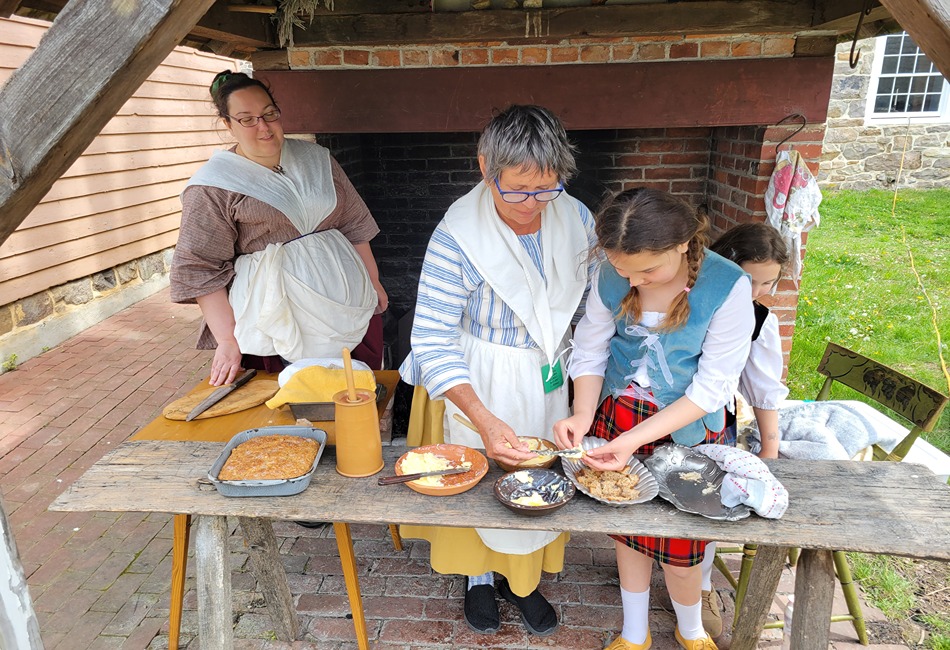

Dill’s Tavern in Pennsylvania is a great place for teachers to take students on a field trip, especially those who want to shed light on everyday life in the years following the War of Independence. Instead of only learning about prominent politicians, military leaders, and major battles, students can learn about the lives of ordinary people, including how they lived and worked during the transition from a collection of colonies to a fully independent country.
Located in Dillsburg, Pennsylvania, Dill’s Tavern dates back to the years before the War of Independence. The stone building at the center of the site was built in 1794 by John Dill, whose family had settled in the area a few decades earlier. Its position near a strategic trade route through the South Mountains ensured that the tavern was often busy. A wide range of ages can enjoy a trip to Dill’s Tavern, as students with differing levels of knowledge can take different things from the experience. Younger students might compare the homes and common objects used then with those used now. In comparison, older students might appreciate the significant impact distilleries and taverns had on the economy.
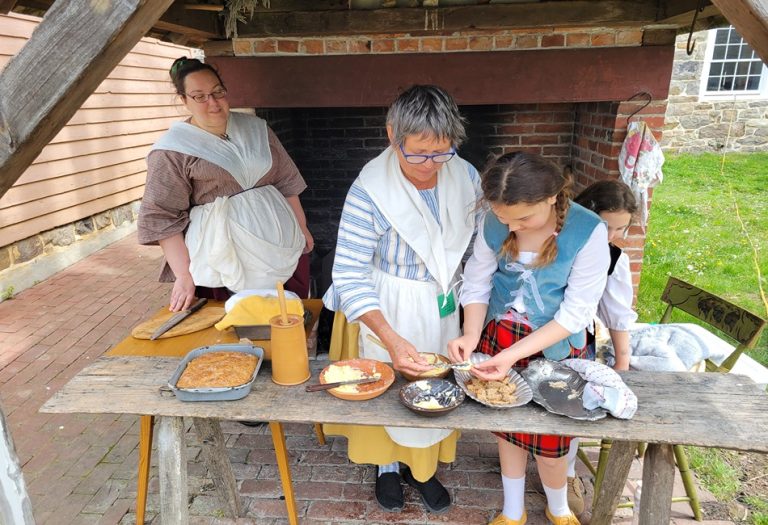
A tour of Dill’s Tavern and the surrounding buildings not only serves to tell the story of life in Dillsburg, but also the story of what life was like in Pennsylvania. For example, the wheelwright shop is still in use by volunteers who practice activities such as blacksmithing, coppering, and carpentry, allowing students to see what the everyday lives of practitioners of these trades would have looked like. The tavern also encourages interaction. Students are invited to interact with the period-style furniture and observe how meals were prepared, helping them better imagine the physical conditions of life before electricity, modern heating, supermarkets, and rapid transportation. Students can also visit Maple Shade Barn, which contains more artifacts, documents, and genealogical materials that are free to examine.
Tours can also include a visit to the Eichelberger Distillery. Distilling was a major contributor to the economy in the late 18th century, and students can observe the methods and technologies used in that period. The Eichelberger Distillery is one of the few places that accurately reproduces what an 18th-century distillery would have looked like, giving students a unique experience.
Dill’s Tavern also hosts seasonal events such as seasonal tours, camps, festivals, and product tastings, so teachers should check the events calendar before visiting. Furthermore, Dillsburg is home to a farmer’s market, so students will have time to explore it.
Overall, Dill’s Tavern is a great field trip destination for students studying colonial and early American history, as it helps them understand what everyday life looked like, rather than just the lives of a few leaders.