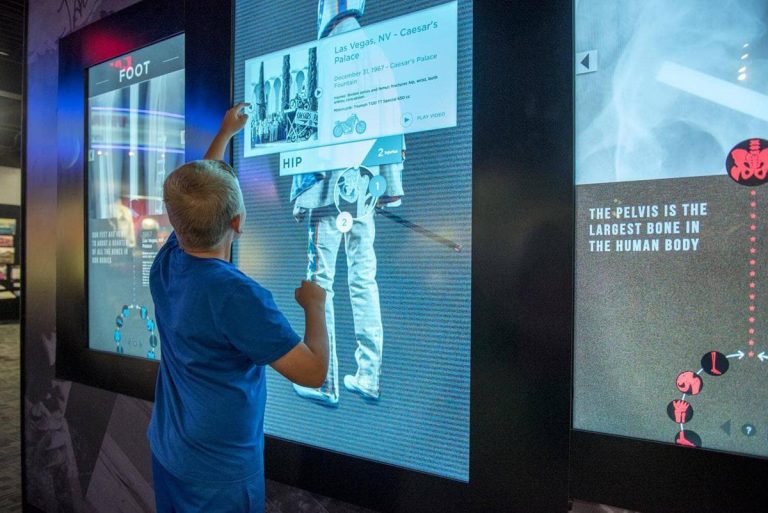

At the Connecticut Science Center, students can observe, touch, test and manipulate science through more than 165 hands-on exhibits. Spanning engineering, space, physics, health and the natural world, groups can experiment, investigate and challenge themselves in meaningful ways. Learn about forces and motion, take on building challenges for problem-solving opportunities and investigate real-world phenomena. Deepen the field trip experience with NGSS-aligned Discovery Center Labs, where participants conduct facilitated scientific investigations, or enter a lush tropical greenhouse for up-close encounters with butterflies. Add another immersive layer with spectacular movies and live science shows that showcase the wonders of science and captivate audiences.
What Students Will Experience
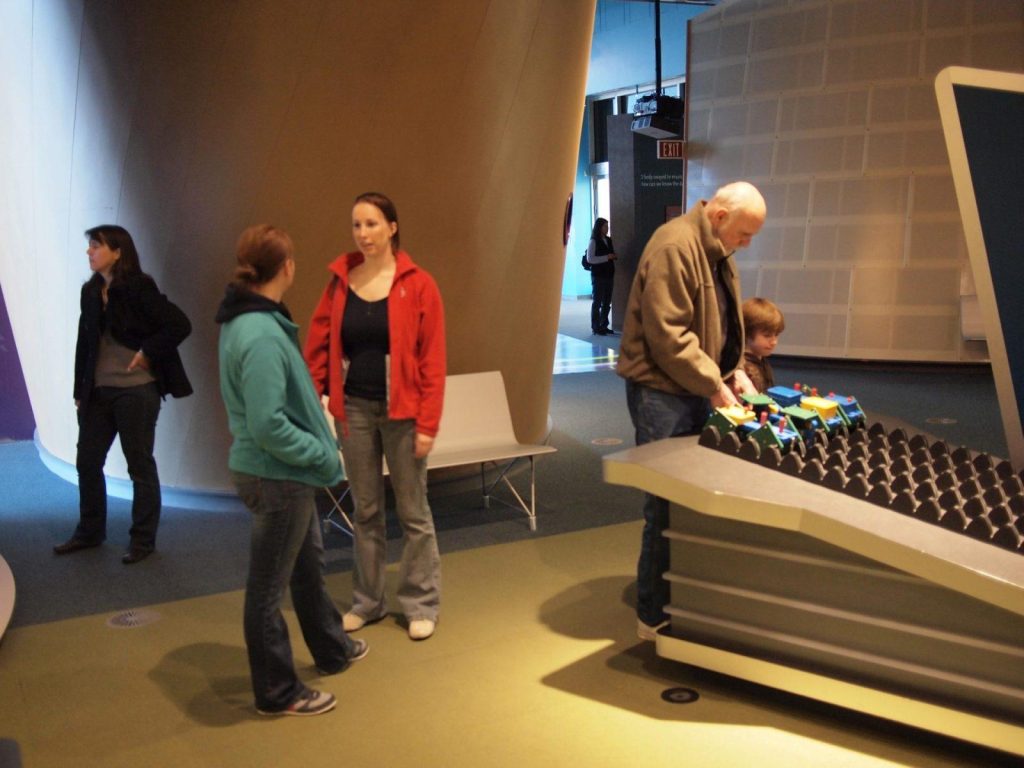
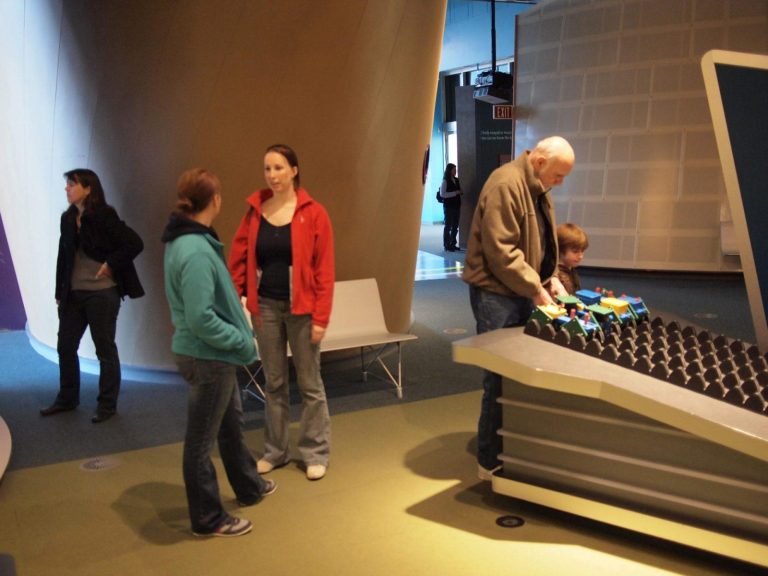
The Connecticut Science Center is especially well suited to students who learn best by doing. Rather than moving through galleries filled primarily with objects behind glass, groups encounter exhibits that invite experimentation, prediction and repeated trial and error. In Forces in Motion, for example, students can build racecars, launch flying objects and investigate gravity, friction, momentum and energy by watching what happens when they change a design or variable. Across the Science Center, this same hands-on approach encourages learners to test ideas instead of simply being told how a scientific principle works.
Teachers can further structure the visit by adding a Discovery Center Lab, a 45-minute facilitated experience where students actively investigate science connected to everyday life. Labs are aligned with Next Generation Science Standards and accommodate up to 25 students per session. Another school-only option is the Butterfly Encounter Lab, which gives groups approximately 20 minutes inside a tropical greenhouse with free-flying butterflies. Live stage shows introduce scientific concepts through large-scale demonstrations, video and animation, while films—including some presented in 3D—offer another way to reinforce classroom topics.
Curriculum & Grade-Level Connections
The Science Center is designed for a broad school audience rather than one narrow grade band. Its exhibits support NGSS concepts and let teachers build an itinerary around physical science, life science, Earth and space science, and engineering and technology. Younger students can focus on cause and effect, observation, and basic experimentation, while middle and high school learners can use the same exhibits to explore more complex concepts such as forces, systems, energy, and engineering design.
For groups that want stronger curriculum alignment, the educator guide and facilitated labs help teachers align activities with classroom goals. The Science Center also supports career exploration through its broader Pathways to STEM initiatives, which connect young people with STEM careers, mentors and employers. This makes the destination useful not only for elementary science enrichment but also for older students beginning to consider how classroom science translates into real-world professions.
Teachers unable to bring students to Hartford can also consider the Science Center’s Science in Motion traveling programs. More than 50 NGSS-aligned options include workshops, assembly shows and activity stations that bring hands-on STEM experiences directly to schools.
Planning Your Visit
Advance planning is particularly helpful here because a school day can combine general exhibit exploration with timed labs, shows, movies and lunch. The Science Center recommends dividing large groups into smaller teams of about 8–12 people to move through the galleries more easily. Required supervision is one adult for every eight students in preschool through grade 7 and one adult for every 12 students in grades 8–12. One chaperone receives complimentary admission for every 20 paid students; additional adults can be included at the school-group rate.
Teachers can arrange a complimentary pre-visit after booking to map out exhibits and anticipate transitions between scheduled activities. Also reserve lunch space when booking because seating is limited and lunch periods are timed. Groups should leave backpacks, coats and unnecessary belongings on the bus when possible, as the Science Center does not provide storage.
Buses can unload at the main entrance but cannot remain there while groups visit. The museum recommends parking nearby, while an hourly garage beneath the building serves drivers arriving separately. Full payment is due in advance, and cancellation or rescheduling should generally be handled at least one week before the trip.