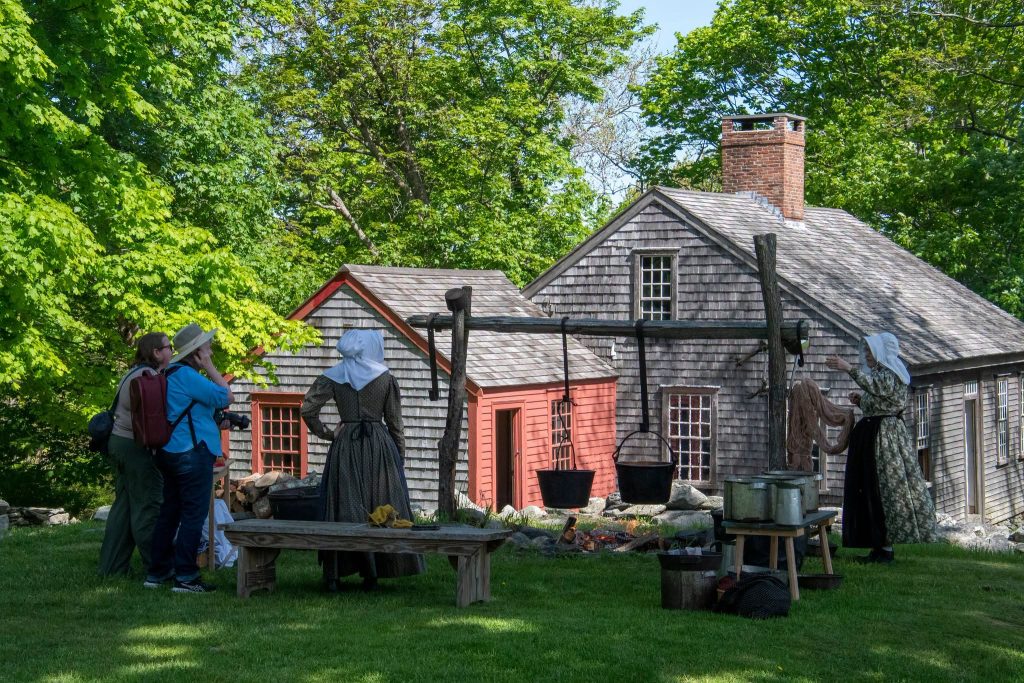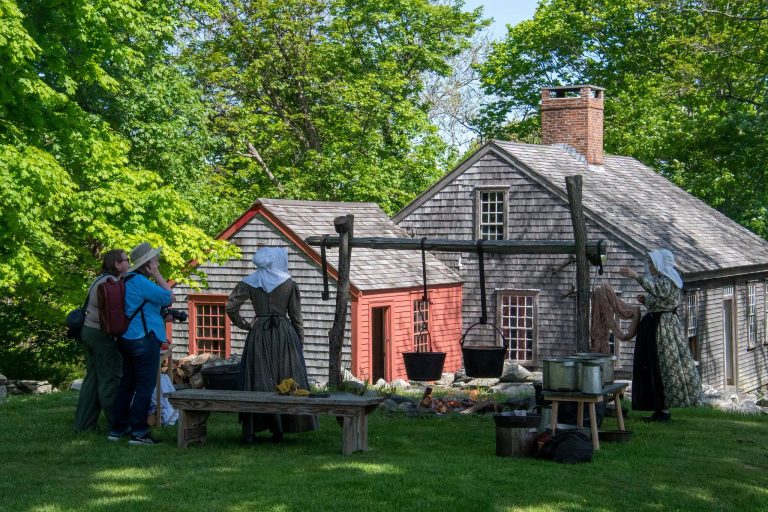

Step into a living history classroom at Coggeshall Farm Museum, a 48-acre coastal farm that recreates the daily experience of tenant farmers in late-18th-century Rhode Island. Historic buildings, heirloom plants, heritage-breed animals and working landscapes provide an immersive setting for learning about agriculture, community, ecology and social history. Grade-specific field trips send students through rotating teaching stations where they may meet farm animals, tackle seasonal chores, play colonial games, split and saw wood, investigate natural habitats or examine primary sources. Programs range from sensory farm exploration for preschoolers and kindergarteners to high school deep dives into foodways, textiles, animal husbandry and the history of the Bristol slave trade.
What Students Will Experience
Coggeshall’s strongest programs emphasize active participation. Field Day, designed for pre-K through grade 12, is the most flexible option and typically lasts two hours. Students rotate among stations where they may try colonial games and sports, meet animals, help with farm chores, hike through the property’s natural habitats and practice skills such as sawing and splitting wood. Because the program serves many grade levels, it is especially useful for schools with mixed-age groups.
For preschool and kindergarten, Our Big Backyard uses the farm as a sensory science laboratory. Children investigate the farmyard with all five senses, search for signs of wildlife, meet domestic animals and consider what living things need to survive. The program blends early science with age-appropriate observation and movement.
Citizen Kid, for grades 1–2, focuses on children’s roles in the community. Students learn how young people contributed to family farms at the turn of the 18th century, what school was like and how children spent their limited leisure time. The program helps younger students compare their own lives with those of children from the past.
For grade 3, Strong Roots shifts toward ecology and sustainability. Students investigate local ecosystems and habitats and consider how plants, animals and humans interact. Hands-on activities ask a particularly modern question: What can past farming practices teach us about farming for the future?
Who Tells Your Story?, designed for grades 4–5, uses primary sources to examine the lives of Indigenous people, European settlers and enslaved residents in the Bristol Harbor area. Students investigate the Bristol slave trade and Pokanoket history, then try practical activities drawn from 18th-century sources.
A special America 250 offering, Exploring Rhode Islanders of the Revolution, serves grades 3–6. Students decode spy messages, listen to excerpts from Mary Gould Almy’s wartime journal, learn about the diverse First Rhode Island Regiment and finish with camp-life activities associated with Revolutionary soldiers.
Curriculum & Grade-Level Connections
Coggeshall’s program structure makes it easy for teachers to select a field trip based on developmental level rather than forcing one experience to fit everyone.
Preschool and kindergarten students focus on sensory observation, animals and basic ecological needs. Grades 1–2 explore community roles, childhood and change over time. Grade 3 moves into ecosystems, sustainability and stewardship, while grades 4–5 tackle increasingly complex historical questions involving slavery, Indigenous-settler relationships and historical perspective.
High school students can book the History Deep Dive, a two-hour guided walking experience on the 1796 homestead. Teachers can choose among topics such as Farming and the American Dream, Foodways and Culture, Textiles: From Sheep to Loom, Animal Care and Husbandry, Hearth and Home, or Untold History: The Bristol Slave Trade. This makes Coggeshall especially valuable for secondary teachers who want to connect agricultural history with labor, economics, race or material culture.
The farm’s programming also works well across disciplines. Science teachers can emphasize animal needs, habitats and sustainable agriculture. Social studies classes can examine community structures, slavery, citizenship and the Revolution. Language arts students can work with diaries, historical perspectives and primary sources, while art and technology teachers can explore textiles, traditional tools and material production.
Homeschool groups can join many of the same programs, and the museum also schedules dedicated Homeschool Days with rotating workshops and self-guided activities for ages 4 and older.
Planning Your Visit
Most standard field-trip programs last approximately two hours. Current pricing for Field Day, Our Big Backyard, Citizen Kid, Strong Roots, Who Tells Your Story? and the High School Deep Dive is $12 per student and $12 per chaperone, with one teacher per class admitted free. The special Exploring Rhode Islanders of the Revolution program is currently $14 per student and chaperone.
School programs operate on select weekdays in the spring and fall, even when general public hours are more limited. Teachers should reserve directly with the education department and discuss multiple-grade groups or special curricular requests when booking.
After a program, school groups may bring a picnic lunch and stay on the farm. Because much of the experience takes place outdoors on a working historical landscape, students should wear sturdy shoes and weather-appropriate clothing. Teachers should expect walking, grass, dirt, animals and seasonal farm conditions rather than a fully indoor museum environment.
Large grade levels may need to be divided across multiple days for certain programs, particularly Who Tells Your Story?, so schools should share accurate group counts early.
Coggeshall works especially well for teachers who want students actively participating in history. Rather than watching farm life from a distance, learners are asked to play, investigate, work and interpret—making the past feel both physical and immediate.