These incredible institutions in the Southeast provide in-depth, immersive, and thought-provoking lessons on Civil Rights history
The modern Civil Rights Movement, a series of organized efforts by Black Americans to end racial discrimination, was one of the most important chapters in 20th-century U.S. history. Hitting its stride in the 1950s and ’60s, the nonviolent campaign resulted in laws to protect every citizen’sconstitutional rights.
Most of the era’s triumphs and tragedies took place in the Southeast, fertile ground for African American history field trips. While some textbooks do a good job of telling the story, nothing can duplicate place-based learning, going to the physical location where history happened. Walking across the Edmund Pettus Bridge in Selma, Alabama, or seeing the Memphis motel balcony where Martin Luther King Jr. was killed puts the past into sharper focus.
From classroom goals to real-world learning. Download your free copy of Student Travel Pro and start planning today.
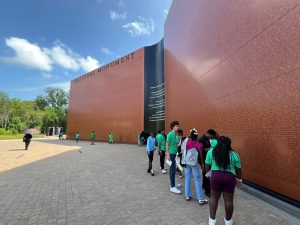
Discover Civil Rights Experiences in the Southeast
For teachers interested in organizing a civil rights field trip for students but need help figuring out which cities to prioritize, a valuable resource is the U.S. Civil Rights Trail, a collection of churches, courthouses, schools, museums and other landmarks that recognize brave activists who played pivotal roles in advancing social justice. The Trail’s website has a mapped network of civil rights sites across 15 states with downloadable state-by-state itineraries.
Many of the larger sites have education programs that enhance a civil rights field trip, offering teacher-friendly tools and on-site activities that make it more than a sightseeing experience. The best teaching trip involves advanced preparation, guided processing and thoughtful follow-up.
The following are a few key sites in the Southeast that can be included in civil rights field trips for students:
Atlanta, Georgia
Martin Luther King Jr. National Historical Park
Located in Sweet Auburn, the Atlanta neighborhood where King grew up, the Martin Luther King Jr. National Historical Park includes a visitor center with exhibits on King’s personal life and his role in the movement, his birth home, and Ebenezer Baptist Church, where he was co-pastor alongside his father. Next to the church, surrounded by a reflecting pool fed by tiers of a cascading stream, resides the tomb of MLK and his wife, Coretta Scott King. Inscribed on the blue-tiled pool are these words: “We will not be satisfied until justice rolls down like water and righteousness like a mighty stream.”Steps away, The King Center and Eternal Flame are reminders of the Kings’ undying commitment to their beloved community.
Your Life’s Blueprint, a ranger-led education program appropriate for grades3-9, engages students as they create their life plan using the timeless words of Dr. King. Lasting from 30 minutes to one hour, the program gets students thinking about the steps they need to take to make their dreams a reality.
The King Center offers various classroom resources, including a Teacher’s Guide with lesson plans and other curriculum materials for kindergarten through high school.
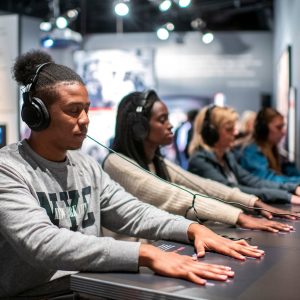
National Center for Civil and Human Rights
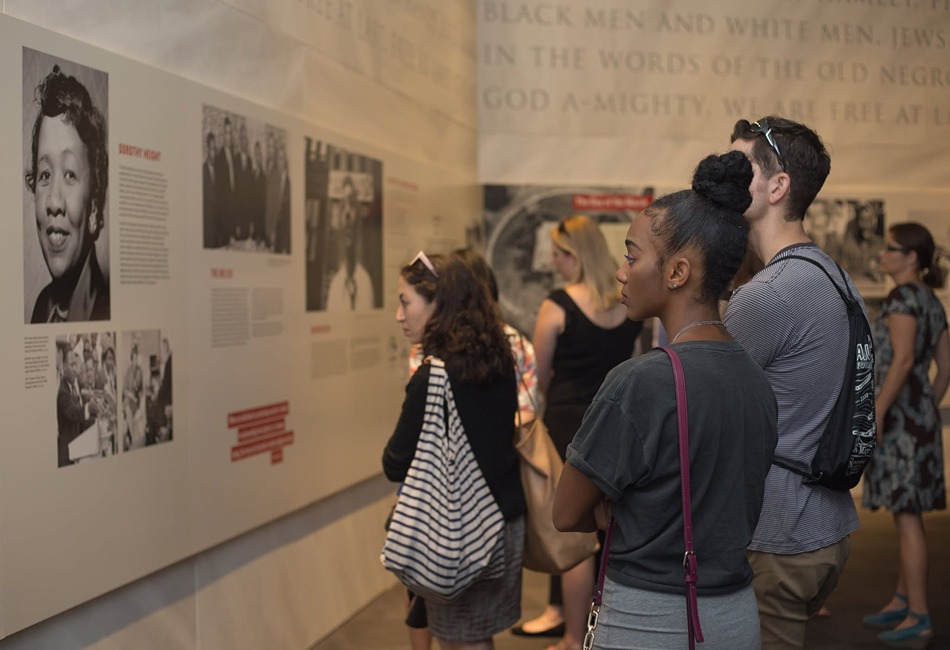
Exhibitions at the privately operated National Center for Civil and Human Rights in downtown Atlanta spotlight not only domestic civil rights history but also lay out a broader view of human rights struggles worldwide. In the popular lunch counter simulation complete with audio of a confrontation, visitors experience what Black college students endured during a non-violent “sit-in” at a whites-only lunch counter in 1960.
For teachers, the online Learning Portal provides lesson plans, Decision Guides and activities that prepare students for a visit. Adjacent to Centennial Olympic Park, the Center is steps from the Georgia Aquarium and World of Coca-Cola.
Birmingham, Alabama
Birmingham Civil Rights Institute
The BCRI anchors downtown’s Birmingham Civil Rights District, which encompasses several landmark destinations within easy walking distance of each other. The Birmingham Civil Rights Institute provides opportunities for school groups to see black-and-white footage of Martin Luther King’s 1963 “ I Have a Dream” speech at the Lincoln Memorial in Washington, D.C., and the jail cell door from behind which he wrote his famous “Letter from the Birmingham Jail” urging religious bystanders to become active in the movement. Museumgoers also witness the realities of segregated lunch counters, restrooms, drinking fountains, theaters and bus station waiting rooms.
Teachers can access educational materials, including lesson plans, discussion guides and pre-visit activities, to enhance classroom learning. The institute’s educational programs are aligned with social studies and history curriculum standards.
16th Street Baptist Church
A turning point in the nation’s Civil Rights Movement was the September 15, 1963, bombing of the 16th Street Baptist Church that killed four girls and injured more than 20 others. Perpetrated by Ku Klux Klan members, the crime shocked the world and generated support and sympathy for the movement, which used the church for mass meetings and rallies. Tours for school groups include exhibits that describe the horrific crime that buried the girls (ages 11 to14) in rubble.
Kelly Ingram Park
Across the street from the Birmingham Civil Rights Institute and 16th Street Baptist Church, Kelly Ingram Park was a staging ground for demonstrations in the 1960s. Among the Freedom Walk’s bronze sculptures are those depicting teens in jail (many marchers were high school students), ferocious police dogs that attacked demonstrators, and the four girls killed in the church bombing. A statue honors Martin Luther King Jr.
Montgomery, Alabama
Equal Justice Initiative (EJI) Sites
EJI operates four sites in Montgomery, a hub of activism during the height of the Civil Rights Movement. The Legacy Museum, deserving of at least two hours, uses holographic re-creations and other cutting-edge technology to trace the history of injustice, from enslavement to mass incarceration.
The National Memorial for Peace and Justice, a mostly outdoor space, is dedicated to victims of racial terror lynching. Designed to be an emotionally demanding experience, it features nearly 5,000 names engraved on 800+steel monuments, one for each county in America where a lynching occurred between 1877 and 1950. The Freedom Monument Sculpture Park displays original artifacts that belonged to enslaved Black individuals.
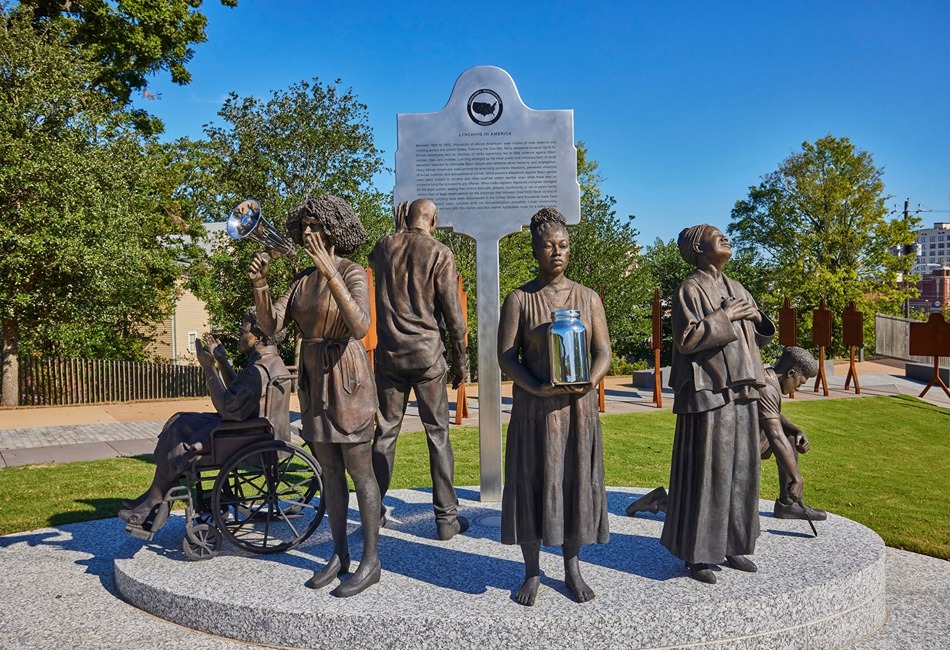
Montgomery Square, the newest EJI site, highlights people and events that shaped the Civil Rights Movement between 1955 and 1965. Art installations, photography, and powerful films tell the story.
A free shuttle connects the four sites. The sculpture park can be reached by a short boat ride on the Alabama River.
Because visiting the EJI sites can be intense, these civil rights field trips for students require preparation and follow-through, allowing time for reflection and to digest the material. EJI provides lesson plans, discussion guides, and curriculum-aligned teacher resources to help students process what they’re learning.
Rosa Parks Museum at Troy University
Rosa Parks, a brave seamstress who was arrested in 1955 for refusing to give up her seat on a Montgomery bus, is a civil rights icon. Her action led to the famous Montgomery Bus Boycott. Rosa Parks Museum exhibits, including a 1955 city bus and a 1956 station wagon used in an extensive carpooling system, shed led light on the era’s segregated South.
Dexter Avenue King Memorial Baptist Church
A focal point in the Montgomery Bus Boycott, the Dexter Avenue King Memorial Baptist Church, where Martin Luther King Jr. began his journey as a pastor and civil rights leader, offers group tours. A large mural in the church depicts King’s civil rights crusade from Montgomery to Memphis.
Selma, Alabama
Edmund Pettus Bridge
The iconic Edmund Pettus Bridge, one of the most recognized symbols of the Civil Rights Movement, is free to visit and open at all hours for foot crossings. It was here on March 7, 1965, an infamous date that became known as Bloody Sunday, that 600 nonviolent voting rights marchers were stopped and beaten with billy clubs by Alabama state troopers as they embarked on a trek to the State Capitol in Montgomery. Two weeks later, Martin Luther King Jr. led a five-day march from Selma to Montgomery, this time with protection from state and federal law enforcement. In less than five months after the march, the landmark Voting Rights Act of 1965 was signed by President Lyndon Johnson.
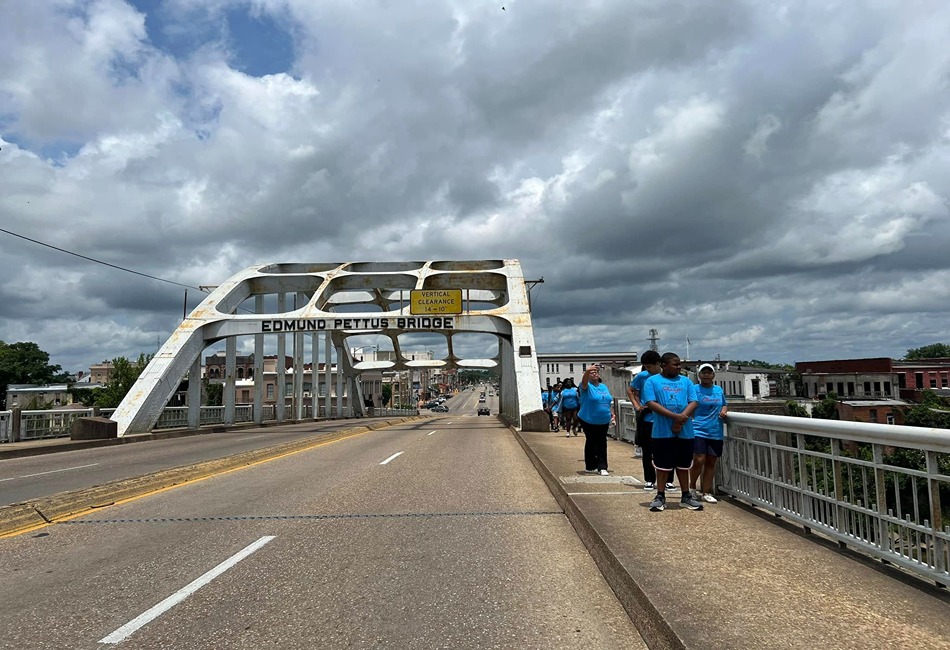
Edmund Pettus Bridge anchors one end of the 54-mile Selma to Montgomery National Historic Trail, a unit of the National Park Service. School groups can arrange a ranger-led tour in Selma, meeting at the Selma Welcome Center (while the park’s Selma Interpretive Center is closed for renovations until 2028). Several Selma tour companies offer guided walks led by local historians and by those who participated in the marches as teenagers.
Selma’s Brown Chapel AME Church, a key gathering place during the Civil Rights Movement, also does group tours.
Memphis, Tennessee
 National Civil Rights Museum
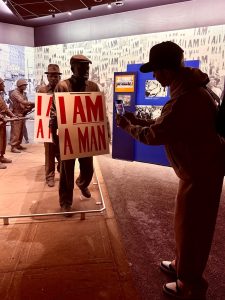 National Civil Rights Museum
Interactive exhibits, short films, recorded oral histories and artifacts immerse school groups in the pivotal moments of civil rights history in America, from the first anti-slavery movements to the present day. The National Civil Rights Museum is housed in the former Lorraine Motel, the scene of Martin Luther King Jr.’s assassination on April 4, 1968. Room 306 is preserved as it was on that day, its balcony adorned with a wreath marking where King died from a bullet wound. Exhibits address the assassination and its aftermath, student lunch-counter sit-ins, the Montgomery Bus Boycott, the Memphis garbage workers’ strike, and other episodes in the ongoing struggle for equality.
For teachers, free K-12 education programs, offered virtually or on-site, align with Tennessee and Common Core standards and include interactive experiences on civil rights history, activism and heroes of the movement, music, media and Dr. King’s legacy. Virtual and in-person teacher workshops are available.
Making the Most of a Civil Rights Field Trip for Students
Preparing students for what they will see and putting the visit into context afterward is just as important as the visit itself. For the best experiences, remember that:
- Pre-trip reading and films set the stage and heighten student interest. The BCRI archive, EJI’s educator resources and the National Civil Rights Museum’s teacher materials are all available before the trip.
- Guided observation questions during the visit—two or three specific things for students to notice and think about—will make a difference.
- A structured debrief afterward, in the form of discussions or writing assignments, will help ensure the subject matter stays with the student.
For more ideas on planning civil rights field trips for students, check out the civil rights articles posted on Student Travel.pro.
To make African American history field trips possible, teachers can find funding ideas at https://studenttravel.pro/grants-funding/
By Randy Mink