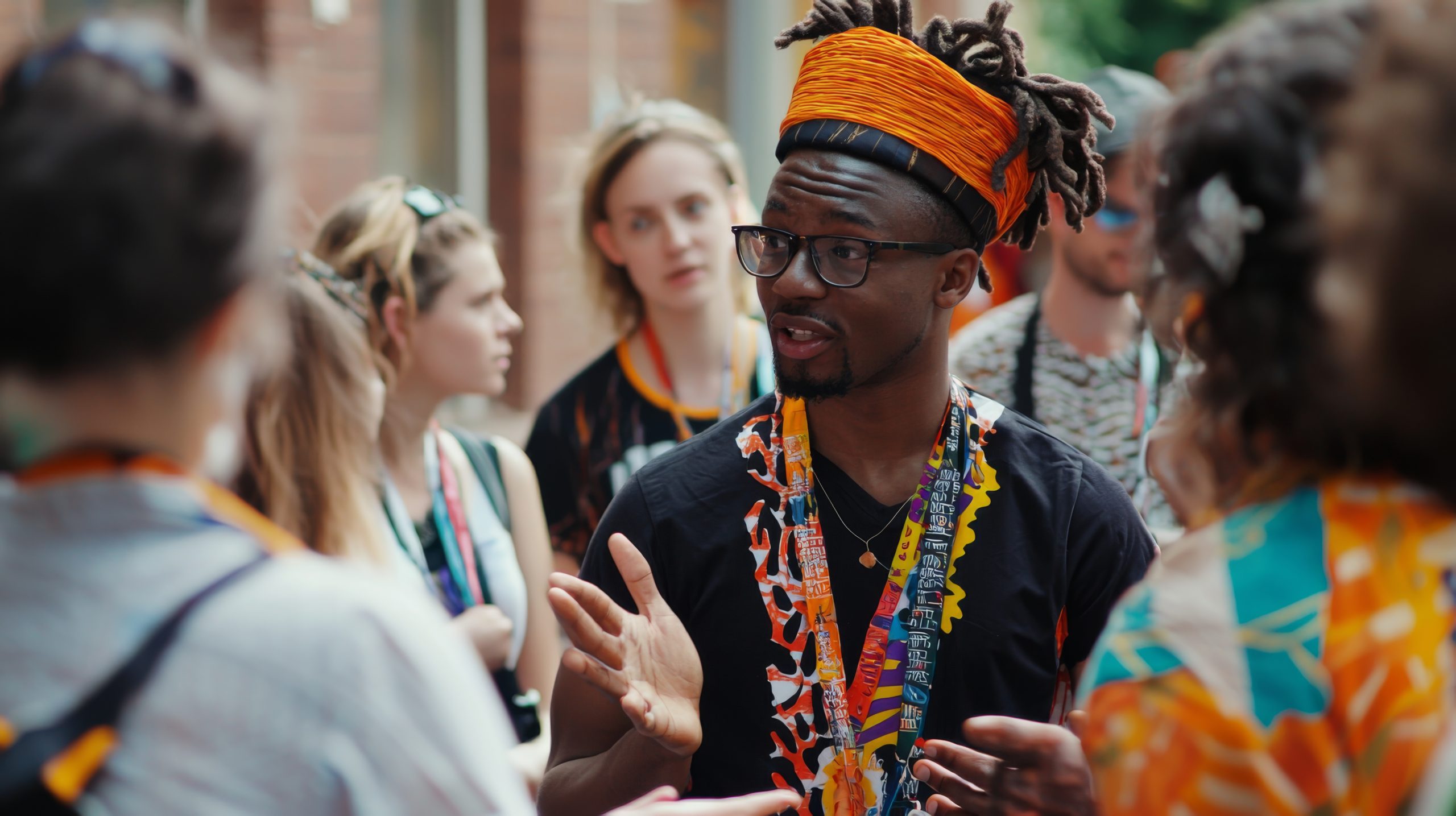
A practical framework for culturally respectful student travel, orientation tips, behavior norms, ethical tourism and reflection tools
In a kaleidoscope, mirrors reflect tumbling pieces of glass or beads, producing impossibly brilliant worlds of color and shape. In much the same way, experiences that introduce new sights, tastes, smells, and sounds to a young person have the capacity to produce an incalculable number of changes to their worldview. Often, the opportunities for these experiences are found in cultural contexts very different from those to which students may be accustomed.
However, the set of skills and outlooks that are necessary to become a citizen of the world isn’t exactly intuitive. It takes work to ensure your students are equipped to explore the unknown with ease, confidence, and curiosity. We’ve compiled a list of seven practices and tools you can use in your classroom to curate culturally respectful student trips.
Plan with purpose. Travel with impact. Get the Student Travel Pro magazine free.
Responsible Student Travel Practices
When it comes to preparing students for international travel etiquette and ethical tourism, cultural sensitivity encompasses several actions and mindsets that go beyond simple travel logistics.
- Recognize that feelings of culture shock and uncertainty are normal and temporary.
- Approach learning new experiences with curiosity by asking questions without judgment.
- Seek guidance when unsure of local habits regarding dress, food, and social etiquette.
- Reflect on experiences for deeper understanding and connection.
- Practice empathy to cultivate appreciation for dynamic ways of life.
The following seven practices will help educators prepare students for respectful and culturally aware experiences.
#1 – Pre-Trip Cultural Orientation and Expectation-Setting
Get your students excited about engaging with diverse cultures with a thoughtful pre-trip group orientation that sets the tone for the experience. Start with a short “why we travel” framing that provides context on the location and centers experiential learning, over sightseeing or tourism.
- Provide a cultural context before the journey. Focus on the local history, general social norms, and how to be culturally sensitive (avoiding stereotypes, for example).
- Define experiential learning with active participation. Give examples of what interactive learning might look like, such as engaging with locals in their daily lives, pursuing creative projects, and building social skills.
- Conduct an “assumptions check” to practice self-reflection. Assign students a self-reflective exercise that asks them to list three assumptions they may have about the destination. Then replace each with an open-ended question they can investigate through personal interactions and firsthand experiences.
- Set learning and behavioral expectations. Be sure to clearly outline to the group how students are expected to engage, with curiosity, awareness, and respect, so they understand the dual role they play as travelers and learners.
Teachers who invest time before the trip to help students navigate new worldly experiences will benefit during the journey; they maximize educational value for students and reduce misunderstandings across cultures.
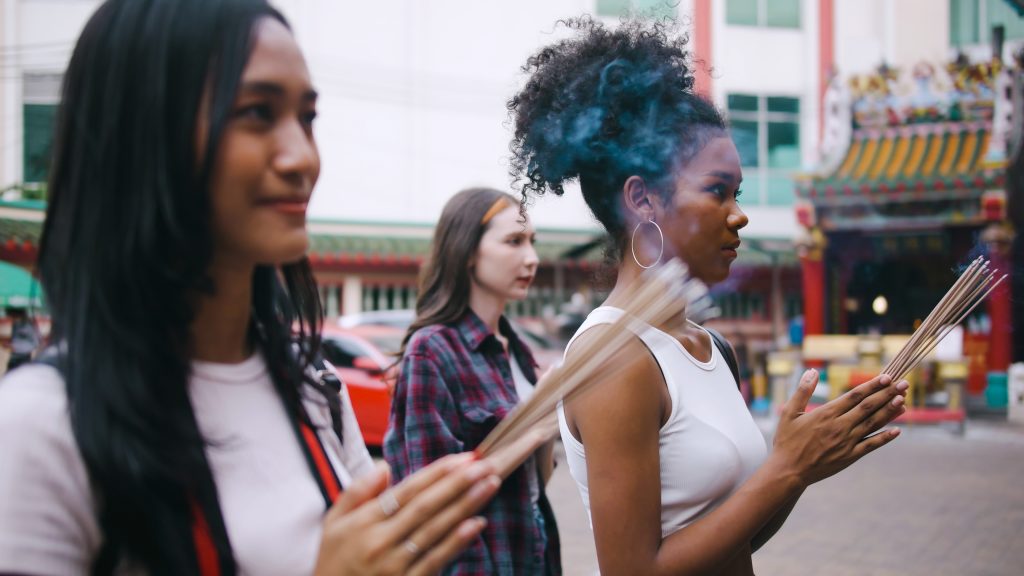
Discover unique ethnic traditions and religious practices while maintaining cultural etiquette. Credit: Freepik
#2 – Cover Respectful Behavior, Language and Body Norms
Prepare students beforehand by explaining the realities of diverse social norms across cultures. This includes eye contact, dress code, social conduct, voice level, and personal space, especially in religious or significant cultural sites.
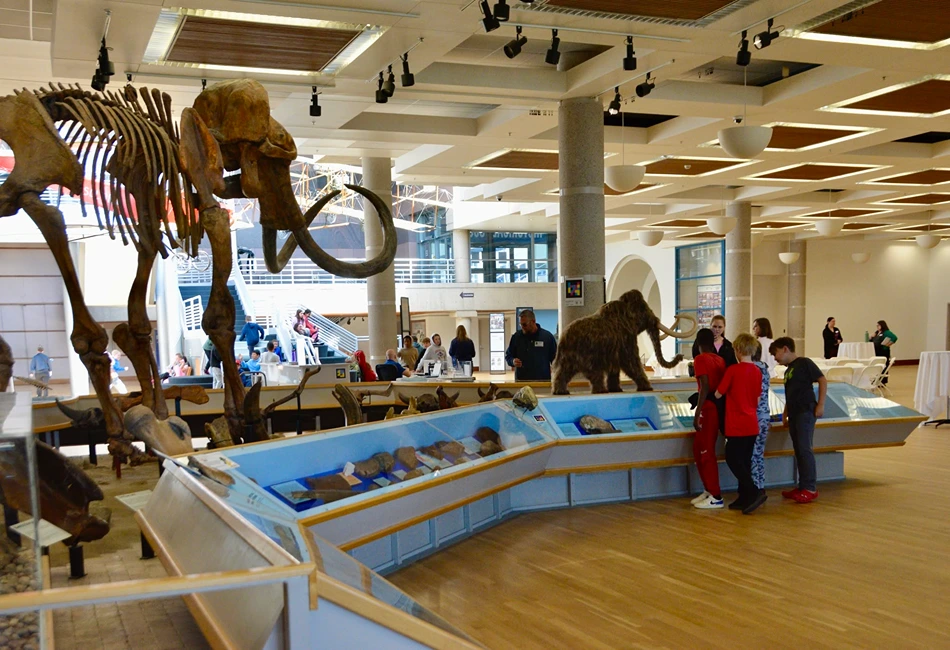
- Define behavior that is context-based. Give examples of museums, religious sites, and memorials that might call for more formal or professional conduct, such as quiet spaces for reflection or prayer.
- Practice through role-playing. Introduce three scenarios to practice proper etiquette: entering a religious site, buying from a vendor, and asking someone for help. This ensures that your students are prepared for real-world interactions, such as removing one’s shoes before entering a religious space, covering certain parts of the body, or tipping standards.
- Motivate students to observe first. Nonverbal communication includes body language, eye contact, and gestures that vary in meaning across cultures. By observing social interactions beforehand, students can feel confident in their engagement.
Proactive teaching engages students with cultural norms, reducing anxiety and uncertainty when they find themselves in an unfamiliar situation. This encourages positive interactions and confident exploration.
#3 – Encourage Curiosity Without Stereotyping
One of the most valuable traits a student can possess is curiosity, but it must be guided with thoughtful intention. Emphasize respectful, honest exchanges across cultures and age groups, and encourage asking questions.
- Avoid overgeneralizing. Remind students that one story does not represent a whole culture, teaching young learners to be open-minded about complex or nuanced situations, and to recognize that diversity is what makes us human.
- Encourage learning through questions. Suggest inquiring about local people and traditions instead of assuming who they are. This fosters creative and meaningful dialogue between cultures and deeper insight for students.
- Reframe language to replace stereotypes. Exchange statements about people, food, or practices with neutral observations and questions.For example, reframing language in real time, such as rephrasing “People here are…” into something more thoughtful, like “Can you please tell me more about…” or “I noticed that…”
Cultivate empathy and respect by framing curiosity as a tool for connection to world cultures, not as a categorization or stereotyping. The answer is in how questions are asked rather than the question itself.
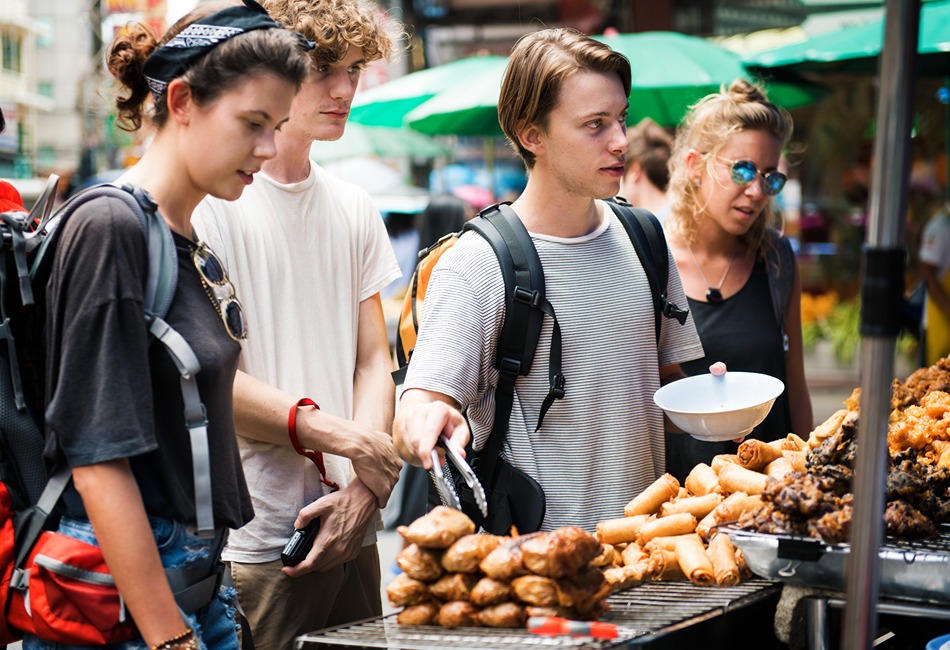
Explore food traditions for deeper appreciation of local cultures. Credit: Freepik
#4 – Supporting Ethical Tourism and Local Economies
Encourage students to consider what it means to spend intentionally and to make ethical purchases. Teach them beforehand about your destination’s local communities and what their livelihood and traditions look like.
- Explain intentional spending and why it matters. Give examples of what spending intentionally might look like, such as choosing locally owned shops for food or crafts that directly benefit the community.
- Define ethical purchases clearly. Provide examples of how to make ethical purchases, such as refraining from paying for experiences that exploit animals or people as props.
- Present a “Where does our money go?” map: Help learners visualize the impacts of their choices by following where their money goes. This can include local businesses, chains, and questionable places. Advise students to research products unique to the region, the history behind their production, and locally owned businesses that specialize in responsibly made products.
- Introduce students to global tourism standards. Review UNWTO’s ethics principles, which emphasize respect for host communities and the benefits to local economies.
PLANNING TIP: The GSTC (Global Sustainable Tourism Council) standards/criteria are widely used sustainability guidelines that include socio-economic, cultural, and environmental impacts, along with sustainable management practices.
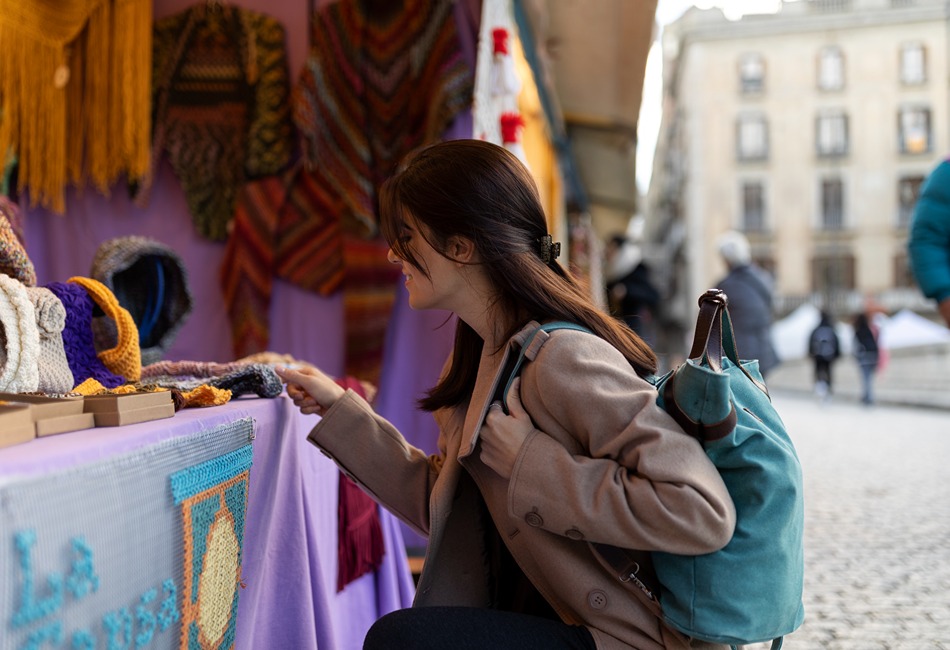
Consider the economic impact shopping locally has on the community you visit. Credit: Freepik
#5 – Preparing Students to Engage with Unfamiliar Customs and Beliefs
Remind students that uncomfortable feelings are a normal part of cross-cultural experiences. They may arise when students encounter unfamiliarity outside their comfort zones, and it is important to observe first, reflect thoughtfully, and act accordingly.
- Teach observing first and evaluating after. Encourage students to note cultural differences and consider how and why they differ from what they are personally accustomed to.
- Present cultural differences as explorations. Ask students to document similarities and differences they notice across cultures and reflect on why they exist. Help students understand what might feel surprising, and what a respectful response looks like.
- Practice in advance. Use role-play or classroom discussions that walk students through real-life situations they may encounter. This will help them build confidence in their responses.
By normalizing unfamiliarity in cross-cultural situations, you’re equipping students with the tools they need to navigate foreign surroundings and engage meaningfully with respect.
#6 – Addressing Power Dynamics and Privilege in Travel Contexts
Help students understand that when they travel, they represent not just themselves or a school, but a broader social, racial, or economic background. For example, they may be perceived as affluent outsiders even when some students don’t identify with that.
- Caution students against “savior” framing. Encourage them to focus on listening and learning by shifting their mindset from “helping” or “fixing” to observing and learning.
- Teach an “impact vs. intent” mini lesson. Cover how jokes, photos, bargaining, or comments land differently across contexts and cultural beliefs. Help students understand that their intentions don’t always align with how others perceive their actions.
- Promote awareness and reflection on defensiveness. Have space for thoughtful open dialogue where students can process ideas without discomfort. This helps build awareness, empathy, and global consciousness among travelers.
#7 – Modeling Adaptability, Humility and Reflective Learning
Teachers set the tone for how students respond to new cultures, unfamiliar situations and foreign environments. Educators must model adaptability and humility by demonstrating how to adjust tone and expectations respectfully in real time.
- Model flexible and calm leadership. Explain that when leaders make a mistake, they apologize, correct their actions, and assume a flexible behavior and a calm tone of voice. Practice this in social settings, and students will mirror your reactions.
- Prioritize personal reflection every day. Emphasize how daily reflection transforms experiences from surface-level observations into major lessons by intentionally cultivating self-awareness and empathy.
- Provide students with a simple three-question daily debrief. Ask students what surprised them, what they learned about themselves, and what they will do differently tomorrow.
Group Norms & Cultural Etiquette for School Trips
Finally, a list of group norms can help solidify students ’understanding of what their actions and behavior should generally look like during a trip. Here is an example that covers a wide range of scenarios.
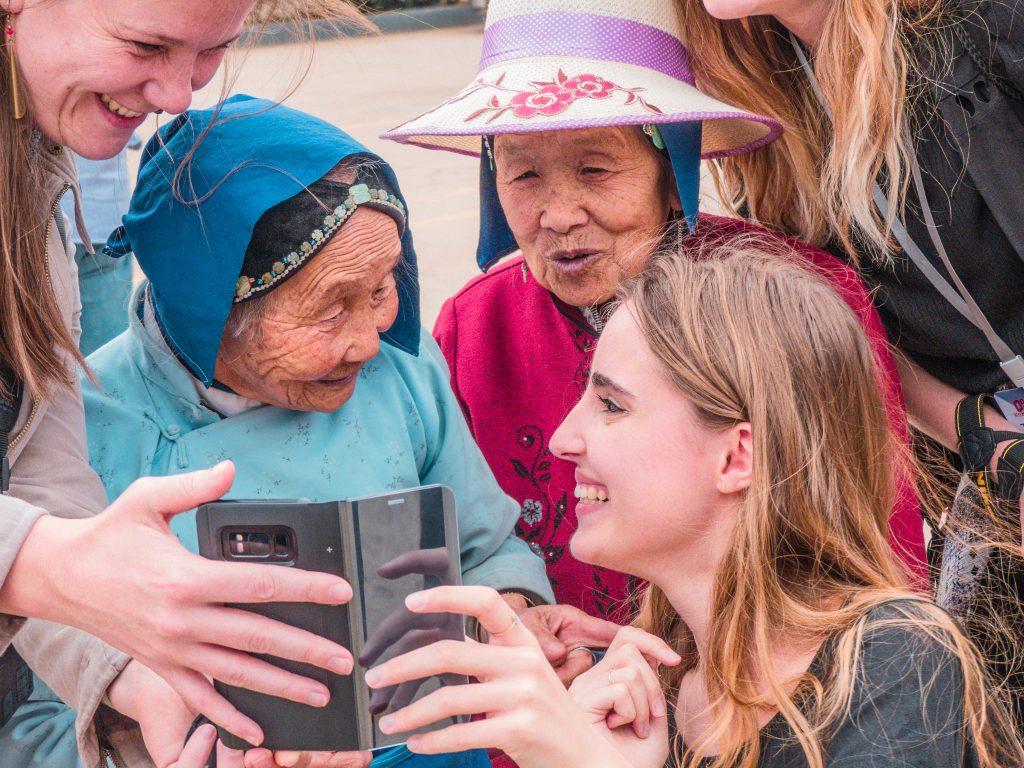
Ask permission to take photos with people and consider your motivation behind it. Credit: Freepik
Photo & Social Media Norms
Limit phone usage to keep focus on the group and surroundings. Be mindful of the people around you and the requirements of the social setting. Understand that not everyone will want their photo taken, and that it may be necessary to ask for permission first.
Before posting on social media, ask yourself: Would you want a photo like this of yourself posted on social media? Or would you take the same photo at home in your own country? If the answer is no, reconsider your motivation behind posting and maybe put the phone down.
Language Norms (slang, volume, humor)
Loud conversations, especially in quiet zones like museums or public transport, are considered rude. Avoid speaking louder when trying to be understood. Speak more slowly and clearly or use a translation tool. Avoid using slang, as it can hinder understanding, and remember that humor is subjective. Sometimes it can be translated poorly and misunderstood.
Religious & Cultural Site Behavior Norms
Research dress codes in advance. Prioritize respectful behavior by dressing appropriately to honor local religious standards. Interact with sacred statues or site areas in socially appropriate ways. Do research on the site’s rules in advance to avoid disruption. Refrain from taking photos of people, ceremonies, or important icons. Keep conversations to a whisper, as many sites are active places of worship, and respect local signage.
Purchasing & Tipping Norms (general, not country-specific)
Tipping norms vary widely by destination. Researching local customs is important, as some cultures view tipping as insulting while others view it as expected.
Script: “If you’re not sure, ask.”
Prepare your students with a respectful opening when meeting new people. For example, “Hello! I am visiting from another country, and I was wondering what the proper way to experience [aspect of culture] is?”
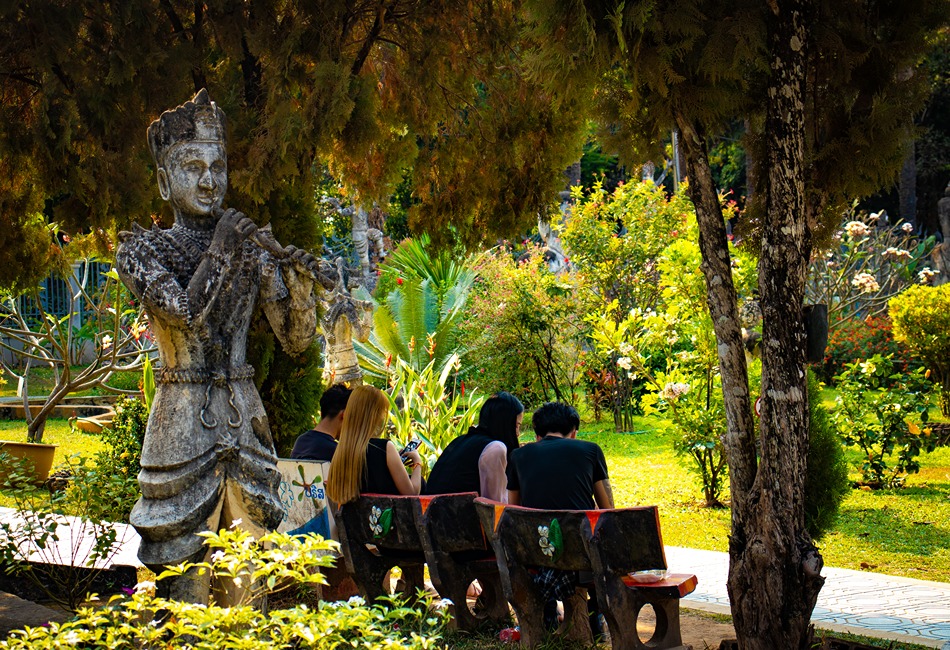
Understand cultural practices when visiting religious sites, where quiet reflection is best practiced. Credit Freepik
Cultural Sensitivity for Student Travel
Ultimately, we must return to the kaleidoscope metaphor. The mirror is one of the toy’s most important components, as it reflects the light off the shifting pieces of colorful glass to create a beautiful, intricate image. Similarly, self-reflection will be students’ most powerful tool in cultivating a sense of wonder, excitement, and curiosity about the new culture they are encountering and others they have yet to. Like the mirror, this self-reflection will produce confident explorers and enable them to create a vibrant, dynamic worldview.
Expert guidance—delivered to your inbox. Get student-friendly destinations, tips, and trends—free. Subscribe to the Student Travel Pro newsletter.
By Natalie Hsu