From advanced manufacturing and ag technology to insurance, healthcare and wind energy, Iowa gives students access to industries shaping the state’s economy—and the careers behind them
Part of the high school experience is preparing students for their future, and schools are under increasing pressure to deliver meaningful career- and workforce-readiness outcomes. This presents an important opportunity for tour operators. Trips that connect high school students to real-world situations in authentic environments give schools a stronger reason to book the experience and a clear case to present to administrators and parents.
Iowa is particularly well suited for this kind of student travel because its workforce story extends far beyond the industry most often associated with the state. Agriculture remains a defining part of Iowa’s identity, but students can also explore advanced manufacturing, biotechnology, food science, insurance and finance, information technology, hydroscience, healthcare and renewable energy.
Those industries are not simply topics students can learn about while visiting Iowa; they are central to the state’s economy and history. Advanced manufacturing is one of Iowa’s largest industries, Greater Des Moines has one of the nation’s highest concentrations of insurance employment, and Iowa is among the country’s leading producers of wind-generated electricity.
Just as importantly, Iowa has an impressive statewide network of colleges and universities preparing students for these fields. The state is home to three public universities and 15 community college districts, along with private colleges, universities and specialized health-care institutions. That means operators can connect industry exposure with education and training pathways in communities throughout Iowa—not only its largest cities.
In this article, we examine ways operators can package Iowa itineraries around career and workforce exposure, employer visits, professional conversations, hands-on learning opportunities and postsecondary exploration. We also provide language operators can use to help communicate the educational value of an Iowa career-readiness trip to schools and administrators.
Plan with purpose. Travel with impact. Get the Student Travel Planning Guide free.
WHY IOWA? SEVEN INDUSTRIES STUDENTS CAN EXPLORE IN ONE STATE
One of Iowa’s strengths as a career-readiness destination is the range of industries students can encounter within its borders. Some grow directly from the state’s agricultural heritage and natural resources, while others demonstrate how Iowa’s economy has expanded into technology, manufacturing, healthcare, finance and advanced science.
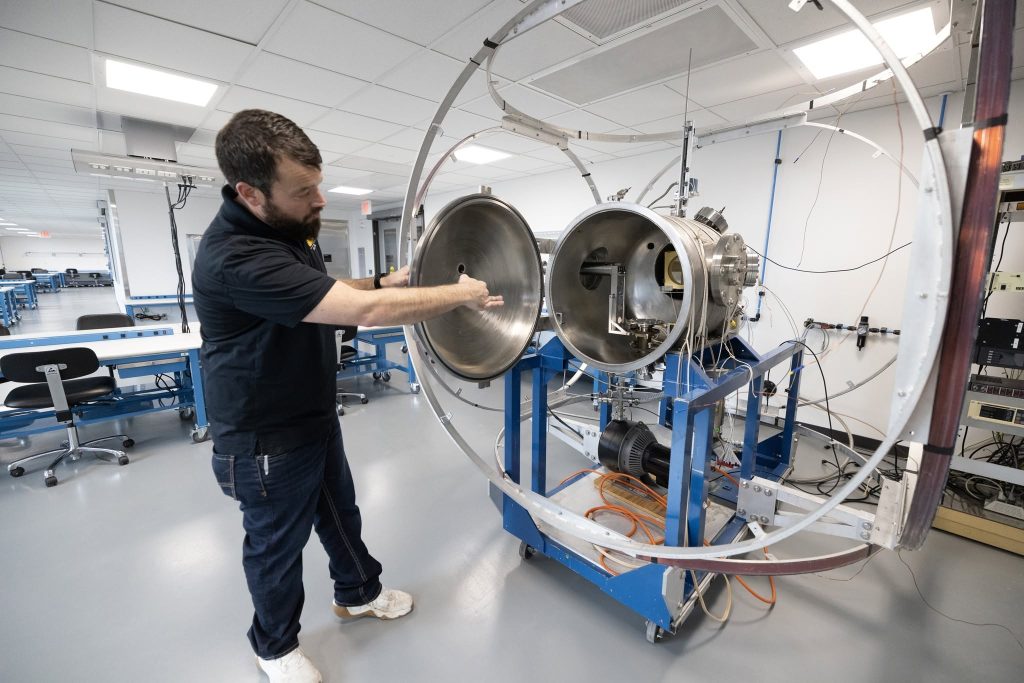
Iowa Spaceflight Laboratory at the University of Iowa. Credit: University of Iowa Facebook
An exploratory trip can introduce students to several sectors, while specialized groups can build an entire itinerary around one career pathway.
- Advanced Manufacturing – automation, engineering, robotics, quality control, logistics, supply chain careers and skilled trades
- Agriculture & Ag Technology – equipment technology, precision agriculture, agronomy, animal science, data systems, farm-to-business operations and agricultural engineering
- Biosciences, Food Science & Hydroscience – biotechnology, plant science, genetics, laboratory work, animal health, food production, water research and food safety
- Insurance, Finance & Data – financial services, risk management, business technology, customer experience, actuarial work and data analytics
- Information Technology & Cybersecurity – IT support, software, network systems, cybersecurity and data-focused roles across agriculture, finance and manufacturing
- Renewable Energy – wind energy, engineering, electrical systems, environmental planning, construction, maintenance and operations
- Healthcare & Medical Careers – nursing, emergency medical services, pharmacy, allied health, medical technology and patient care
WHAT COUNTS AS A CAREER-READINESS EXPERIENCE?
Career readiness does not mean every stop needs to operate like a classroom. Strong itineraries provide students with opportunities to immerse themselves in authentic settings, interact with professionals and imagine how their passions and interests could translate into future careers.
In Iowa, that might mean moving from a university laboratory to a manufacturing environment, from a working agricultural operation to a technical college, or from a Des Moines professional workplace to a health simulation lab.
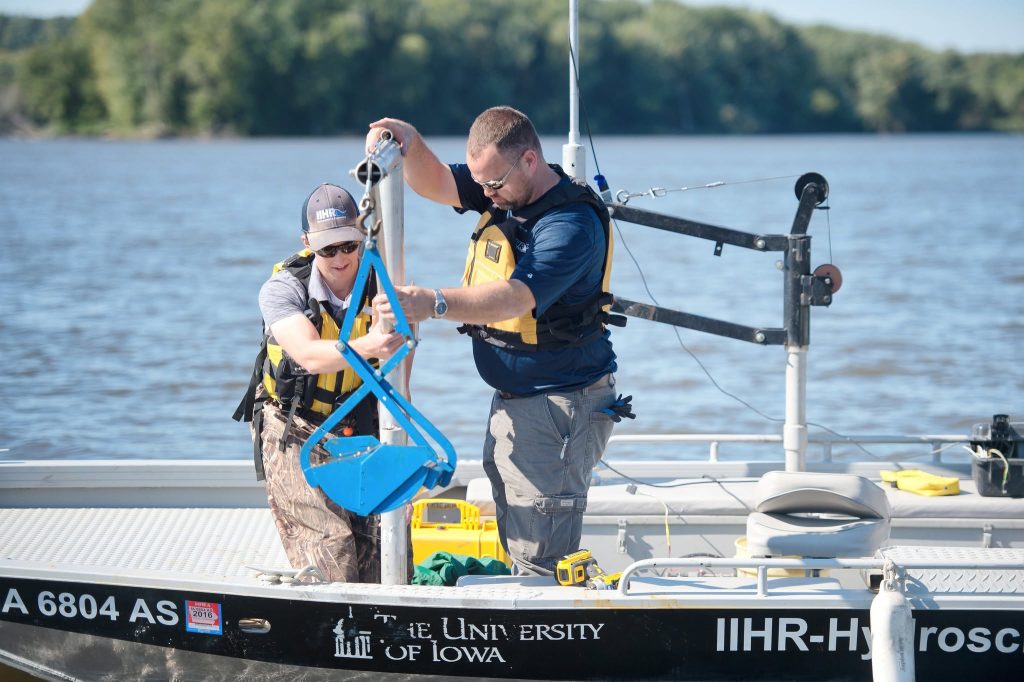
The University of Iowa is the birthplace of hydroscience research, and IIHR – Hydroscience and Engineering is an internationally renowned lab. Credit: University of Iowa Facebook
Look for experiences that deliver one or more of the following:
Real Workforce Exposure
Visits to production sites, factories, working farms, manufacturing plants, professional workplaces, universities and college campuses allow students to visualize themselves in real-world environments.
The benefit of doing this in Iowa is the variety. A student can encounter traditional skilled trades alongside robotics, plant science, data analytics, aviation, healthcare, engineering or renewable-energy technology, helping challenge outdated assumptions about what Iowa careers look like.
In-the-Field Discussions with Professionals
Interacting with professionals lets students ask questions and receive real-time answers from people working in their fields. This helps learners understand day-to-day responsibilities, education requirements, workplace expectations and what a career might actually look like.
Operators can strengthen these conversations by encouraging students to ask how the professional entered the field, what skills employers value and how their industry is changing.
Hands-On Activities & Live Demonstrations
Abstract concepts become tangible when students engage in direct experiences such as hands-on workshops and live demonstrations. It becomes easier to understand how equipment, technology, scientific processes and workplace skills are practiced and applied in real life.
In Iowa, these experiences can be especially effective when they demonstrate how technology has transformed established industries such as agriculture and manufacturing or allow students to experience simulated professional environments in fields such as healthcare.
University and Community College Visits
More than an introduction to college life, campus tours can open doors to professional conversations and help students compare academic programs and potential career pathways.
PRO TIP: Operators should consider asking a college whether a visit can include a specific academic program, specialized facility, laboratory, technical-training space or conversation about internships and career services.
Iowa’s universities and community colleges are particularly useful itinerary partners because their programs often reflect the industries and workforce needs of their regions.
Career Pathway Awareness
It is not about students choosing their lifelong career during a single trip. The goal is to introduce them to pathways they could pursue after high school.
Those options are not limited to four-year colleges. Career preparation can include community college programs, apprenticeships, industry certifications, internships, technical training and employer-based learning.
Showing students multiple routes into Iowa industries can be one of the trip’s most valuable outcomes.
WHAT MAKES A CAREER-READINESS TRIP DIFFERENT?
General field trips provide firsthand educational experiences outside the classroom. Career-readiness trips add another layer by deliberately connecting those experiences to the workforce.
A museum, university or traditional attraction can still play an important role when students receive behind-the-scenes access, meet employees or investigate the careers required to operate the organization.
The difference lies in the framing: students are not only asking “What can I learn here?” but also “Who does this work, what skills do they need and could I imagine myself doing it?”
From classroom goals to real-world learning. Download your free copy of the Student Travel Planning Guide for inspiration and expert advice.
BUILD CAREER-READINESS ITINERARIES AROUND IOWA’S WORKFORCE STRENGTHS
Iowa’s industries offer more than general educational stops. They provide operators with an opportunity to craft flexible itineraries around students’ interests, school programming and future career objectives.
During an exploratory trip, an Iowa itinerary could introduce students to several industries. Groups with established career and technical education programs can instead take a deeper dive into a particular field.
The institutions and companies below are useful starting points for itinerary research and potential partnerships. Because employer access, student programming and security requirements can change, operators should contact organizations directly rather than assuming that public group tours are available.
Advanced Manufacturing: See the Other Side of Iowa’s Economy
Agriculture may dominate outsiders’ perceptions of Iowa, but manufacturing tells another major part of the state’s economic story.
Advanced manufacturing is one of Iowa’s largest industries, producing everything from food products and agricultural machinery to aerospace and defense equipment, electronics, chemicals and medical devices. That breadth makes the state a valuable place for students to explore how engineering, technology and skilled trades function in modern workplaces.
Several major Iowa employers illustrate the range of careers involved. Pella Corporation, headquartered in Pella, has worked with local students through apprenticeships in manufacturing, information technology and business; its WorkSMART partnership provides students with paid, credit-earning work-based learning opportunities.
In Osceola, Altec provides another example of modern Iowa manufacturing, with local careers spanning engineering, production and equipment-related work. The company’s Iowa operations manufacture and support equipment used by industries such as electric utilities and telecommunications.
Cedar Rapids also expands the manufacturing story into aerospace. Collins Aerospace maintains substantial operations there, with current careers ranging from software and systems engineering to artificial intelligence and advanced aviation technology.
Check out Educational Agricultural and Factory Tours in Iowa for more information.
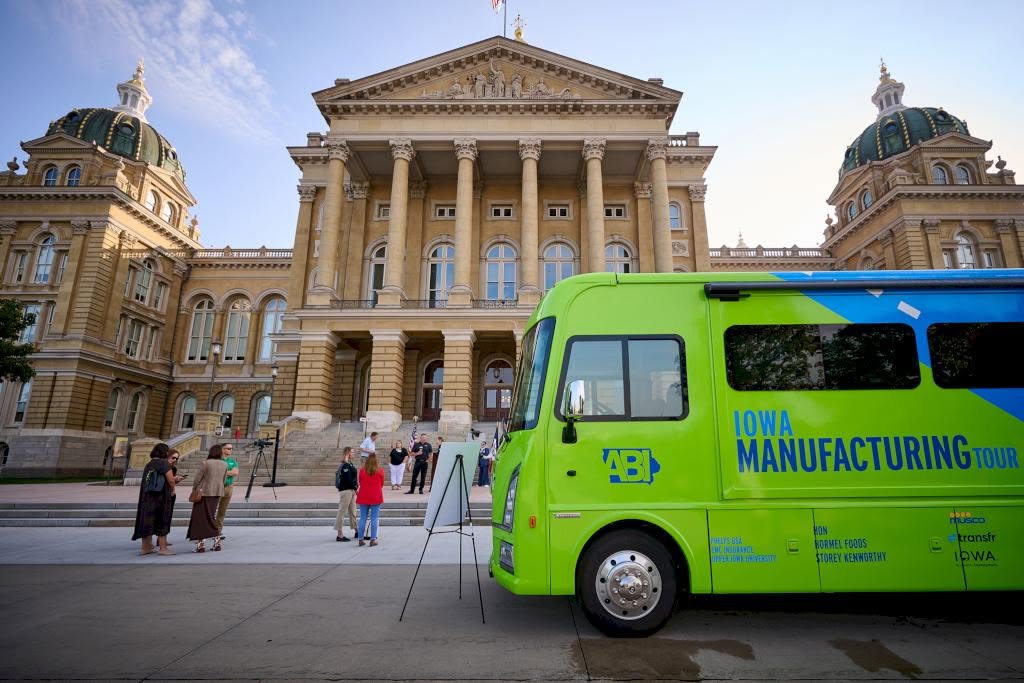
The Elevate Iowa Manufacturing Tour showcases career opportunities across the state. Credit: Iowa Association of Business and Industry Facebook
BUILD THE EXPERIENCE: Pair a manufacturing or production-site visit with a technical college, university discussion, workforce panel or demonstration of modern equipment. Companies such as Pella, Altec or Collins Aerospace can also serve as starting points when researching employer partnerships, even when regular public tours are not offered.
POSITION THIS FOR ADMINISTRATORS: Students see how STEM topics translate into real-world scenarios and day-to-day operations. They can observe technical skills, problem-solving, automation and teamwork while discovering that Iowa manufacturing encompasses far more than a single industry.
PRO TIP: Iowa students can consider the Elevate Iowa Manufacturing Tour, a statewide initiative that introduces students to manufacturing careers through facility visits and employer engagement. Operators should confirm current dates and participating companies when planning.
Agriculture & Ag Technology: Look Beyond the Farm
Agriculture is one of Iowa’s defining industries, making the state a natural destination for students interested in food systems and ag careers.
But an Iowa agriculture trip can—and should—move well beyond the traditional image of farming. Today’s careers encompass precision agriculture, agronomy, animal science, agricultural engineering, biotechnology, business management, equipment technology and data systems.
This is one of the clearest examples of why Iowa works so well for career-readiness travel: students can investigate an industry deeply embedded in the state’s identity while seeing how science and technology continue to transform it.
Iowa State University provides a natural academic connection through programs and research spanning agriculture, engineering, animal science, plant science and technology. Operators can also look to Iowa agricultural businesses, research facilities, and working operations to show how data, automation, genetics and advanced equipment are changing how food is produced.
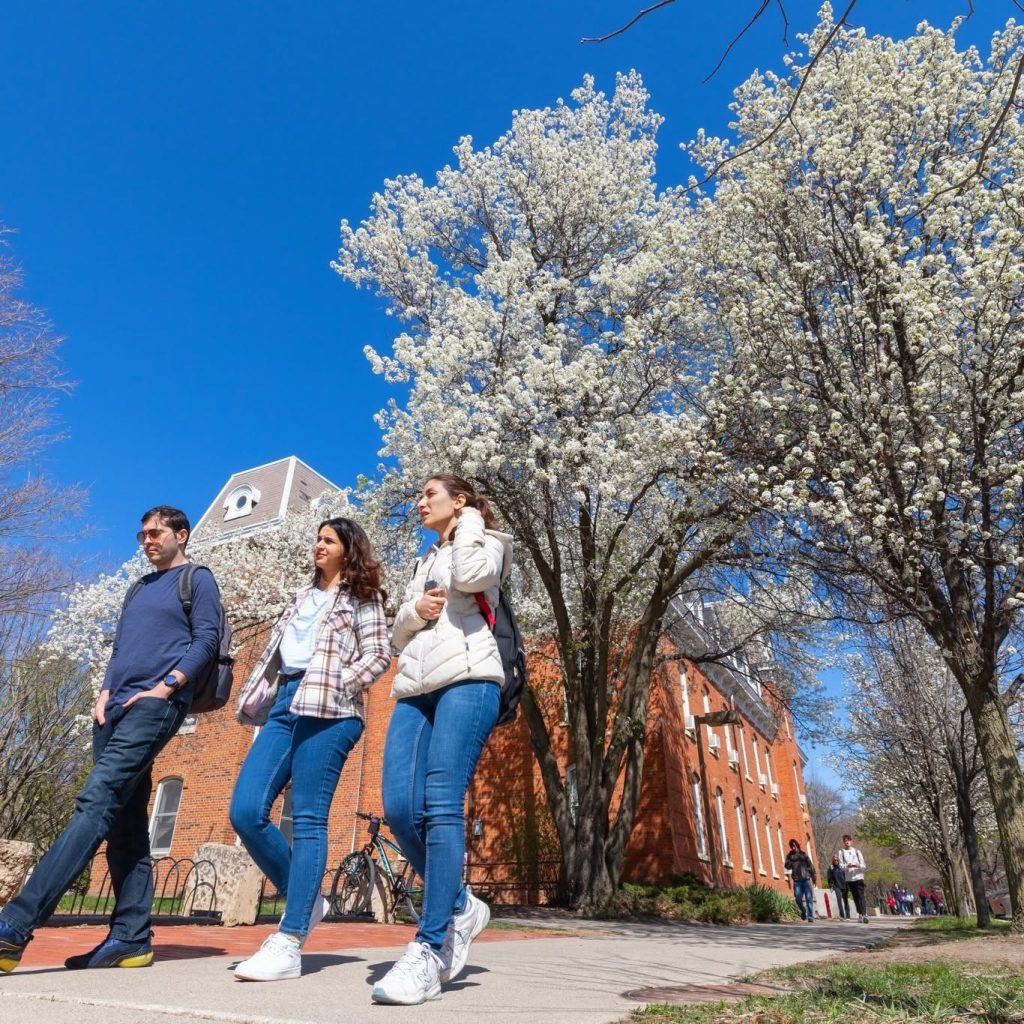
Tour the Iowa State University campus and discover programs spanning agriculture to genetics. Credit: Iowa State University Facebook
BUILD THE EXPERIENCE: Incorporate a working farm, agricultural research experience or production operation with an ag-science program, dialogue with industry professionals or a university visit. Ask potential partners whether students can hear from employees working in fields such as agronomy, engineering, animal science, data analysis or agricultural business.
POSITION THIS FOR ADMINISTRATORS: High school students witness firsthand how technology, science, engineering and business come together within a modern industry responsible for producing and moving food through increasingly sophisticated systems.
Biosciences, Food Science & Hydroscience: Science With Iowa Roots
Iowa’s agricultural strengths have also helped create a natural environment for bioscience and food-science careers. The state’s bioscience sector includes areas such as agricultural bioscience, human and animal health, food security and bio-based products.
For students, these industries directly connect classroom biology and chemistry to fields involving genetics, plant science, biotechnology, laboratory research, animal health and food production.
One Iowa company that illustrates those connections is Kemin Industries. Founded in Iowa in 1961 and headquartered in Des Moines, the global company develops science-based nutritional and health products for people, animals, plants and food systems. Its Des Moines campus includes research laboratories, making Kemin a useful example of how an Iowa agricultural business grew into a global bioscience and food-technology company.
Iowa’s science story also extends to water.
At the University of Iowa, IIHR—Hydroscience & Engineering has more than a century of history researching water and fluid dynamics. Its first hydraulics laboratory opened on the banks of the Iowa River in 1920. Researchers have addressed real-world problems involving rivers, floods, rainfall, ship hydrodynamics, environmental systems and water resources—giving students another example of research conducted in Iowa with applications far beyond the state.
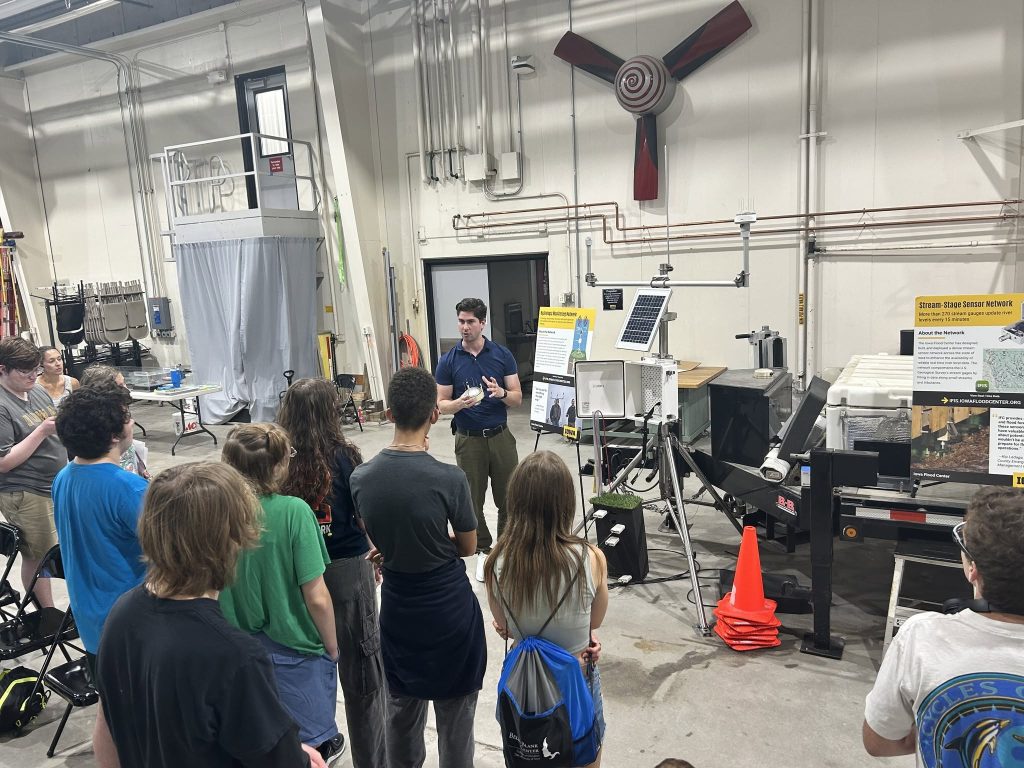
High school students tour the IIHR-Hydroscience and Engineering facility at the University of Iowa. Credit: IIHR Facebook
BUILD THE EXPERIENCE: Seek opportunities involving university programs, research facilities, food-production environments, science-based employers such as Kemin or conversations with researchers and professionals. Employer visits should be arranged individually according to current access policies.
POSITION THIS FOR ADMINISTRATORS: Students gain a clearer understanding of how chemistry, biology, engineering and research skills can lead to careers addressing food production, environmental systems, animal and human health and water-related challenges.
Insurance, Finance & Data: Discover a Side of Des Moines Students May Not Expect
An Iowa career-readiness trip can also introduce students to one of the state’s less obvious workforce strengths: insurance and financial services.
Greater Des Moines has one of the country’s highest concentrations of insurance employment, making the metro especially relevant for showing students that careers in insurance and finance extend far beyond sales or customer service.
Students can investigate actuarial science, risk management, business technology, communications, cybersecurity, data analysis, finance and client services.
Major Des Moines employers such as Principal Financial Group and EMC Insurance help illustrate that variety. Principal’s student opportunities encompass areas such as finance, investments, technology, marketing and communications, while EMC offers careers and internships in fields including information technology and analytics as well as traditional insurance functions.
EMC provides an especially relevant high-school example: the company partners with Des Moines Public Schools to provide paid work experience for local juniors and seniors, allowing students to see behind the scenes of a professional workplace before graduation.
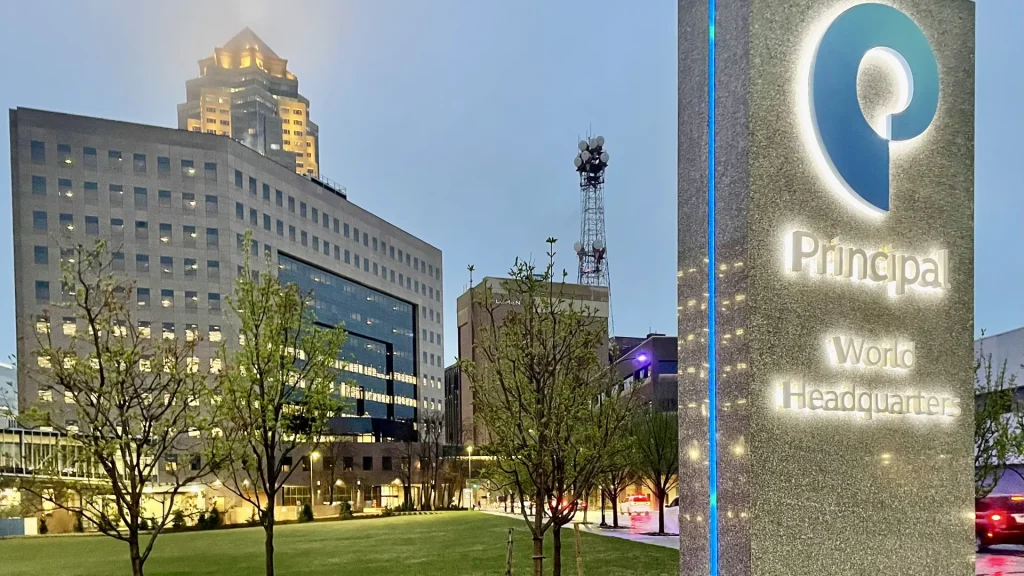
Principle Financial Group in Des Moines offers a behind-the-scenes glimpse into finance careers. Credit: Bing
BUILD THE EXPERIENCE: Pair workplace conversations or professional panels with career-focused campus tours or visits that show learners how different departments contribute to a larger organization. Principal, EMC and other Des Moines employers can serve as starting points for outreach about potential workforce-development experiences.
POSITION THIS FOR ADMINISTRATORS: Students learn how math, technology, communication and analytical skills apply to major professional-service industries while discovering a career sector they may not immediately associate with Iowa.
Information Technology & Cybersecurity: Technology Behind Iowa Industries
Technology and technical skills are increasingly relevant across nearly every modern industry.
Students traveling through Iowa can explore how IT, software, data systems and cybersecurity support agriculture, finance, manufacturing, insurance and other sectors.
That cross-industry connection is one of the strongest reasons to include technology on an Iowa career itinerary. Students don’t need to visit a traditional Silicon Valley-style technology company to find meaningful tech careers. They can see how programmers, cybersecurity specialists and data professionals support industries already rooted in Iowa.
Collins Aerospace in Cedar Rapids is one example. Current positions at its Iowa operations include software engineering, artificial intelligence, automation and systems engineering—demonstrating how digital technology intersects with aerospace manufacturing and engineering.
The same principle applies across Iowa’s agricultural, manufacturing, finance and insurance companies, where cybersecurity and data systems increasingly support everyday operations.
BUILD THE EXPERIENCE: Combine a technology-focused discussion or demonstration with an innovation center, campus program or workplace conversation about software, digital systems, automation, IT careers and data protection.
POSITION THIS FOR ADMINISTRATORS: Students discover that technology careers span many industries and understand how digital skills can create multiple professional pathways without requiring a career at a traditional technology company.
Renewable Energy: Study Wind Power Where It Shapes the Landscape
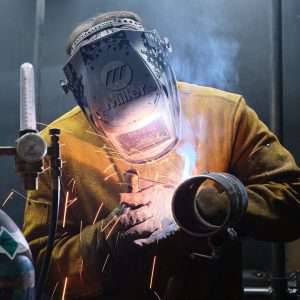
Students can discover careers in skilled trades, including welding and other technical training throughout Iowa. Credit: Iowa Lakes Community College Facebook
Few career-readiness topics connect Iowa’s landscape, infrastructure and workforce as visibly as wind energy.
Wind is Iowa’s leading source of electricity generation, making renewable energy more than an abstract sustainability topic here. Students traveling across the state can physically see wind infrastructure while exploring the careers needed to design, construct, operate and maintain it.
Those careers include engineering, electrical systems, environmental planning, construction, turbine maintenance, safety and operations.
Iowa also offers a direct education-to-workforce connection. Iowa Lakes Community College in Estherville operates a Wind Energy & Turbine Technology program featuring hands-on electrical, hydraulic and mechanical training as well as a full-scale operational wind turbine on campus.
BUILD THE EXPERIENCE: Consider incorporating a college energy program, renewable-energy educational stop, technical-training discussion or demonstration into a broader STEM itinerary.
POSITION THIS FOR ADMINISTRATORS: Students connect sustainability, physics, engineering and technical skills to an industry they can see operating across Iowa while learning about degree and technical-training pathways into the workforce.
Healthcare & Medical Careers: Practice Skills Before Entering the Profession
Healthcare adds another vital dimension to Iowa’s career-readiness story.
The state has six colleges specifically categorized by the Iowa Department of Education as nursing and health-care institutions, along with medical, nursing and allied-health programs at public universities, private colleges and community colleges throughout Iowa.
The University of Iowa Health Care system provides one example of how students can explore these careers before college. Its STEM Education programming at Carver College of Medicine engages K-12 students in health sciences, and its Teens Go STEM program for grades 9 through 12 has included hands-on medical simulations and activities focused on healthcare skills, medical innovation and career exploration.
Community colleges provide another hands-on route. Southeastern Community College in West Burlington incorporates simulation into its nursing education, using a clinical simulation lab where students can practice patient-care scenarios in a controlled environment. The college also offers emergency medical services and paramedic training.
In Waterloo, Hawkeye Community College offers nursing and allied-health pathways, along with dental assisting and dental hygiene programs featuring a working training clinic and extensive clinical experience.
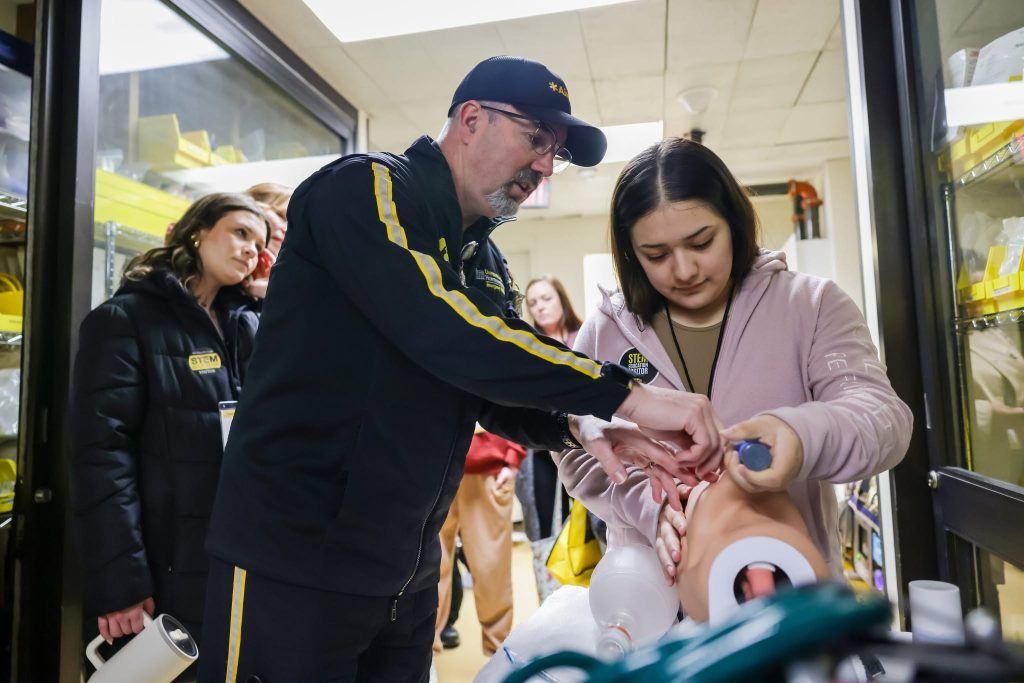
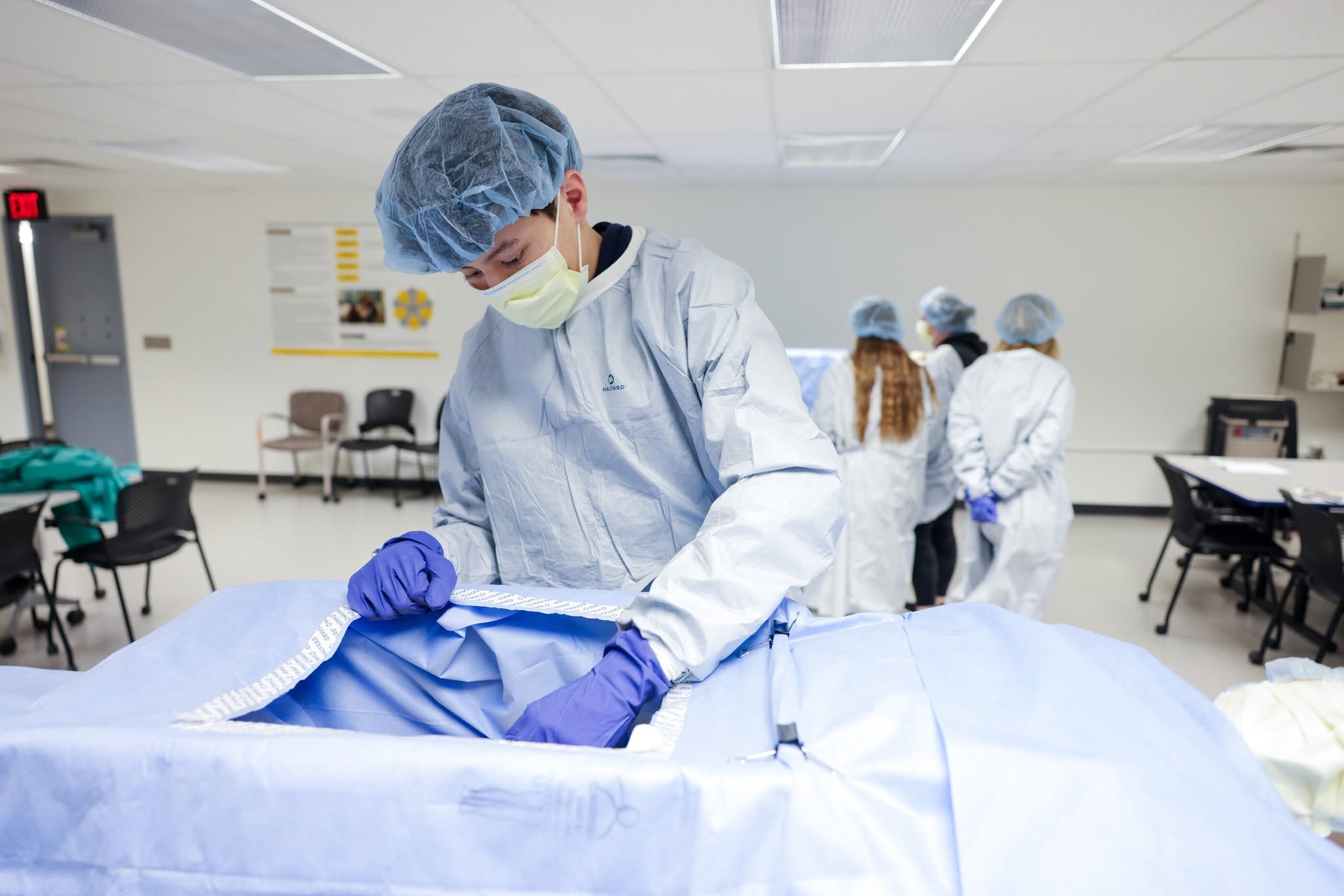
Teens Go STEM program at Carver College of Medicine lets students get hands-on in real-world scenarios and authentic environments. Credit: Carver College of Medicine Facebook
BUILD THE EXPERIENCE: Explore campus health-science facilities, simulation laboratories, healthcare STEM programming or conversations with professionals working in nursing, emergency medicine, pharmacy, allied health or medical technology. Programs such as UI Health Care’s Teens Go STEM demonstrate how hands-on career exploration can introduce students to the field.
POSITION THIS FOR ADMINISTRATORS: Students connect biology, chemistry, technology, communication and problem-solving to professions that directly serve communities while learning about education pathways ranging from certificates and associate degrees to professional healthcare programs.
CONNECT IOWA INDUSTRIES TO POSTSECONDARY PATHWAYS STATEWIDE
Strengthen an Iowa itinerary with university and community college visits that show students how education connects to the industries they have explored.
A campus tour allows students to picture themselves in an academic environment while learning how degree programs, technical training, credentials, internships and career services connect to future employment.
Iowa’s higher-education network makes this particularly useful for tour operators. The state has three public universities and 15 community college districts, supplemented by private nonprofit colleges and universities and six specialized nursing and health-care institutions. These schools are distributed across Iowa, so career-readiness programming doesn’t have to be concentrated in a few major metros.
Many programs also reflect regional workforce needs. Potential itinerary connections include:
- Iowa State University, Ames – agriculture, engineering, biosciences, computing and research
- University of Iowa, Iowa City – engineering, hydroscience, healthcare, research and technology
- University of Northern Iowa, Cedar Falls – business, education, technology and applied career pathways
- Kirkwood Community College, Cedar Rapids – Aviation Maintenance Technology, including hands-on instruction in an aircraft hangar at the Eastern Iowa Airport
- Iowa Lakes Community College, Estherville – Wind Energy & Turbine Technology with an operational on-campus wind turbine
- Southeastern Community College, West Burlington – welding, nursing, emergency medical services and health simulation facilities
- Hawkeye Community College, Waterloo – nursing, dental hygiene and other allied-health and technical programs
- Northwest Iowa Community College, Sheldon – powerline, electrical and construction programs, including extensive hands-on field training
- University of Dubuque, Dubuque – aviation and flight operations, including professional pilot training and simulator experience
- Drake University, Des Moines – pharmacy, nursing, occupational therapy and health sciences
Operators should ask whether a college visit can include a specialized academic program, laboratory, hangar, simulation facility, technical-training space or career-services discussion rather than relying entirely on a traditional admissions tour.
The goal is not simply to add a college visit. It is to help students connect an Iowa industry they have just experienced with a realistic next step for entering that field.
CREATE AN IOWA CAREER-READINESS ITINERARY WITH PURPOSE
Career and workforce-readiness experiences allow high school students to picture themselves in real-world environments where classroom learning connects to authentic professional scenarios.
What makes Iowa particularly effective for these trips is the way seemingly different industries intersect.
Agriculture connects with biotechnology, data and engineering. Manufacturing relies on robotics, logistics and skilled trades. Insurance increasingly depends on analytics, technology and cybersecurity. Wind energy combines engineering with environmental science and technical training. Healthcare requires science, technology and human-centered skills. Iowa’s universities, private institutions and community colleges prepare students for each of these fields.
That means an Iowa trip can show students something larger than a collection of careers. It can demonstrate how a modern workforce functions as an interconnected system—and how education and training pathways respond to the needs of individual regions.
A student may arrive thinking Iowa means agriculture and leave understanding how agriculture itself connects to genetics, computing, finance, manufacturing and engineering. Another may discover that Des Moines is a national insurance center, that Iowa researchers have spent more than a century studying water, that healthcare students practice in advanced simulation environments, or that the wind turbines visible from a motorcoach represent an entire network of technical careers.
Specific Iowa employers make those possibilities even easier to visualize. A manufacturer such as Pella can demonstrate apprenticeships and production careers. A bioscience company such as Kemin can connect agriculture with laboratory research and global food systems. Employers such as EMC can show students the many professions operating behind an insurance company. Colleges throughout the state can then demonstrate the education and technical preparation required to enter those fields.
That is the value Iowa brings to career-readiness student travel: students can encounter established industries, emerging technologies, real employers and multiple pathways into the workforce within one state—and begin to see where they might fit into that story.
PLANNING RESOURCES
Discover more of what Iowa and Student Travel Pro can do for you and your clients:
- Visit Iowa Travel Industry Partners to connect with Iowa tourism professionals.
- Read Parts One and Two of our Iowa student travel series.
- Download your free copy of the Student Travel Planning Guide for expert planning advice, educational travel insights and inspiring destinations.
ADDITIONAL IOWA STUDENT TRAVEL IDEAS
- Nature & Historic Sites
- Museums & Educational Attractions
- Educational Agricultural & Factory Tours
- 10 Student Factory Tours for STEM Experiences
CONTACT
Chelsea Lerud, Executive Director
Iowa Travel Industry Partners (iTIP)
clerud@iowatravelindustry.org
515-207-0009
www.iowatravelindustry.org/itineraries/
Stay connected to the latest ideas and resources for student travel with the InSite from Student Travel Pro newsletter.
HEADER IMAGE: Teens Go STEM at Carver College of Medicine brings students into authentic environments for immersive learning. Credit: Carver College of Medicine Facebook