Explore Delaware history through role-playing, authentic artifacts, primary sources and hands-on challenges at the Delaware History Museum and Mitchell Center for African American Heritage. Dedicated on-site programming currently serves grades K–8, while educators can arrange customized experiences for students in grades 9–12. Students might examine Indigenous cultures, role-play Revolutionary events or investigate Delaware’s Underground Railroad history.
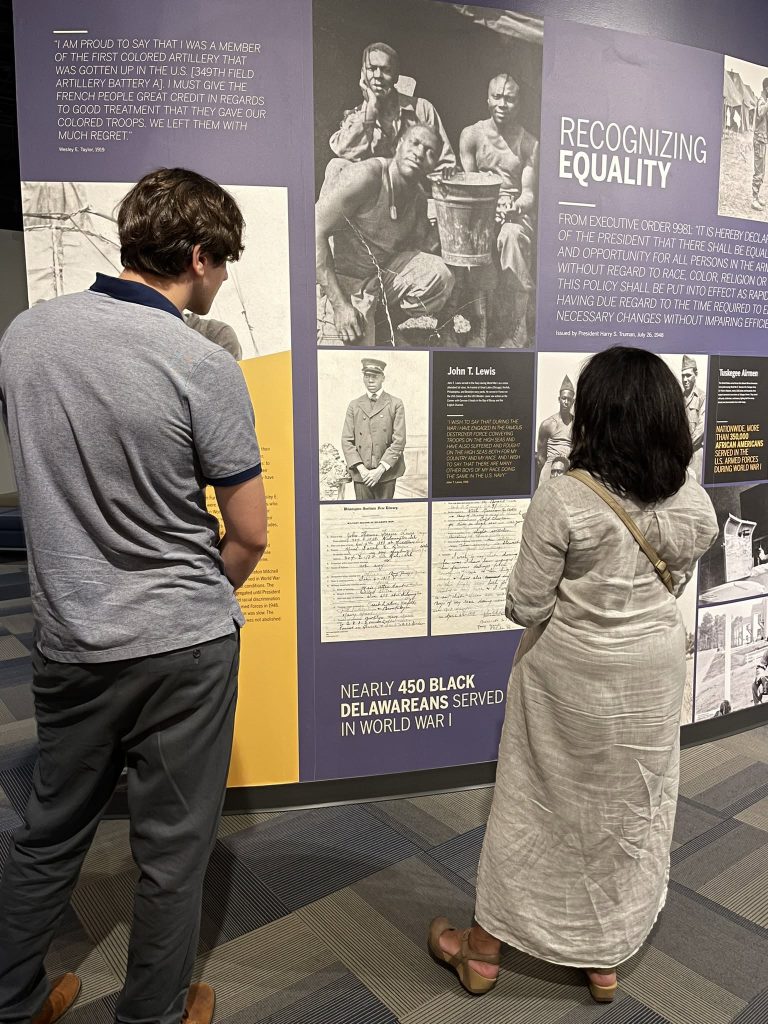
The Mitchell Center’s powerful Journey to Freedom exhibition expands the African American story through artifacts, oral histories, interactive displays, music and art spanning the 1600s to the present, connecting individual stories of resistance and achievement with Delaware’s wider history.
What Students Will Experience
The Delaware History Museum’s school programs focus on participation and investigation rather than a traditional lecture-style tour. Students handle ideas through artifacts, primary sources, role-playing and problem-solving activities designed to make Delaware history feel immediate.
For grades K–3, Ahoy Matey! Pirates on the Delaware uses role-play and hands-on activities to explore piracy, maritime commerce and early forms of democracy during the Golden Age of Piracy. First People in the First State, recommended for grades 1–4, asks students to examine artifacts while investigating Indigenous resources, food, clothing and community life.
Students in grades 3–5 can participate in First Contact, which considers interactions between Lenape communities and Swedish settlers beginning in 1638. The program uses discussion, artifact analysis and hands-on activities to examine how two cultures encountered one another.
For grade 4, Choosing Independence and Fighting for Freedom transforms Revolutionary history into active learning. Students reenact part of the Second Continental Congress, explore civilian perspectives, examine a soldier’s clothing and equipment and recreate the Battle of Cooch’s Bridge.
Journey to Freedom: The Underground Railroad in Delaware, for grades 4–8, asks students to examine the choices and dangers involved in self-emancipation. Activity stations explore what a freedom seeker might carry, conditions that influenced decisions to escape and ways people resisted slavery.
Curriculum & Grade-Level Connections
The museum’s K–12 programs foster historical inquiry and critical thinking while connecting Delaware history with broader U.S. themes. Onsite programs currently focus on grades K–8, while high school groups can request customized programming.
That grade progression allows teachers to revisit Delaware history at increasing levels of complexity. Younger students might focus on community, material culture and life in the past. Upper elementary students can engage with colonization, revolution and slavery, while middle and high school students can analyze more difficult questions involving race, freedom, civic responsibility and historical evidence.
The permanent Discover Delaware exhibition provides a broad overview of state history, including immigration, maritime heritage, agriculture, industrialization, wartime experiences and cultural contributions. Journey to Freedom, located within the Mitchell Center, traces African American history from the earliest known African presence in Delaware through slavery, civil rights, community activism and contemporary cultural expression.
For older students, the Delaware Historical Society also offers virtual programming in grades 6–12 on child labor, World War I and civil rights. These can function as pre-trip or post-trip extensions or as stand-alone experiences for classes unable to travel to Wilmington.
Planning Your Visit
School field trips must be confirmed by the 15th of the month before the requested visit, though teachers may submit requests much earlier. Completing the online program request is only the first step; a trip is not officially booked until the school receives a confirmation letter.
Program lengths vary significantly. Some experiences, including First People in the First State, First Contact and Journey to Freedom, last about 90 minutes, while more elaborate role-playing programs can run up to three hours. Teachers should check the length carefully before building transportation and lunch schedules.
Groups may eat lunch at the museum if they indicate that need when booking. The museum can store packed lunches, though refrigeration is not available.
The Mitchell Center is housed inside the Delaware History Museum, so schools do not need to travel between two locations to experience both. The Wilmington campus is open Wednesday through Saturday, though confirmed school programming may follow its own schedule.
For educators who want to extend classroom learning, the Delaware Historical Society also maintains lesson plans, primary-source collections, digital resources, an African American history resource guide and teacher materials that can be used before or after the trip.