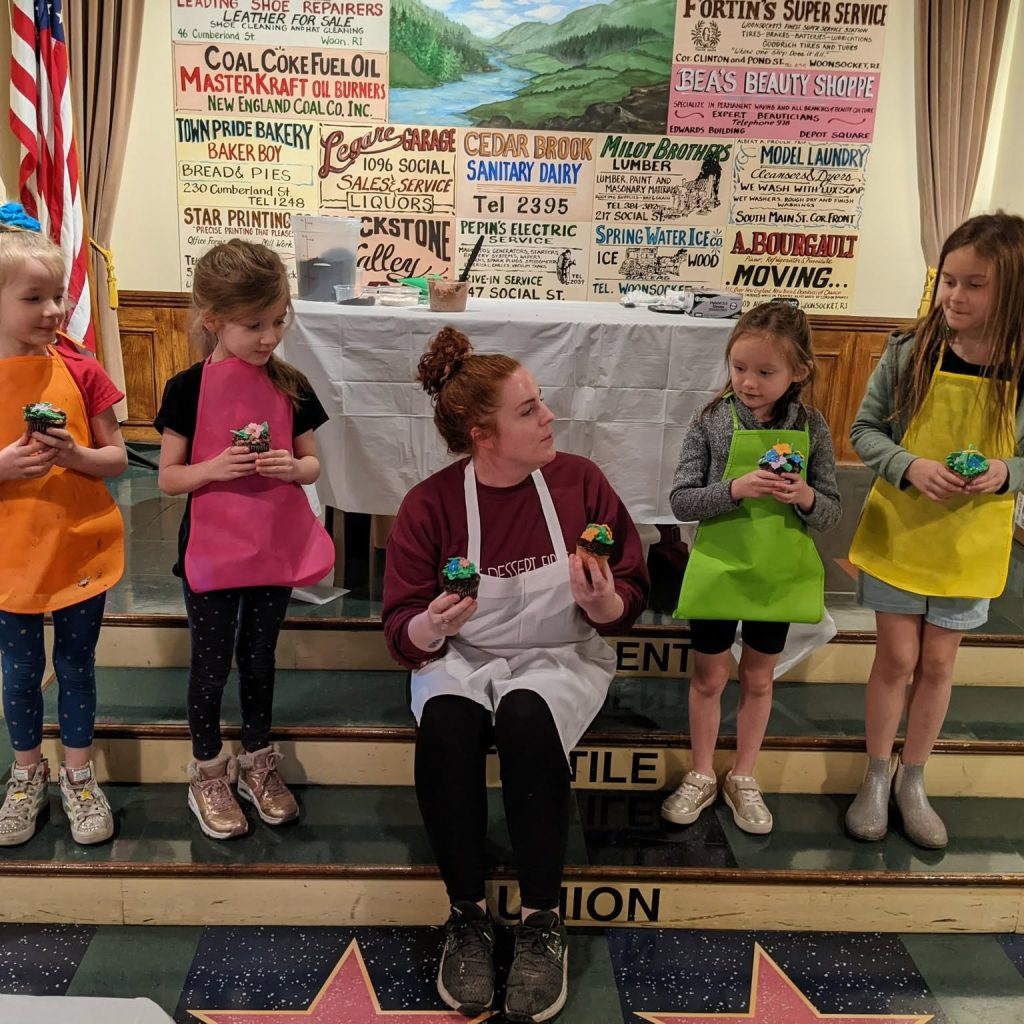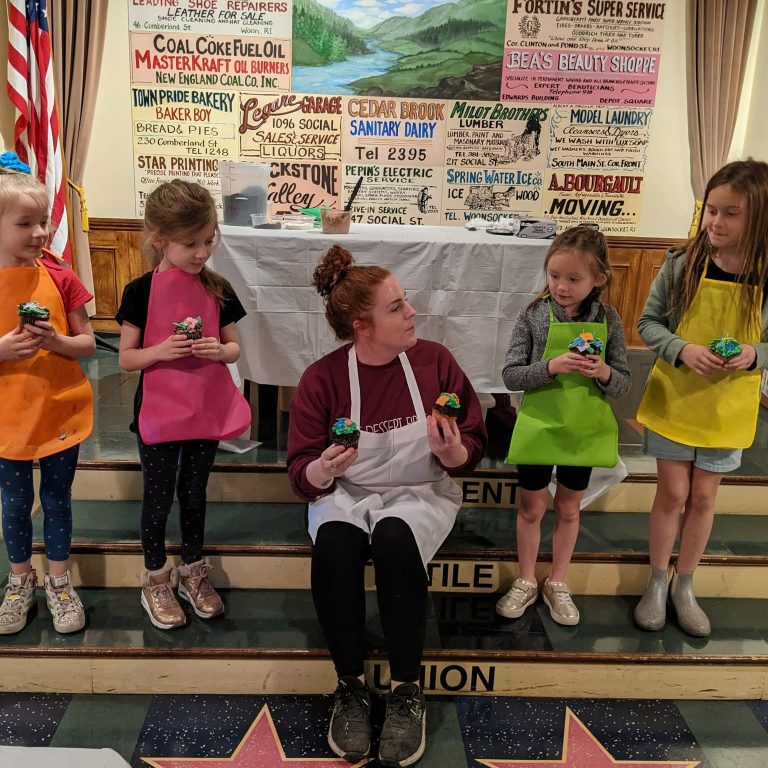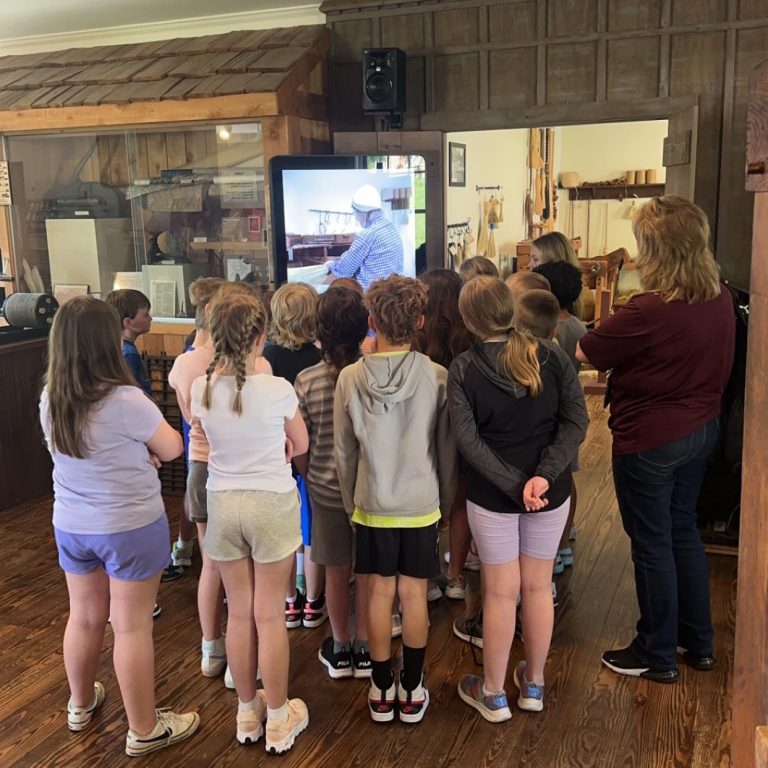
An immersive journey into Rhode Island’s industrial past awaits at the Museum of Work & Culture, where students move through recreated environments that tell the story of work, immigration and life in the Blackstone Valley. Exhibits include a 19th-century farmhouse, textile mill floor, immigrant home, parochial classroom and union hall, allowing students to follow families from rural communities into the industrial workforce. Docent-led tours are available for all grade levels, with specialized options focused on immigration and labor history. Hands-on add-ons let students compete on an assembly line, investigate an immigrant family’s suitcase or negotiate a labor dispute, while an outdoor tour connects industrial development with the Blackstone River, waterpower and ecology.
What Students Will Experience
A standard guided tour uses recreated spaces, artifacts and personal stories to explain how industrialization changed daily life in northern Rhode Island. Students move from an agrarian setting into mill work, housing, education and organized labor, helping them understand industrialization as a social transformation rather than simply the introduction of new machinery. Tours typically last 30–45 minutes and are recommended for all grades.
Teachers who want a more focused experience can choose a Labor History Focused Tour, also appropriate for all grades. This version narrows attention to workers, unions and the labor movement in the Blackstone Valley, using stories and questions to connect museum material with classroom learning.
The hands-on Assembly Line Activity is available for all grade levels and adds roughly 30 minutes. Students become competing companies and experience firsthand how repetitive tasks, speed and coordination shape factory production. The activity gives teachers a natural opening to discuss efficiency, working conditions, division of labor and the human consequences of industrial systems.
For grades 6–12, the Suitcase Activity asks students to act as historians as they sort through belongings associated with immigrant families. Students use objects as evidence to infer identity, occupation, cultural background and migration experience.
For grades 6–12, the Labor Dispute Simulation also puts students on opposing sides of a labor conflict. Through negotiation and role-play, they consider the pressures facing workers and employers and practice evaluating competing interests rather than accepting a single historical viewpoint.
The Outdoor Walking Tour, suitable for all grades, extends the visit beyond the building to the Blackstone River. Students investigate the river’s ecology, waterpower and the way natural geography helped determine where mills developed.
Curriculum & Grade-Level Connections
Because standard tours suit all grades, teachers can adapt the museum to different learning goals. Elementary groups can focus on then-and-now comparisons, family life, community change and the contrast between farm and factory work.
Middle school students can investigate industrialization, immigration, labor, and urbanization in greater depth. The Suitcase Activity is particularly effective for teaching historical inference because students must interpret material evidence rather than being given a complete story.
High school groups can move into labor economics, unionization, migration, cultural identity and industrial conflict. The Labor Dispute Simulation can support U.S. history, economics and civics by asking students to weigh employer and worker priorities, negotiate positions and consider how collective bargaining developed.
The museum also supports interdisciplinary science and environmental studies. The Blackstone River walking tour connects industrial history with hydrology, ecology and energy, helping students understand that industrialization depended on both technological and natural systems.
Language arts teachers can build assignments around immigrant narratives, oral histories and perspective-taking, while geography classes can examine why industrial cities grew where they did. The museum’s recreated schoolroom and domestic settings also provide opportunities to discuss cultural assimilation, language, education and the persistence of ethnic traditions.
Planning Your Visit
School tours and educational activities are offered through the Rhode Island Historical Society and should be reserved in advance. A basic museum tour lasts about 30–45 minutes, while most hands-on or outdoor add-ons require an additional 30 minutes. Teachers can therefore build a short visit or create a substantially longer experience by combining several components.
The standard tour, Labor History Focused Tour and all listed educational add-ons are currently described as free for school groups, making the Museum of Work & Culture an especially attractive option for educators working with limited field-trip budgets.
Groups bringing bagged lunches can reserve the museum’s ITU Hall for a 30-minute lunch period. Teachers should request lunch space when booking rather than assuming it will be available on arrival.
Because several add-ons have grade restrictions, educators should build the itinerary around student age. The Assembly Line and outdoor tour work for all grades, while the Suitcase Activity and Labor Dispute Simulation are reserved for grades 6–12.
For larger classes, dividing students into rotating groups can work particularly well: one group might tour the exhibits while another completes an activity, then switch. This also keeps discussion groups smaller and lets students participate more directly.
The museum’s biggest strength for educators is its human-centered approach. Students see industrialization through the experiences of workers and immigrant families and then test those ideas through role-play, evidence analysis and problem-solving.