Infrastructure History
Normally, when people think about a place’s history, they don’t give much thought to public transportation and how it can bring communities together. Public transportation has connected Maine communities since the state’s settlement. The Seashore Trolley Museum has committed itself to teaching visitors about that history of connection while maintaining trolleys from several time periods in the state’s and country’s history, going back as far as the 19th century. The museum shares this history through several visual and interactive methods, so the information isn’t just intellectual trivia but a lived experience for visitors.
What’s there to see?
Visiting the Seashore Trolley Museum means seeing exhibits like History in Motion, which cover the state’s history of public transportation and its impact on communities through artifacts and murals. The visitor center also features exhibits about the historic Atlantic Shore Line, which the museum still operates on the demonstration track.
The museum also showcases exhibits like A Seat for Everyone: a Mobile Bus Exhibit that highlights how vital transit has been to movements across the country. This exhibit discusses the beginning of the Montgomery Bus Boycott, examining the young girl, Claudette Colvin, who was virtually unknown until recently, and the ripple effects of her refusal to give up her seat before Rosa Parks.
Get in Motion
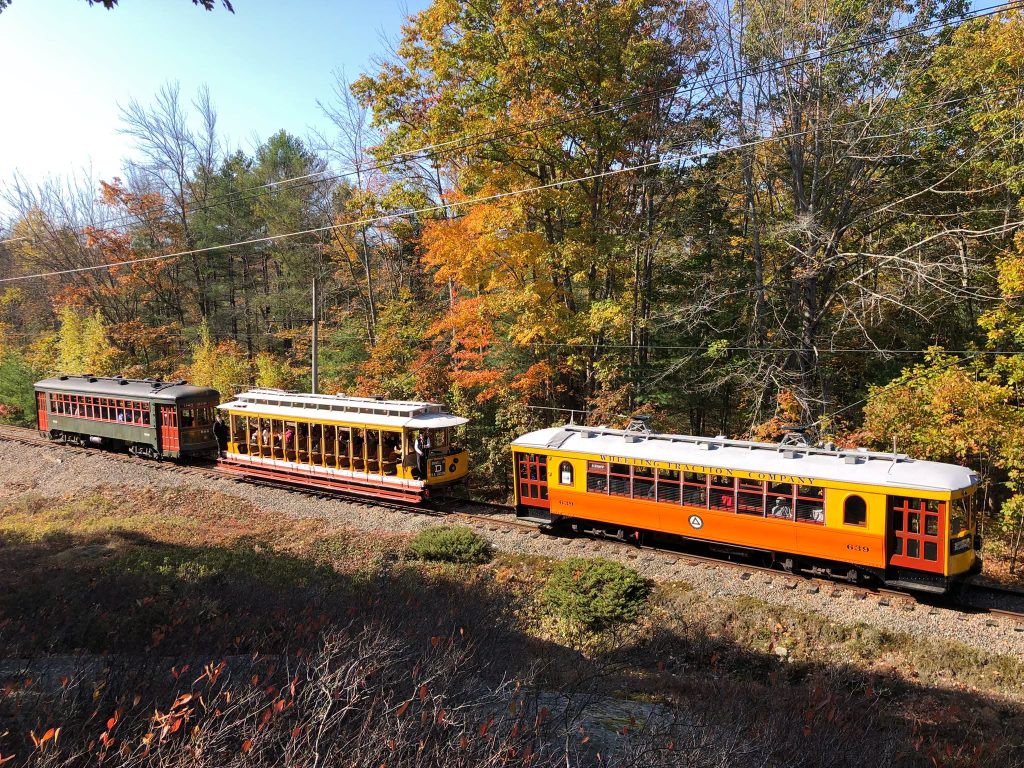
On the demonstration track, several trolleys are run, including the Atlantic Shore #100 of course, running on the historic Atlantic Shore Line. Visitors can ride an antique trolley, traveling the historic line and learning more interactively about these forms of transportation, while also getting a feel for what it might have meant for people early in the state’s history to ride these cars.
On the museum campus is the Donald G. Curry Townhouse Shop, occasionally referred to as the Restoration Shop. This building is where many volunteers, and before 2017, the titular Donald G. Curry, worked hard to restore the trolley cars the museum acquires with donor help, bringing them back to their former glory. The shop also acts as the maintenance station for the museum’s fleet of antique trolleys, which also need love from time to time. Visitors are allowed to come in and have a close-up look at these restoration projects and see the volunteers in action, turning old, rundown cars into things of beauty.
Get Interested
Public transportation is a building block of connection that is often ignored; when a place has a storied past with transportation—as many places do, and Maine certainly does—there’s an incentive to come see what all the fuss is about. The Seashore Trolley Museum is the world’s first and largest electric railway museum and an invaluable resource for teaching students about the importance of infrastructure at any age.