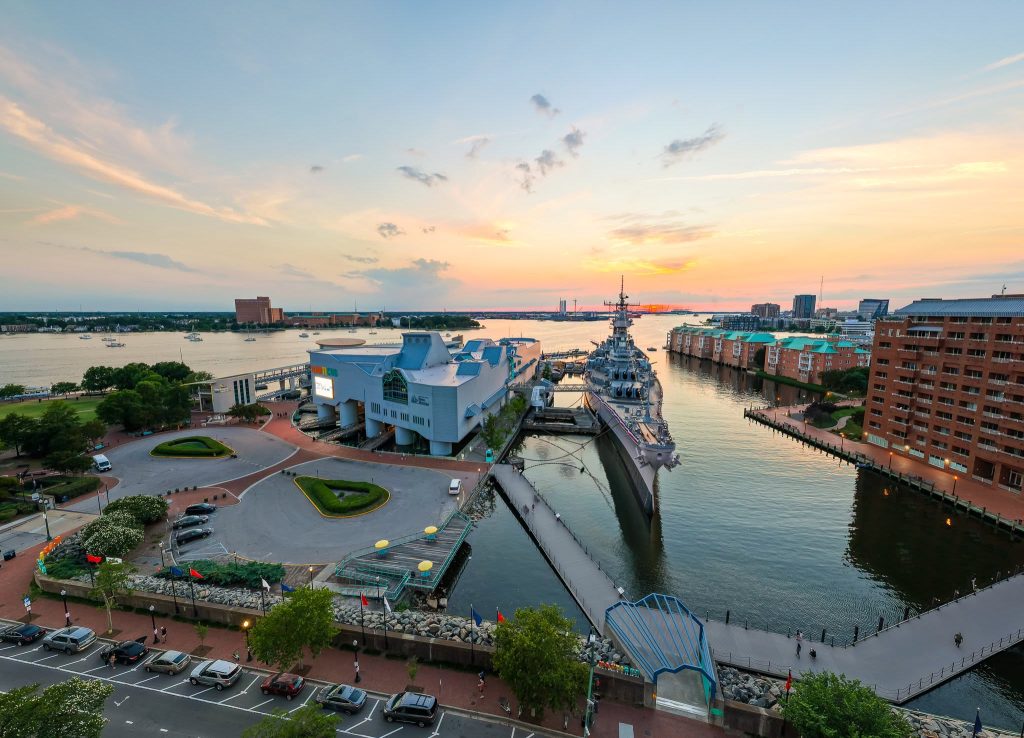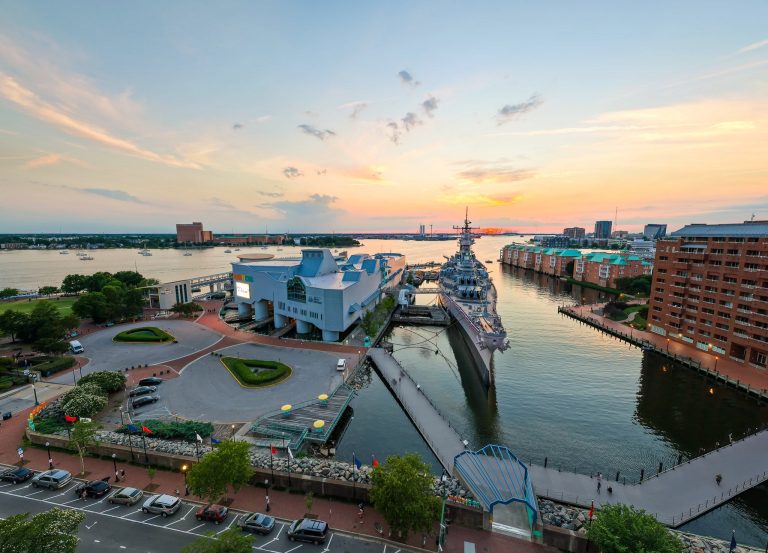

Nauticus in Norfolk is a field trip that brings together science, history, engineering, and life on the water in one place. Located along the waterfront and home to the Battleship Wisconsin, Nauticus gives students plenty of opportunities to explore maritime science through interactive exhibits and hands-on programs. Its education programs connect STEM concepts with the maritime world so that students can learn about everything from weather and water to engineering and the Chesapeake Bay.
Immersive Student Programs
The on-site programs are organized by grade level, making it easy for teachers to find an experience that fits their students. Younger students can explore volcanoes through “The Floor is Lava!” and then design a house to protect bears from the lava. Another early learning program has students test materials and build their own floating boats. Older elementary students can investigate habitats, explore the life cycle of an American eel, become water molecules while learning about the water cycle, or discover how lighthouse lenses use reflection and refraction.
STEM Education for Middle and High School Groups
Middle and high school students can take on more advanced STEM challenges. In “Engineering on the Chesapeake Bay,” students explore the science behind bridges and tunnels before building and testing their own models. High school programs combine environmental science and engineering, giving students a chance to apply what they know to real-world problems. Nauticus also offers programs aboard the Battleship Wisconsin, where students can practice weather forecasting, create weather instruments, or experience “Life as the Enlisted” while learning about the ship and the sailors who lived and worked there.
For educators, the programs support classroom curriculum and Virginia Standards of Learning. Most onsite programs last 45 minutes and are designed for one class of up to 30 students. Nauticus recommends allowing about three hours for a visit that includes both programming and time to explore. Teachers can also choose a self-guided field trip for more flexibility. The museum requires one teacher or chaperone for every five students, and qualifying schools can receive financial assistance through the Nauticus Student Access Program.
Plenty of ways exist to build classroom lessons around a visit to Nauticus. Before the trip, students could learn about the Chesapeake Bay, practice making weather observations, or research how ships navigate. After an engineering activity, students could redesign their model, explain what worked, and identify what they would change. A class studying ecosystems could create a Chesapeake Bay food web, while students learning about the water cycle could track the different forms water takes throughout their day. Nauticus also offers sailing field trips through Sail Nauticus, giving students another way to experience the maritime environment firsthand.
Hands-On Learning
Nauticus is a great choice for teachers who want a field trip with plenty of movement, experimentation, and real-world connections. Students can build boats, investigate waterways, test engineering designs, study weather, and step aboard a historic battleship. The programs encourage students to work together and use what they are learning instead of simply listening to a lesson. With options ranging from preschool science activities to high school engineering challenges, Nauticus makes STEM feel active, practical, and connected to the maritime world around Norfolk.