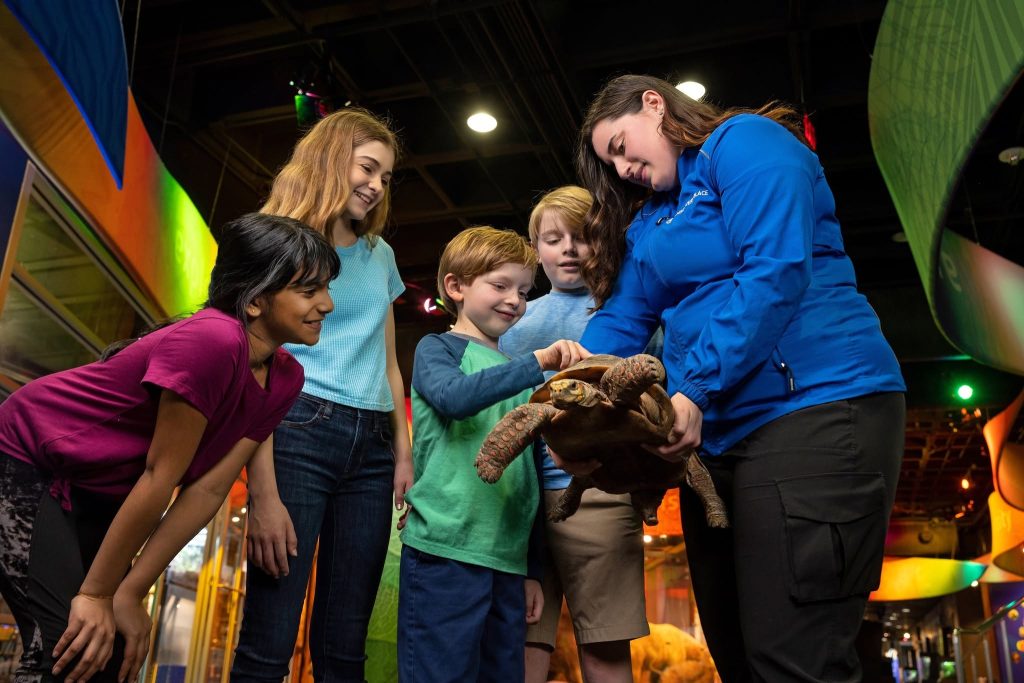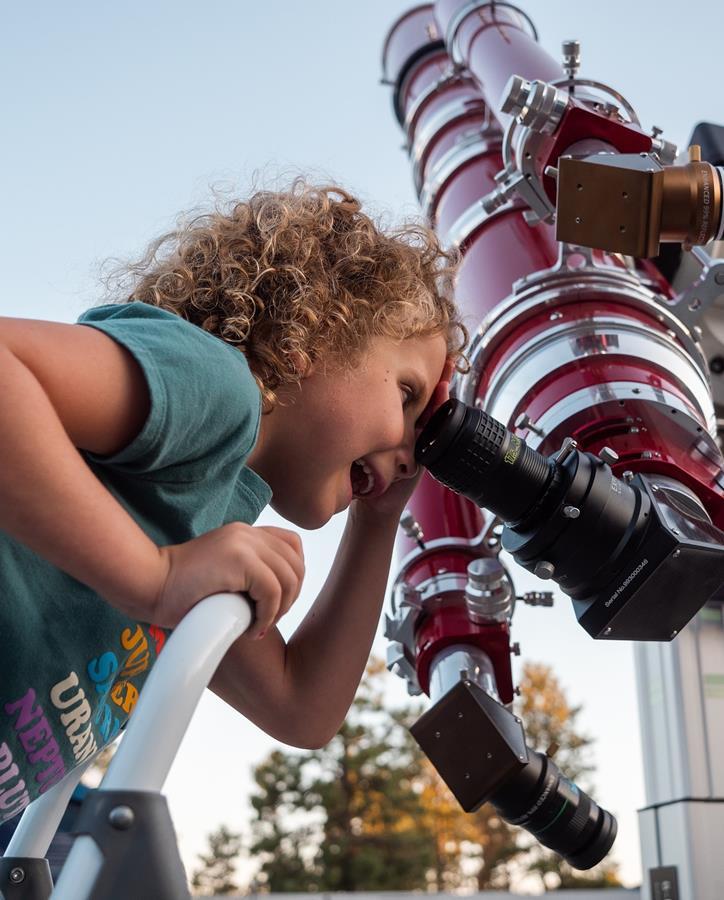

Located in Uptown Charlotte, the hands-on science museum lets students explore science through interactive exhibits, live experiments, animal encounters, and immersive experiences. Instead of being told how something works, students can test ideas, make observations, and see the results for themselves. Discovery Place Science Museum also features the Charlotte IMAX Dome Theatre, giving schools another way to bring science and the natural world to life on a much larger scale. With experiences designed for a wide range of ages, Discovery Place Science can turn an ordinary science lesson into a day of exploring, experimenting, and discovering something new.
Exciting Education
Once students walk through the doors, plenty keeps them moving. The museum is filled with interactive exhibits that encourage students to touch, build, experiment, and investigate. Current and rotating experiences can add even more variety to a visit, including Brick Masters Studio, where students can explore building and engineering through LEGO bricks, and Mending the Wild, which connects art with conservation, biodiversity, and endangered species. Discovery Place also offers opportunities for students to participate in community science projects, where they can contribute real data to research. Depending on the grade level and current programming, field trips can include hands-on educational classes and workshops focused on topics such as animals, sound, weather, forces, and other STEM concepts.
STEM Learning
For educators, one of the biggest benefits is how easily the museum’s programs can connect to what students are already learning in the classroom. Discovery Place offers age-appropriate educational experiences, including early learning classes for pre-K and kindergarten that help students build early STEM skills through exploration and observation. Older students can participate in hands-on workshops covering subjects such as robotics, engineering, and life sciences. The museum’s approach centers on asking questions and encouraging students to investigate rather than simply giving them answers. That makes it especially useful for teachers looking to bring science standards off the page and into a real-world environment.
Field Trip Activities
A visit can also easily become a classroom activity before and after the trip. Teachers could have students choose one question to answer during their visit and track what they discover. Younger students might focus on observing animals and describing what they see. In contrast, older students could investigate an engineering challenge or consider how technology can solve problems. Afterward, students could share their favorite discovery or explain one experiment that surprised them. The museum’s focus on curiosity makes it a great place to remind students that science isn’t always about immediately knowing the right answer, but about testing and being willing to try again.
Discovery Place Science is a field trip that makes it pretty hard for students to be bored. Between interactive exhibits, experiments, animals, engineering challenges, and the IMAX Dome Theatre, there are plenty of ways to keep curious minds engaged. More importantly, the experience shows students that science is not something that only happens in a textbook or a classroom. It happens all around them, and they can help figure it out. For North Carolina schools looking for a field trip that combines education with plenty of hands-on fun, Discovery Place Science offers an experience where students can learn, explore, and get a little messy with science along the way.