A Living Wetland Classroom
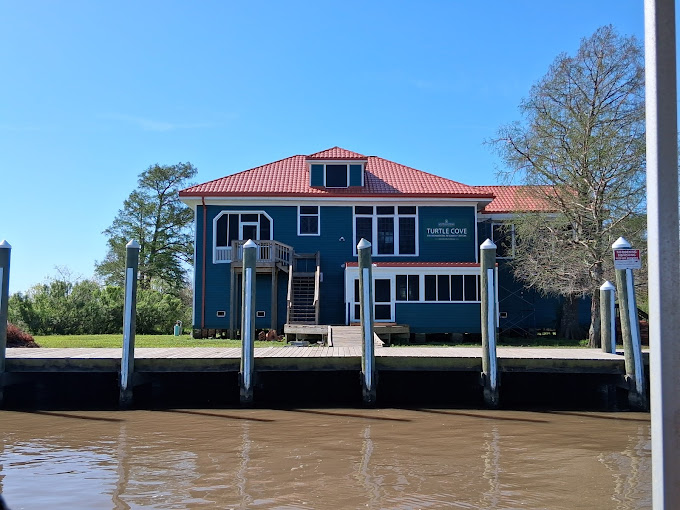
For students ready to trade the traditional classroom for a working wetland laboratory, Turtle Cove Environmental Research Station offers one of the River Parishes’ most immersive environmental field experiences. Operated by Southeastern Louisiana University, Turtle Cove is a research, education and outreach facility within the Lake Pontchartrain estuarine ecosystem, where students can investigate coastal wetlands in the same kinds of environments studied by university researchers.
Unlike a passive nature tour, Turtle Cove’s field-trip program is specifically designed for students in grades 5–12, as well as university classes and community groups. Programming focuses on wetland and aquatic science, Louisiana’s environmental history and the causes and consequences of coastal wetland loss.
Student Field Trips
Field trips are generally offered during fall and spring semesters, with additional summer availability, and typically run from about 9 a.m. to 12:30 p.m. Dates depend on Southeastern graduate-assistant schedules and are reserved on a first-come, first-served basis.
The experience begins at the Galva Canal Boatshed and Classroom near Manchac, a land-based education facility that serves as the gateway to the research station. The actual Turtle Cove station sits within the Manchac Wildlife Management Area and is accessible only by boat.
That journey is part of the learning experience: students travel by pontoon boat down Pass Manchac toward Lake Pontchartrain and Turtle Cove while discussing the surrounding wetland landscape.
Hands-On Learning
A standard field trip combines several components. Students receive an orientation to wetland ecosystems, environmental issues, coastal wetland loss and Turtle Cove’s history before participating in a pontoon excursion and guided boardwalk exploration.
Field activities can include plant identification, dip-netting and water-quality sampling. Topics discussed along the way include bald-cypress swamp and marsh restoration, adaptations that allow plants and animals to survive in wetlands and environmental challenges affecting the Lake Pontchartrain Basin.
Water-quality testing can introduce concepts such as temperature, dissolved oxygen, salinity, conductivity and pH, while dip-netting gives students a chance to observe aquatic organisms and think about food webs, biodiversity and habitat quality. Equipment maintained at the facilities includes dip nets, microscopes, Secchi disks, plankton nets, aquatic viewing scopes, binoculars and water-testing equipment.
Science and Environmental Connections
Wildlife observations reinforce those lessons. Depending on conditions, students may encounter alligators, birds, nutria, snakes, fish and diverse wetland vegetation. Rather than approaching these organisms as isolated species, instructors can help students consider adaptations and ecological relationships.
The geography surrounding Turtle Cove makes broader environmental concepts especially concrete. The research station lies within an estuarine system containing habitats ranging from fresh to moderately saline environments, including bottomland hardwood forests, bald-cypress swamps and fresh and intermediate marshes.
Some areas are relatively undisturbed, while others are degraded or restored, creating opportunities to compare ecosystem conditions and understand why restoration scientists need baseline data.
Teacher Resources and Grade Levels
Teachers can also tailor the field trip to their curriculum. Turtle Cove notes that tour leaders can adjust experiences to support thematic units or learning objectives already being covered in class. Educators can use the station’s boardwalk information to develop pre-trip or on-site activities such as scavenger hunts and species-identification exercises.
The progression works especially well across the published grades 5–12 range. Fifth- and sixth-grade students can focus on ecosystems, food webs, adaptations and human impacts on habitats. Middle school groups can investigate water quality, biodiversity, erosion and wetland functions. High school environmental science, biology, Earth science and geography classes can tackle more sophisticated concepts involving estuaries, salinity gradients, coastal land loss, restoration ecology and the interaction among environmental, cultural and economic systems.
Teachers should plan ahead for the logistics of this experience. Turtle Cove accommodates single and larger groups based on staffing and scheduling, and participants traveling by pontoon boat must complete required forms; minors need a parent or legal guardian to sign the appropriate waiver.
For Louisiana students especially, Turtle Cove makes an urgent environmental issue visible and measurable. Instead of reading about coastal loss from a classroom, students can collect data, identify wetland species, travel through the ecosystem by boat and see firsthand why Louisiana’s wetlands matter.