
Learning Through Louisiana History
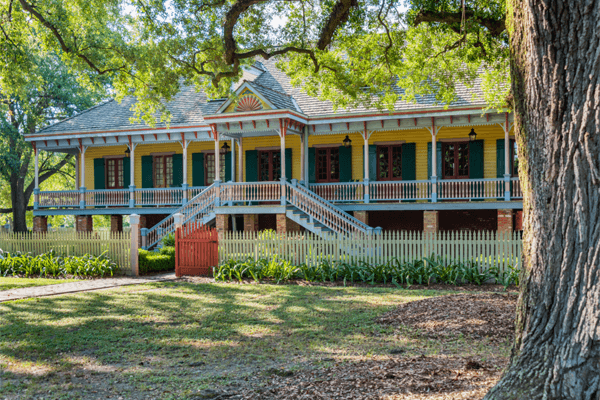
At Laura Plantation: Louisiana’s Creole Heritage Site in Vacherie, students encounter Louisiana history through the documented lives of the people who lived and labored on a working sugar plantation. Rather than presenting plantation history solely through architecture or the families who owned the property, the experience examines the interconnected stories of free and enslaved people within Louisiana’s French-speaking, Catholic Creole society. For teachers covering Louisiana history, slavery, the Civil War, cultural identity or primary-source research, the site provides an especially valuable opportunity to connect classroom lessons with a place where that history unfolded.
Laura Plantation officially welcomes educational school groups from elementary through high school and offers customized tours for different age levels. Of particular interest to educators, specially designed benchmark tours are available for grades 3–12 in Social Studies and Language Arts, drawing from the plantation’s extensive collection of historical documents and research. School groups should reserve in advance, and groups can expect to spend approximately 90 minutes on site.
Student Programming
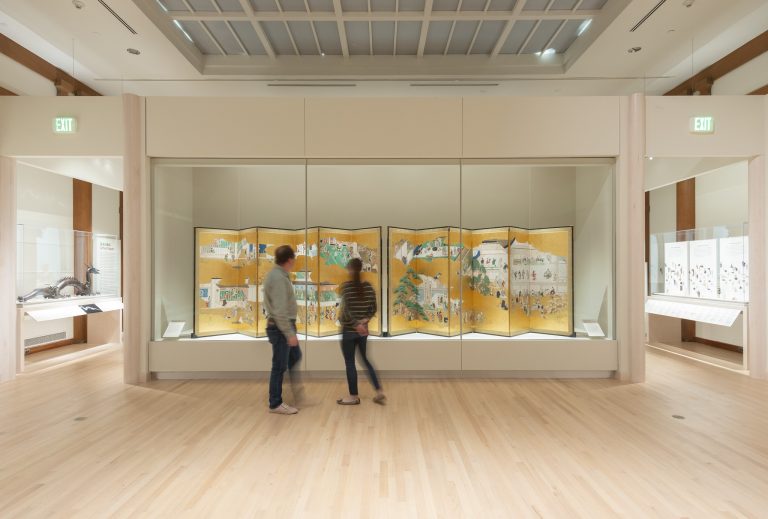
A visit incorporates both museum interpretation and guided exploration of the historic property. Students can visit From the Big House to the Quarters: Slavery on Laura Plantation, a museum exhibition devoted to the people who were enslaved at Laura and the systems that shaped their lives. The broader guided experience draws from Laura Locoul Gore’s memoir, Memories of the Old Plantation Home, along with archival records from the United States and France, allowing teachers to introduce an important historical-thinking concept: how historians construct a fuller account of the past by comparing personal narratives with documentary evidence.
Students then move through spaces that help make abstract historical concepts tangible. Depending on the tour, these can include the raised Creole Big House, service and common rooms, gardens, outbuildings and an original 1840s slave cabin. Twelve structures on the property are listed on the National Register of Historic Places. The preserved landscape gives students opportunities to consider how a plantation functioned as a home, agricultural operation, labor system and community rather than simply viewing the main residence in isolation.
Curriculum Connections
The slave cabins also introduce another fascinating connection between Louisiana history, oral tradition and literature. West African stories featuring Compair Lapin, later familiar to English-speaking audiences through versions of the Br’er Rabbit tales, were recorded at Laura. This makes the site particularly useful for Language Arts educators interested in oral storytelling, folklore, cultural transmission and the ways African traditions survived and evolved in the Americas.
For older students studying the Civil War and emancipation, Laura Plantation offers another avenue for inquiry through the documented stories of nine men once enslaved at Laura who escaped during the Civil War and joined the Union Armed Forces. The plantation currently offers a separate Black Union Soldiers Tour, a 50-minute outdoor experience centered on these nine individuals and the larger impact of slavery, war and the struggle for freedom in Louisiana.
Teachers can use a visit to explore questions that reach across several disciplines: What did it mean to be Creole in 18th- and 19th-century Louisiana? How did slavery shape the state’s sugar economy? How do historians recover the experiences of people whose voices were frequently excluded from written records? How were stories and traditions preserved across generations? And how did enslaved people pursue freedom during the Civil War?
Grade-Level Fit
For younger elementary groups, the strongest approach may be an age-appropriate examination of daily life, family, buildings, storytelling and Louisiana culture. Upper-elementary and middle school students can begin comparing perspectives and examining the relationship among geography, agriculture, slavery and economics. High school students are well positioned for deeper discussions of primary sources, race, social systems, Civil War-era emancipation and historical interpretation.
By grounding these subjects in documented individual lives, Laura Plantation gives students something textbooks often cannot: the ability to stand within a historic landscape and consider how the choices, labor, traditions and experiences of real people shaped Louisiana.