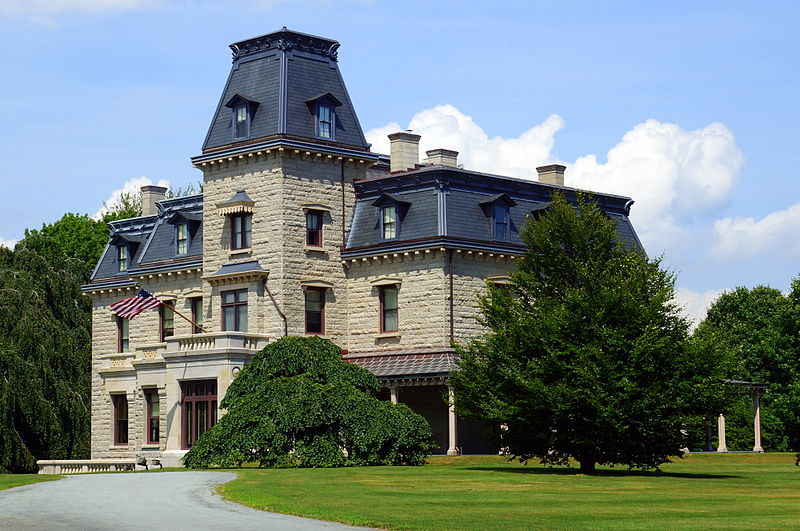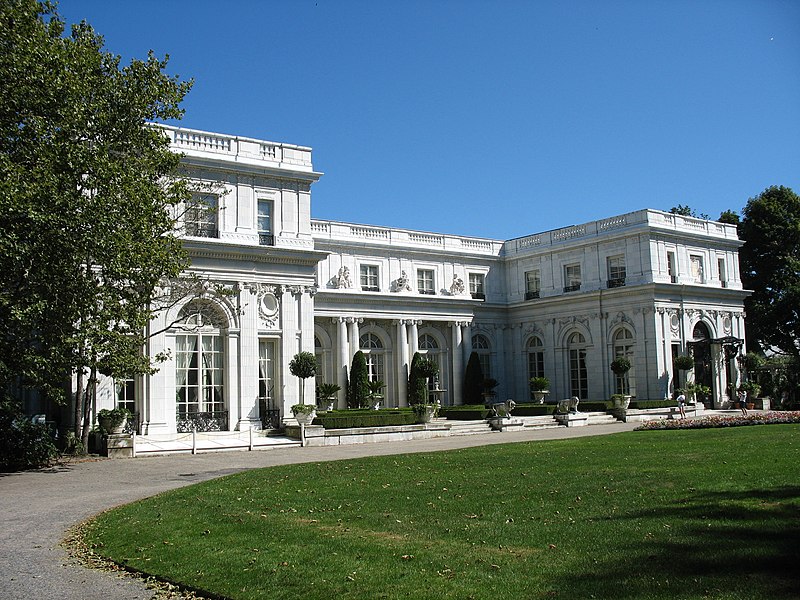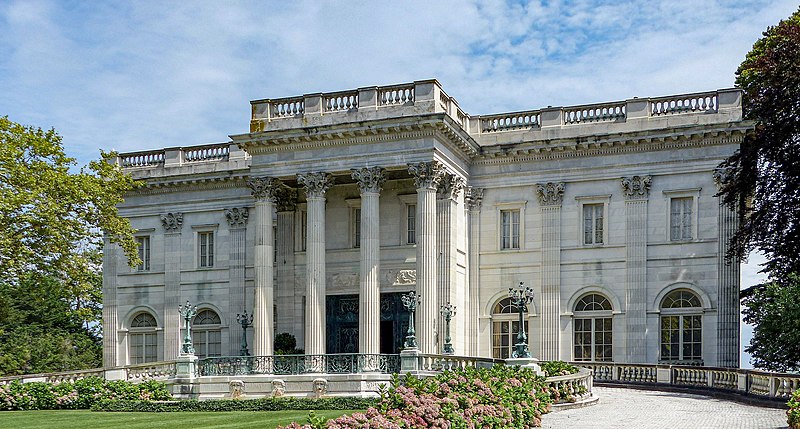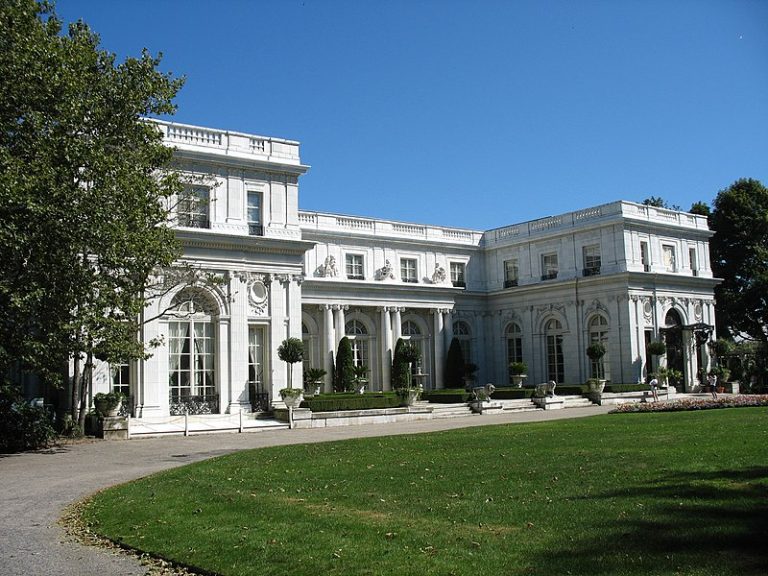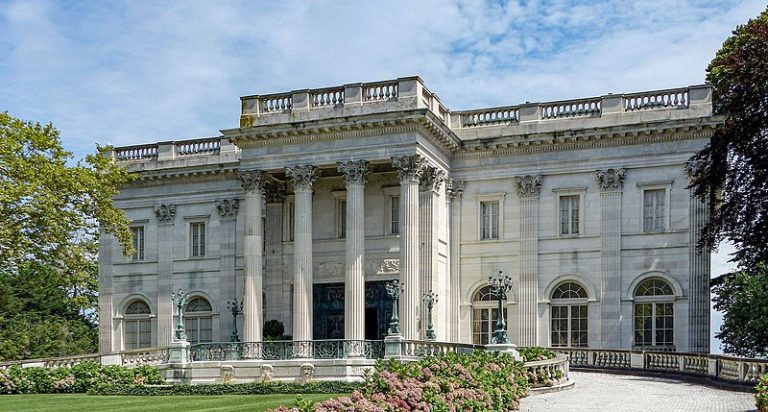
The Newport Mansions bring the opulent world of the Gilded Age into vivid focus through extraordinary architecture, decorative arts and stories of the people who lived and worked inside these massive summer “cottages.” Student groups can visit properties including The Breakers, Marble House, The Elms, Rosecliff and Green Animals Topiary Garden, depending on seasonal operating schedules. Self-guided audio tours reveal how industrial wealth, technology, immigration, design and domestic labor shaped elite life at the turn of the 20th century. Kid-focused audio tours at The Breakers and Marble House use characters and sound effects to engage younger students, while teachers can connect the properties with lessons in U.S. history, architecture, economics and social change.
What Students Will Experience
Each mansion offers a different entry point into the Gilded Age. The Breakers, associated with the Vanderbilt family, showcases the scale and ambition of industrial-era wealth through monumental rooms, imported materials and elaborate craftsmanship. Marble House offers another dramatic example of luxury and social display, while The Elms provides strong opportunities to consider servant labor and the complex systems required to run a large estate.
Students move through the interiors using the free Newport Mansions audio tour app. The tours explain architecture, artwork, family histories and the work of servants and artisans. For younger visitors, the Kids Tours at The Breakers and Marble House use imaginative characters and sound effects to make the buildings more approachable and narrative-driven.
Because the properties preserve entire environments rather than isolated artifacts, students can examine how wealth was communicated through architecture, gardens, dining rooms, bedrooms, servants’ spaces and imported decorative objects. Teachers can ask students to compare public and private spaces or consider what these houses reveal about class divisions.
The mansions also create opportunities to discuss global influences. European architecture, imported stone, and international art and design traditions appear throughout the interiors, showing how wealthy American families used global cultural references to demonstrate status.
Optional specialty experiences can deepen that analysis. Depending on the season, guide-led offerings may include Beneath The Breakers and The Elms Servant Life, offering more focused attention to the infrastructure or the workers who kept these vast households running.
Curriculum & Grade-Level Connections
The Newport Mansions does not assign a single required grade range for student visits. The student reservation form accepts groups from K–2, grades 3–5, grades 6–8, grades 9–12 and college, allowing teachers to tailor the learning objectives to student maturity.
For younger students, the strongest approach is often visual comparison: size, materials, rooms, objects and the differences between their own homes and a Gilded Age mansion. Kid-focused tours at The Breakers and Marble House make those comparisons more accessible.
Upper elementary and middle school groups can investigate immigration, industrialization, architecture and technological change. Teachers can ask how fortunes made in railroads, manufacturing or finance were converted into homes designed to communicate wealth and social position.
High school students can explore more complex themes of inequality, labor, immigration, and the social structure of the Industrial Age. The contrast between owners’ rooms and servants’ spaces provides a particularly strong lens for discussing class and work.
Art and design classes can examine decorative arts, symmetry, historical revival styles and craftsmanship. Economics teachers can connect the mansions with the rise of corporations and concentrated industrial wealth. U.S. history classes can place Newport within broader Gilded Age topics such as urbanization, industrialization, immigration and reform.
Planning Your Visit
Student groups qualify for discounted rates with a minimum of 10 students. The Preservation Society requires one adult chaperone for every 10 students, and those required chaperones are admitted free. Additional adults pay the regular adult group rate.
Teachers should allow about 90 minutes per mansion, including travel time between properties. If Green Animals Topiary Garden is included, planners should note that it is roughly 30 minutes north of Newport, making it less convenient to combine with several city mansions on a tight schedule.
All standard group tours are self-guided. The Mansions no longer provide audio players or headsets, so students should download the free app before arrival and bring their own earbuds. Printed tour scripts are available for students without devices.
Parking is free at most properties, which is a major advantage for buses and vans.
Selected properties offer lunch options, including the Carriage House at The Elms and the Chinese Tea House at Marble House, though group meal reservations require separate arrangements and mansion admission.
Because operating schedules vary by property and season, educators should confirm which houses are open before building the curriculum around a particular mansion.